





India’s Water Coercion and Pakistan’s Legal Response
 IWT
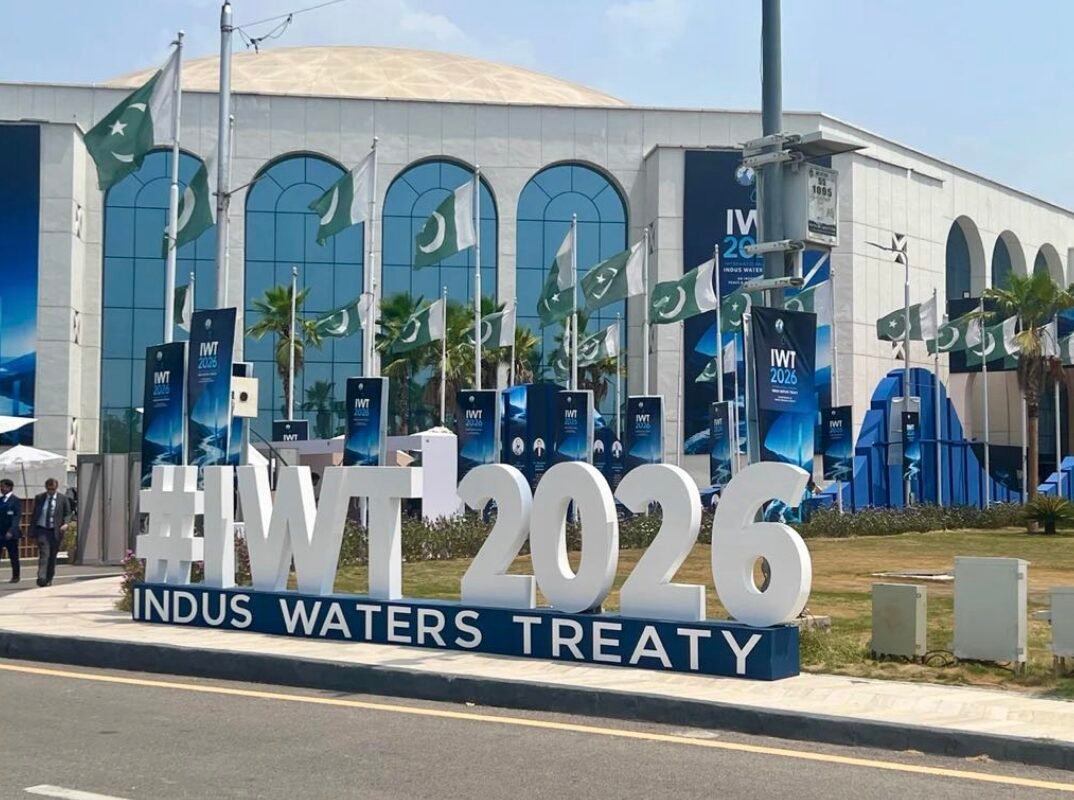
IWTThe Indus Waters Treaty is not merely a technical agreement over rivers. It is a lifeline for millions of people, a legal framework for regional stability, and one of the few surviving instruments of cooperation between Pakistan and India despite decades of political hostility. The recent International Seminar on the Indus Waters Treaty at Jinnah Convention Centre, Islamabad, once again brought into sharp focus the dangers of using water as a tool of pressure, punishment or political coercion. The statements made by political leaders, legal experts and international scholars at the seminar reflected a clear message: Pakistan’s water rights are not negotiable, and any attempt to undermine the treaty must be resisted through law, diplomacy and international opinion.
Khurram Dastgir’s remarks at the seminar were significant because they highlighted the growing concern that India has moved beyond rhetoric and has acted upon its water-related threats. His reference to reported remarks describing temporary Chenab flow restrictions as punitive and coercive underscores a troubling reality. Water cannot be treated as a weapon in South Asia, where agriculture, food security and human survival are deeply tied to river flows.
When senior Indian figures speak of diverting water to Rajasthan or depriving Pakistan of its rightful share, such statements cannot be dismissed as routine political language. They reflect an attitude that threatens the spirit and structure of the Indus Waters Treaty
Pakistan’s position is firmly anchored in international law. The right to water is closely linked with the right to life, food, health and livelihood. For a country where millions depend on the Indus River system for agriculture, irrigation, drinking water and economic survival, any interference with water flows is not a minor administrative matter. It is a direct threat to human security. The treaty was designed precisely to prevent such threats from becoming instruments of conflict. Its continued relevance lies in the fact that it separates water cooperation from political disputes and provides a rules-based mechanism for managing differences.
The intervention of Russian expert Dr Roxolana Zigon added an important international perspective. She rightly described the Indus Waters Treaty as a durable World Bank-brokered framework that has preserved water cooperation despite recurring India-Pakistan tensions. This point deserves emphasis. Few bilateral treaties in the world have survived wars, crises and diplomatic breakdowns with such endurance. The treaty’s river allocation system, Permanent Indus Commission and dispute resolution mechanism have all contributed to long-term conflict management.
Its strength lies not only in its text but also in its institutional design, which prevents unilateralism and compels both sides to remain within a legal framework
India’s credibility in multilateral forums will inevitably suffer if it is seen as violating international law or weakening a treaty that has long been regarded as a model of water-sharing cooperation. A state cannot claim responsible global leadership while disregarding binding obligations in its own neighbourhood. Unilateral actions on shared rivers create mistrust, invite legal scrutiny and weaken regional stability. If water agreements become hostage to political tensions, then the consequences will not remain limited to Pakistan and India. They will set a dangerous precedent for other transboundary river systems across the world.
Federal Information Minister Atta Tarar’s statement that Pakistan will pursue all legal and diplomatic avenues reflects a necessary and responsible approach. Pakistan’s response must remain firm, lawful and internationally visible. The country must continue to expose attempts to alter or undermine the Indus Waters Treaty, not through emotional slogans but through legal documentation, diplomatic engagement and global advocacy. His description of the right to water as sacred is particularly meaningful. For farmers, labourers, rural families and entire agricultural communities, water is not an abstract policy issue. It is the basis of life itself.
Mehr Ali Shah’s remarks on the Court of Arbitration further clarified the legal strength of Pakistan’s case. The court’s position that India’s non-participation and so-called “abeyance” stance do not affect its jurisdiction is crucial. It means that a party cannot escape legal accountability simply by refusing to participate. The awards of the Court of Arbitration remain final and binding, and the treaty’s dispute resolution mechanism continues to operate.
This strengthens legal certainty and reinforces the principle that treaty obligations cannot be suspended through political convenience
Ahmer Bilal Sufi’s legal assessment was equally important. His argument that India’s decision to hold the treaty “in abeyance” amounts to a breach of treaty obligations exposes the weakness of India’s position. International law recognizes suspension, termination and legally defined exceptions under specific conditions. It does not recognize an undefined category that allows a state to avoid its core obligations while pretending that the treaty still exists in some uncertain legal space. The Vienna Convention on the Law of Treaties does not provide room for such ambiguity. A treaty cannot be placed in a political waiting room whenever one party finds it inconvenient.
Federal Minister Musadik Malik’s account of farmer Iqbal Solangi brought the human dimension of water insecurity into the discussion. Solangi’s repeated devastation during the floods of 2010, 2012 and 2022 reflects the suffering of countless families whose lives have been uprooted by recurring water-related disasters. His loss of home, livestock, children’s schooling and livelihood is not an isolated tragedy. It is a reminder that water mismanagement, climate change and regional tensions combine to produce real human suffering. When a farmer is forced to abandon generations of family farming and become a labourer, it represents not only personal loss but also the erosion of rural stability.
The Indus Waters Treaty must therefore be defended as a legal instrument, a humanitarian safeguard and a regional peace mechanism. Pakistan must remain committed to diplomacy, but diplomacy must be backed by legal firmness and national unity. India must understand that water coercion is not strength; it is a violation of trust and law. The future of South Asia cannot be secured by threatening rivers, disrupting flows or weakening treaties. It can only be secured by respecting agreements, protecting livelihoods and recognizing that water is a shared necessity, not a weapon of pressure. The Indus must remain a river of life, not a battlefield of politics.