
Zabihullah Mujahid’s BBC Interview: The Taliban’s Own Indictment
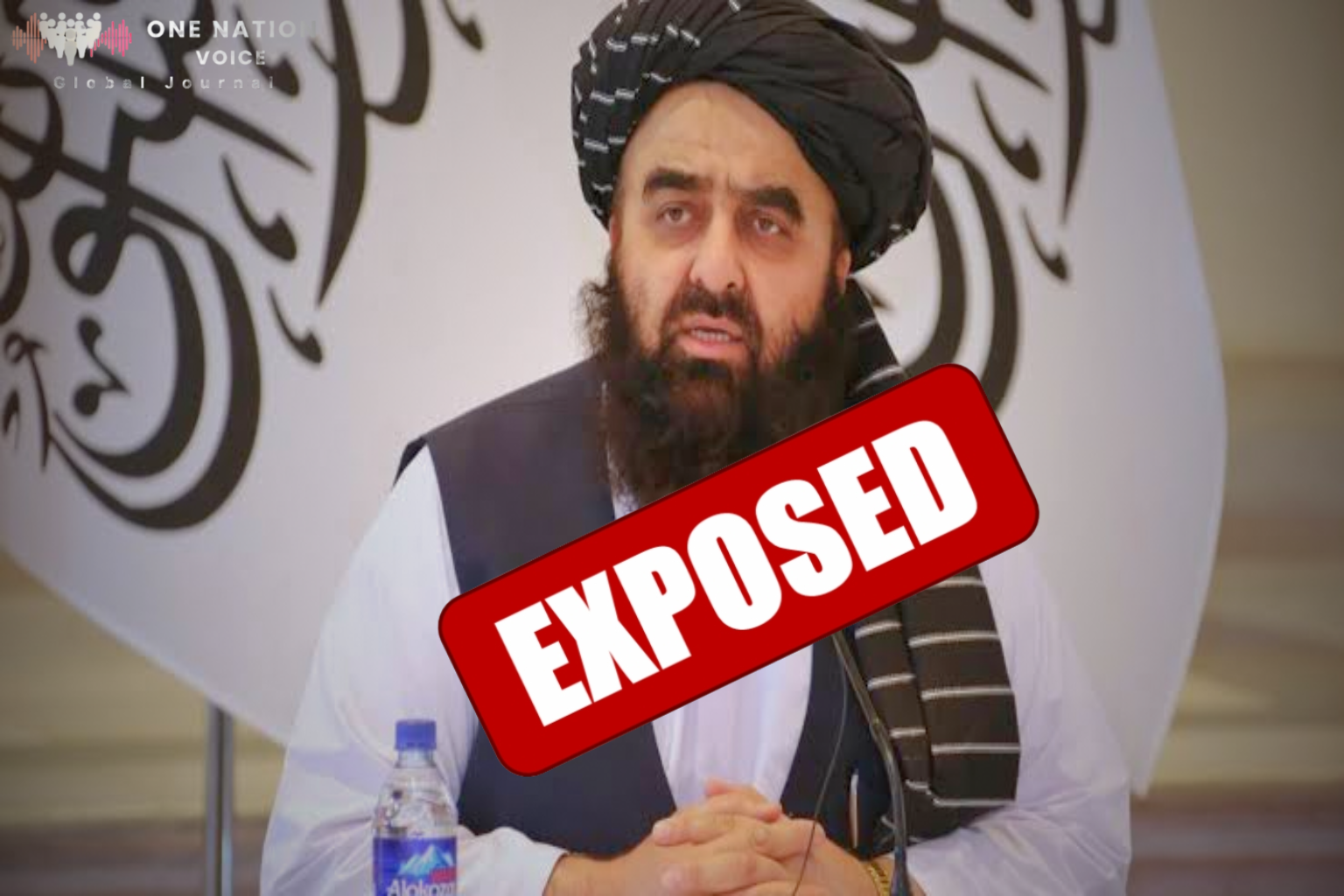
The Stability Illusion: What Mujahid’s BBC Interview Reveals About Taliban Rule
Five years into Taliban rule, Zabihullah Mujahid appeared before the BBC cameras with the polished composure of a statesman. He spoke of stability, sovereignty, Islamic governance and growing international engagement. What he did not offer and could not offer was a single answer to the most fundamental question hanging over Afghanistan today: stable for whom, and at what price?
The interview, viewed through the lens of the latest international assessments, functions less as a defence of governance and more as its indictment.
Stability as Uniformity
Mujahid’s central argument rests on an equation that any serious student of political science would reject: that stability and ideological uniformity are the same thing. In his framing, political pluralism is not a feature of legitimate governance but a security threat. Dissent is not a civic right but foreign interference in disguise. Those who reject the Taliban’s rigid interpretation of Islam are not fellow Afghans with competing visions, they are destabilising agents to be managed or silenced.
This is not governance. It is coercive calm with a theological veneer. The Taliban’s claim that Afghanistan is home to all Afghans rings hollow when entire categories of citizens, women, ethnic minorities, political opponents, journalists, are systematically excluded from public life. True stability is built on legitimacy, and legitimacy cannot be manufactured through suppression.
When pressed on the question of transition, Mujahid floated the possibility of remaining in a transitional arrangement for roughly two decades. Transition to what? No elections were mentioned. No benchmarks. No public mandate. No oversight mechanism. A transition without a destination is not a roadmap, it is an indefinite postponement of accountability dressed in neutral language.
The Education Catastrophe
If any single data point illustrates the human cost of Taliban governance, it is this: Afghanistan is the only country in the world where girls and women are formally banned from secondary and higher education. Five years on, an estimated 2.4 million girls remain locked out of secondary school, wiping away decades of progress and leaving a generation of young women without access to the classroom.
When Mujahid appeared before the BBC, he still refused to provide any timeline for reopening girls’ secondary schools and universities. His framing of women’s rights, protection, chastity, employment only “where needed,” is not a rights framework. It is a system of managed exclusion. According to UN Women, restrictions on movement and access to public spaces intensified in 2025, with more than half of women now reporting leaving their homes only twice a month or less.
In December 2025, the Peoples’ Tribunal for the Women of Afghanistan concluded that the Taliban’s “sustained and deliberate campaign of gender based persecution, carried out through edicts, institutional decrees, and systemic violence” constitutes crimes against humanity under the Rome Statute. UN officials, including the Secretary General, have characterised the situation as gender apartheid. These are not political opinions. They are legal and institutional findings.
The long term economic consequences are equally stark. Afghanistan could lose more than 25,000 female teachers and health workers by 2030 if current restrictions continue. A society that dismantles its own human capital in the name of religious purity is not building stability, it is consuming its future.
The Terrorism Question
Mujahid’s most persistent claim, that Afghan soil is not used against any other country, collides directly with the findings of successive international monitoring bodies. The 38th report of the Analytical Support and Sanctions Monitoring Team, issued as a Security Council document, states clearly that “the authorities were unable to suppress the terrorist problem,” with numerous terrorist groups retaining the ability to operate despite Taliban efforts.
More than 20 international and regional terrorist organisations are currently active in Afghanistan, including al Qaida, Tehreek e Taliban Pakistan (TTP), the Turkistan Islamic Party, the Islamic Movement of Uzbekistan, and Jamaat Ansarullah. These are not allegations, they are the documented findings of the UN Security Council’s monitoring apparatus.
The UNSC report also notes that AQIS has continued to evolve from a fragmented group into a regional terrorist entity, with the November 2025 attack on the Red Fort in Delhi officially attributed to AQIS. Meanwhile, ISIS K has been described as resilient, rebuilding and regaining capacity despite Taliban and regional counterterrorism operations.
The presence of these groups on Afghan territory is not merely a regional security concern. It is a direct refutation of the Taliban’s claim to sovereign responsibility. A government cannot simultaneously assert full territorial control and deny responsibility for what operates within that territory.
The Legitimacy Mirage
Mujahid pointed to expanding diplomatic engagement as evidence of growing recognition. This is a deliberate conflation. Russia remains the only nation to officially recognise the Taliban government, and many Western countries have demanded to see domestic reforms on human rights before considering doing the same. In global human rights and multilateral institutions, the Taliban’s reputation deteriorated further in 2025, with the situation in Afghanistan characterised as gender apartheid by several key UN officials, including Secretary General Antonio Guterres.
Practical engagement, accepting humanitarian aid corridors, conducting deportation negotiations, maintaining trade channels, is a feature of international pragmatism, not a conferral of political legitimacy.
Governments talk to entities they do not recognise all the time, precisely because the people living under those entities cannot be abandoned. Mujahid’s attempt to dress this pragmatism in the language of diplomatic triumph misleads his own audience.
Accountability Without Transparency
Perhaps the most revealing moment in the interview was Mujahid’s justification for refusing to publish a transparent public budget: that transparency could facilitate foreign obstruction. This is a remarkable formulation. It converts accountability into a security threat. It places the regime beyond the scrutiny of its own people by invoking the spectre of external interference.
Similarly, his defence of media freedom, measured against other restrictive countries rather than against any positive standard of independent journalism, exposes the poverty of the argument. Freedom is not defined by the worst examples of its restriction. His acknowledgment that Shariah would remain the ultimate regulatory authority over media is not a reassurance. It is a clear signal that editorial independence will remain subordinate to ideological gatekeeping.
The Central Question
The interview leaves one question unanswered, because it cannot be answered: can coercive calm, institutional opacity, and political exclusion ever produce durable stability?
History suggests otherwise. Regimes built on enforced uniformity rather than genuine legitimacy tend toward brittleness, not durability. The surface quiet of suppression is not the same as the resilience of a society that has chosen its own governance. The economy remains weak, more than 70 per cent of the population relies on humanitarian aid, and nearly 90 per cent live below the poverty line. A population this dependent, this excluded, and this constrained is not the foundation of lasting order, it is the kindling of eventual collapse.
Mujahid is a skilled communicator operating within the constraints of an indefensible system. His BBC appearance was disciplined, articulate, and ultimately unconvincing, because no amount of rhetorical fluency can substitute for the evidence of five years of documented failure.
Stability that rests on the exclusion of half the population, the tolerance of terrorist groups, and the criminalisation of accountability is not stability at all.
It is a regime buying time and calling it governance.
Disclaimer:
The views and opinions expressed in this article are exclusively those of the author and do not reflect the official stance, policies, or perspectives of the Platform.

Author

Sohail Javed is a seasoned media professional, currently serving as Chief Executive of National News Channel HD and Executive Editor of "The Frontier Interruption Report." He brings years of journalistic experience and insight to the newsroom. He can be reached via email at Shohailjaved670@gmail.com for inquiries or collaboration opportunities.
