
Europe Can No Longer Look Away
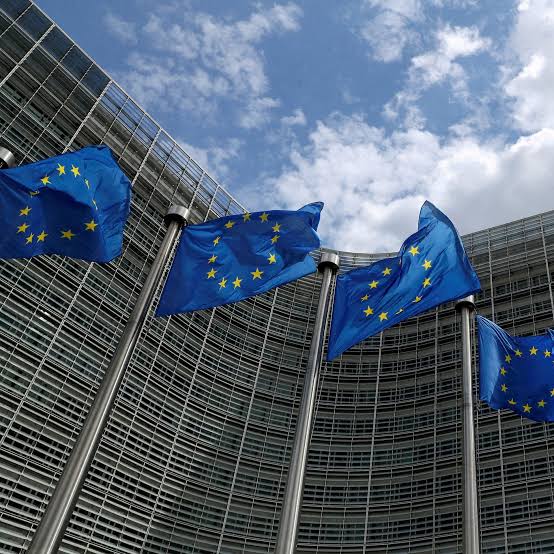
For years, the Taliban regime has attempted to present itself as a responsible authority capable of stabilizing Afghanistan and engaging with the world. It has repeatedly claimed that Afghan soil is no longer being used against other countries. Yet the latest remarks by UK Special Representative for Afghanistan Richard Lindsay and EU Special Envoy Gilles Bertrand, in separate interviews with AMU TV, reveal a very different reality. Europe is no longer treating the terrorist threat from Afghanistan as a distant regional complaint. It is increasingly recognizing that the Taliban’s failure to dismantle terrorist sanctuaries has become a direct concern for regional and international security.
The most serious concern is the continued presence and operational freedom of Tehreek-e-Taliban Pakistan. The TTP is not merely a scattered militant faction hiding in remote terrain. It is an organized terrorist network that benefits from safe havens, training facilities, access to weapons, financial support and operational networks inside Afghanistan. Under Taliban rule, these structures have not been dismantled. Instead, they have become more entrenched, allowing the TTP to plan, regroup and launch cross-border attacks against Pakistan.
This is precisely why the concern voiced by European officials matters: it validates what Pakistan has consistently warned since the Taliban’s return to power in August 2021
The Taliban’s position is built on denial. Kabul insists that it does not allow any group to use Afghan territory against another country. But denial cannot substitute for verifiable action. If the Taliban can impose sweeping restrictions on women, silence media outlets, disarm opponents and enforce its authority across Afghan society, then it cannot credibly claim helplessness when it comes to terrorist groups operating from its soil. The issue is not simply lack of capacity; it is political will. The Taliban has shown capacity where it has ideological or political motivation. Its reluctance to act decisively against TTP exposes a dangerous double standard.
Europe’s concern is also shaped by bitter historical memory. Afghanistan’s instability has never remained confined within its borders. The world learned this lesson before 2001, when terrorist sanctuaries in Afghanistan helped create conditions for global violence. Today’s threat may have different names, networks and technologies, but the underlying problem is familiar: a regime seeking international engagement while allowing extremist groups to operate in its territory. No responsible international actor can ignore this contradiction.
The Taliban wants recognition, diplomatic access, economic engagement and reduced isolation. But recognition cannot be treated as a reward for symbolic meetings or tactical promises. It must be tied to concrete obligations. One of the most basic obligations of any authority claiming to govern a state is to prevent its territory from becoming a platform for terrorism.
If the Taliban fails this test, it cannot expect the international community to treat it as a normal government. Legitimacy is not declared; it is earned through conduct
For Pakistan, the issue is existential. TTP attacks have killed soldiers, police personnel and civilians, undermining security in border regions and beyond. Pakistan has repeatedly asked the Afghan Taliban to act against these groups, but the results remain insufficient. Islamabad’s position should not be misrepresented as a bilateral grievance. It reflects a universal principle: no state can accept armed groups using a neighboring country’s territory to wage violence against its people. The same principle Europe would apply to its own borders must also apply to South Asia.
However, Europe must move beyond expressions of concern. Diplomatic language is useful only when it leads to policy discipline. Engagement with the Taliban may be necessary for humanitarian access, consular matters, migration issues and crisis management, but engagement must not become normalization without conditions. The EU and UK should insist on measurable counterterrorism benchmarks: dismantling of TTP sanctuaries, disruption of financing networks, seizure of weapons stockpiles, prevention of recruitment, and verifiable action against commanders operating from Afghan territory. Without verification, Taliban assurances are merely political theatre.
There is also a moral dimension. Terrorist sanctuaries do not only endanger Pakistan or Europe; they endanger Afghanistan itself. They invite cross-border escalation, deepen Afghanistan’s isolation, obstruct economic recovery and expose ordinary Afghans to the consequences of the Taliban’s reckless security policy.
A regime that shelters or tolerates armed networks cannot claim to defend Afghan sovereignty. In reality, it weakens sovereignty by turning Afghanistan into a contested security space
The international community must also avoid the mistake of separating terrorism from the Taliban’s wider governance crisis. A regime that excludes women from education and public life, suppresses dissent, marginalizes communities and governs through coercion is unlikely to become a reliable counterterrorism partner. Extremism is not only a security problem; it is also a political environment. When a state structure is built on ideological rigidity and exclusion, terrorist groups find space to survive, recruit and operate.
Europe’s growing concern should therefore be seen as a warning. The Taliban cannot demand global legitimacy while allowing Afghanistan to function as a sanctuary for groups that threaten its neighbors. The UK and EU have now publicly acknowledged the seriousness of the threat.
The next step must be coordinated pressure, regional intelligence cooperation and a clear refusal to normalize the Taliban regime until it meets verifiable counterterrorism obligations
The lesson is clear: terrorist sanctuaries do not disappear through diplomatic optimism. They disappear when regimes are compelled to make hard choices. The Taliban now faces such a choice. It can act as a responsible authority by dismantling terrorist networks, or it can continue protecting them and remain isolated. Europe’s concern is justified, but concern alone will not stop terrorism. Only firm, coordinated and principled action will.

