





When Rivers Become Political Weapons
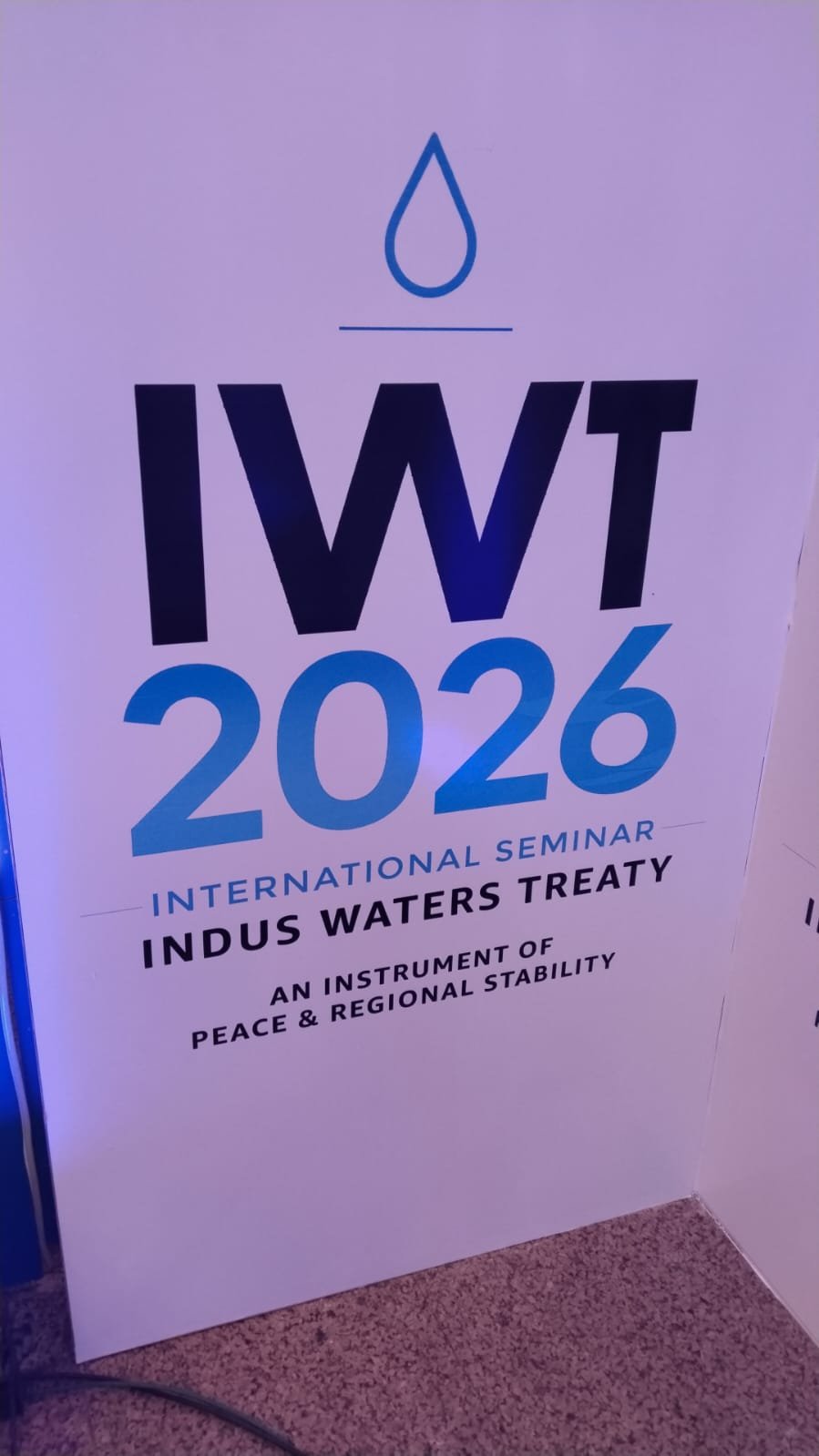
The Indus Waters Treaty has once again become a test case for law, morality and regional responsibility in South Asia. At a time when climate stress, population pressures and agricultural insecurity are already placing enormous burdens on Pakistan, India’s threats and actions regarding shared waters have created a deeply dangerous situation. The International Seminar on the Indus Waters Treaty at Jinnah Convention Centre, Islamabad, brought together political leaders, legal experts and international voices who presented one clear message: the treaty is not a favour from India to Pakistan, nor is it a temporary political arrangement. It is a binding international obligation, a cornerstone of regional stability and a lifeline for millions of Pakistanis.
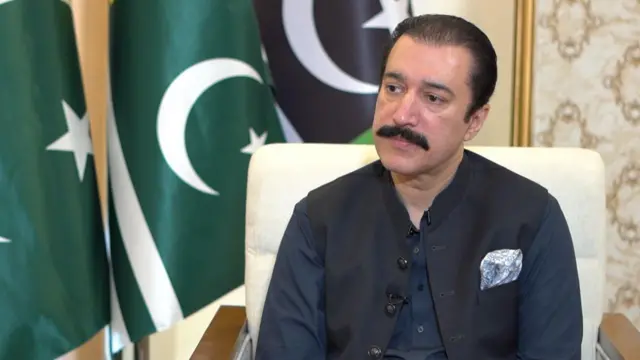
Khurram Dastgir’s remarks at the seminar captured the seriousness of the moment. His statement that India has acted upon its water-related threats should alarm not only Pakistan but the wider international community. Reported references to temporary restrictions on Chenab flows as punitive and coercive point to the weaponisation of water, which is unacceptable under any civilized legal order. Water cannot be treated like a diplomatic bargaining chip. It cannot be switched, restricted or threatened in response to political disputes.
In a region where rivers sustain crops, villages, livestock and livelihoods, any attempt to manipulate water flows carries consequences far beyond politics
The reference to Amit Shah’s statement about diverting water to Rajasthan further exposes the strategic intent behind India’s posture. Such statements are not harmless slogans for domestic audiences. They communicate a policy mindset that seeks to turn Pakistan’s legitimate water share into a pressure point. This is precisely why the Indus Waters Treaty was created: to prevent either side from using geography as a weapon. India, being the upper riparian state on key river systems, has a special responsibility not to exploit its position. When that responsibility is ignored, it creates distrust, undermines treaty stability and pushes the region toward confrontation.
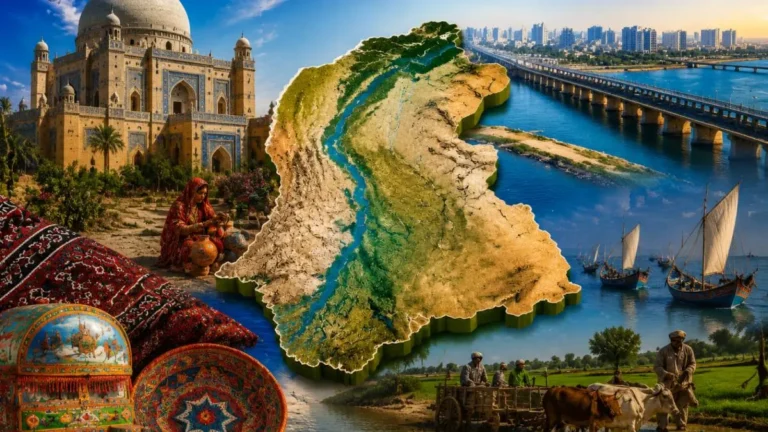
Pakistan’s case is stronger because it is rooted in international law rather than political rhetoric. The right to water is connected to the right to life, food, health and human dignity. For Pakistan, this is not an abstract legal argument. The Indus River system supports agriculture, sustains rural economies and feeds millions. To threaten Pakistan’s water share is to threaten the daily survival of ordinary people. It is to place farmers, workers, children and entire communities at risk. No state can claim moral or legal justification for actions that endanger civilian livelihoods on such a scale.
The contribution of Russian expert Dr Roxolana Zigon was particularly important because it placed the Indus Waters Treaty in its proper international context. She described it as a globally recognized, World Bank-brokered framework that has preserved cooperation despite decades of India-Pakistan tension. This durability is remarkable. The two countries have fought wars, faced crises and experienced long diplomatic breakdowns, yet the treaty continued to provide a structured mechanism for managing water.
Its river allocation formula, Permanent Indus Commission and dispute resolution process are not symbolic features. They are practical safeguards against escalation
The treaty’s survival also proves that cooperation is possible even between adversarial states when rules are respected. However, rules only matter when both parties honour them. Dr Zigon’s warning that unilateral actions and violations of international law undermine India’s credibility in multilateral forums deserves serious attention. India wants to be seen as a responsible global actor, yet its conduct on the Indus Waters Treaty raises uncomfortable questions. A state cannot demand respect for international norms in one forum while disregarding binding treaty obligations in another. If India weakens the treaty, it damages not only Pakistan’s interests but also its own diplomatic reputation.
Federal Information Minister Atta Tarar’s remarks reflected the resolve Pakistan must maintain. His assertion that Pakistan will pursue all legal and diplomatic avenues to protect its water rights is the correct course. Pakistan does not need reckless rhetoric; it needs disciplined legal strategy, diplomatic persistence and international engagement. The issue must be taken to every relevant platform because the stakes are national, regional and humanitarian. His description of the right to water as sacred was not exaggeration.
For millions of Pakistanis dependent on agriculture and the Indus River, water is the basis of existence. It is bread, employment, education, health and social stability
Mehr Ali Shah’s comments on the Court of Arbitration added legal weight to Pakistan’s position. The court has strengthened the treaty by reinforcing its dispute resolution mechanism and legal certainty. Most importantly, it ruled that India’s non-participation and “abeyance” position do not affect its jurisdiction. This principle is vital. A country cannot avoid accountability by refusing to sit at the table. Nor can it neutralize a legal process by inventing political excuses. The court’s awards remain final and binding, and India remains obligated to allow the waters of the western rivers to flow except under the treaty’s narrowly defined exceptions.
Ahmer Bilal Sufi’s intervention further dismantled India’s so-called “abeyance” argument. International law does not recognize this vague category as a lawful method to escape treaty obligations. Under established legal frameworks, states may invoke suspension, termination or treaty exceptions only in specific circumstances and through recognized procedures. They cannot create an undefined status that leaves obligations hanging in uncertainty. The Vienna Convention on the Law of Treaties does not allow such legal improvisation.
India’s attempt to place the treaty “in abeyance” is therefore not a legal position; it is a political manoeuvre dressed in legal language
Yet the most powerful reminder came from Musadik Malik’s account of farmer Iqbal Solangi. His life was repeatedly shattered by the floods of 2010, 2012 and 2022. His home was destroyed, his livestock lost, his children’s education disrupted and his livelihood erased. Eventually, a family tradition of farming was replaced by labour work. This story matters because it brings the debate down from legal chambers and diplomatic halls to the fields and homes where water insecurity is felt most painfully. Iqbal Solangi is not an exception. He represents countless Pakistanis whose futures are shaped by floods, droughts, climate shocks and water governance failures.
The Indus Waters Treaty must therefore be defended as a national red line. Pakistan must remain united, legally prepared and diplomatically active. The world must also recognize that the issue is not merely a bilateral quarrel between two rivals. It is about treaty sanctity, human rights, regional peace and the principle that water must never be weaponised. If India is allowed to weaken a globally respected water-sharing framework, it will create a dangerous precedent for all transboundary river systems. Pakistan’s position is clear: the Indus is not a tool of coercion. It is a river of life, and its protection is a matter of national survival.

