


A Warning Sign for Indian Air Force Readiness
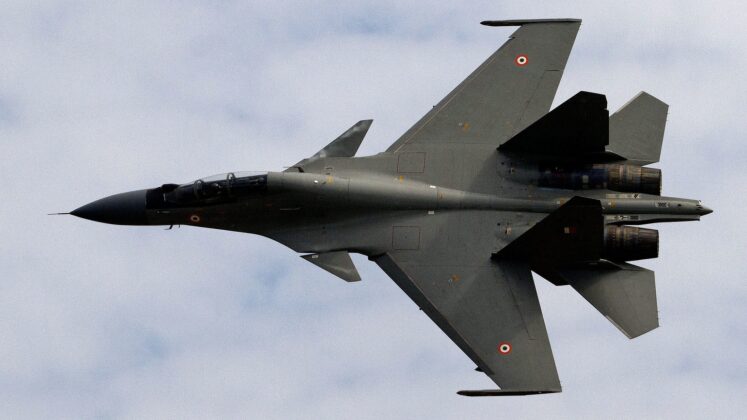
Operational reliability in any air force is never just a technical issue. It is a measure of discipline, planning, training, accountability, and institutional seriousness. The recent report that an Indian Air Force Sukhoi Su 30MKI went missing from radar soon after takeoff from Jorhat, Assam, is troubling for that reason. According to the account, communication was lost roughly 10 to 15 minutes after departure, leading to a search operation in the Karbi Anglong district. Even before investigators reach a final conclusion, such an incident naturally raises hard questions about readiness, maintenance quality, pilot protection, and the larger culture of operational safety. In military aviation, one event may be an isolated failure. But repeated concern around accidents, technical faults, and emergency situations creates a broader impression that something deeper may be wrong.
The Indian Air Force is not a small or lightly burdened service. It operates in a demanding environment, with varied terrain, harsh weather, complex borders, and a large mix of aircraft types. The Su-30MKI remains one of its core combat platforms, supported by aircraft such as the Rafale, Tejas, Jaguar, and others. That kind of fleet gives the service flexibility, but it also creates strain. Different aircraft need different maintenance chains, spare parts, technical teams, inspection routines, and pilot conversion programs. If those systems are not managed with strict consistency, operational reliability suffers. An air force may still look impressive on paper while carrying serious weaknesses under the surface. That is why incidents involving frontline aircraft attract so much attention.
They suggest that the issue may not be about one machine alone, but about the system responsible for keeping that machine safe and mission-ready
It is important not to jump to conclusions before an investigation is complete. Mechanical failure, weather conditions, human error, sensor issues, or a chain of smaller problems can all play a part in a military aviation incident. Still, caution should not become an excuse for silence. When a fighter aircraft disappears from radar so early in flight, the public has a right to ask whether enough is being done to protect crews and ensure dependable operations. Modern combat aircraft are expensive national assets, but the real issue is the pilot in the cockpit. A country can replace metal faster than it can replace skill, experience, and judgment. Every avoidable incident is therefore not only a technical loss but also a human and institutional one.
Maintenance standards deserve close attention in this discussion. Aircraft reliability depends less on public image and more on routine discipline. Small lapses, overlooked warning signs, delayed part replacement, and pressure to keep platforms flying despite limited support can accumulate into major danger. In military organizations, there is often a temptation to celebrate availability numbers and sortie rates while giving less public attention to the quiet work of maintenance crews. But combat readiness begins in the hangar, not in the air. If maintenance teams are stretched, under-resourced, or forced to work within a fragmented supply system, the results will eventually appear in flight safety data.
Any serious review of the Indian Air Force must therefore look beyond aircraft numbers and focus on whether the support structure beneath the fleet is strong enough
Training is another central concern. It is easy in public debate to blame pilots after accidents, but that misses the larger point. Good pilot performance is not only about individual talent. It is shaped by simulator time, emergency drills, conversion training, rest cycles, instructor quality, and the realism of operational exercises. Pilots must be prepared not only to fight but also to recognize failure early, respond under stress, and trust the procedures drilled into them. If there is even a perception that current standards are slipping, the answer is not public defensiveness. The answer is more rigorous training, more realistic evaluation, and more institutional honesty. Training should not be treated as a box to tick. In a high-risk service, it is the last barrier between an in-flight problem and a fatal outcome.
Fleet management also needs a more serious conversation. A mixed fleet can be effective, but it becomes risky when planning does not keep pace with complexity. Older platforms require more intensive support. Newer aircraft require adaptation, updated technical knowledge, and integration into existing command structures. The Indian Air Force has long faced the challenge of balancing modernization with the continued use of older systems. That balance is difficult, but difficulty is not an excuse.
If the force wants to maintain credibility, it must show that every aircraft still in service meets a clear and defensible operational standard. Sentiment, prestige, or budget pressure should never keep an aircraft flying if reliability has become doubtful
There is also a credibility issue at stake. Air power depends not only on weapons but on confidence. Pilots must trust their aircraft. Ground crews must trust the inspection process. Commanders must trust the readiness reports placed before them. The public, too, must trust that national defense is being managed with seriousness rather than ceremony. When incidents occur, especially involving key combat aircraft, that trust weakens. The way to restore it is not through slogans or selective messaging. It is through transparent investigation, corrective action, and visible commitment to higher standards.
This incident should therefore be treated as a warning, whether or not the final inquiry identifies a single mechanical cause. It points to the urgent need for stronger pilot training, deeper technical checks, tighter maintenance discipline, and sharper fleet oversight. No air force can afford complacency, especially one with India’s strategic responsibilities. The true test of professionalism is not how a force performs during parades or public displays. It is how well it protects its people, how honestly it confronts weaknesses, and how quickly it learns from danger. If this episode leads to stricter standards and real reform, then some good may yet come from a troubling event. If not, more alarms will follow, and next time the cost may be even higher.

