


Will the Freedom Flotilla Shift Global Opinion on Gaza
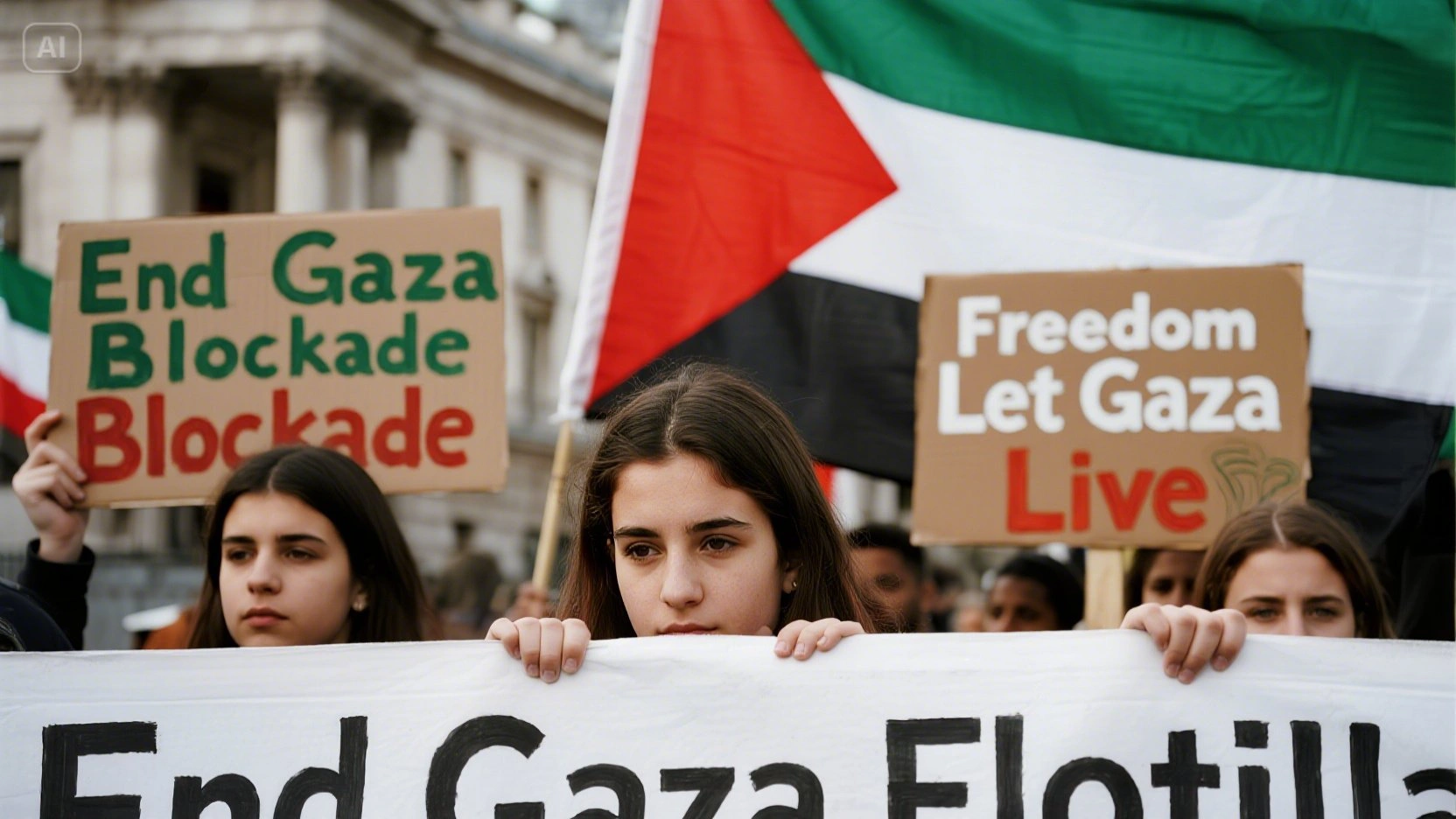
Will the Freedom Flotilla Shift Global Opinion on Gaza
The Freedom Flotilla is a group of international activists and humanitarian organizations. Their goal is to end the Israeli blockade of Gaza. The focus of the world is on one of the longest-running humanitarian crises of modern history. The flotilla is a literal and symbolic defiance of Israel’s 17-year blockade of Gaza. Still, the question arises whether or not this bold step will alter the opinion of international leaders and policy towards Gaza or merely uphold hardened narratives?
The closure on Gaza imposed by Israel and buttressed in part by Egypt has made the strip the kind of “open-air prison” that human rights groups frequently mention. Last week, the United Nations Office for the Coordination of Humanitarian Affairs (OCHA) released a report. It says more than 80% of Gaza’s residents rely on foreign aid, and virtually half of them have no access to clean water or reliable electricity. The blockage of food, medicine, and water is inhuman, and we don’t even need to say it loud. It’s 2025 and people of Gaza are suffering from man-made stage 5 starvation.
The Freedom Flotilla Coalition is a group of European, North American, African, and Asian NGOs and pro-Palestinian activists. The group maintains that humanitarian aid is not enough—lifting the blockade is. “We are not bringing charity”, one of the activists said. “We are bringing solidarity, resistance, and political will,” said another activist.
This mission is not novel. In 2010, the Mavi Marmara tragedy occurred when Israeli commandos boarded a Turkish aid ship bound for Gaza and killed ten activists, causing an international uproar. It also severely strained Israel-Turkey relations. The Flotilla has taken special measures to prevent violent clashes, but still, the geopolitical tension is high. Israel has already warned that it views the flotilla as an infringement of its security and maritime sovereignty—and we already know what happens.
Yet what distinguishes this attempt from previous ones is the shifting world environment. Following the 2023–2024 Gaza war, which killed more than 35,000 Palestinians, says Gaza’s Ministry of Health, international public opinion, especially in the Global South and among younger demographics in the West, became increasingly pro-Palestine. Recent polls by YouGov in 2025 show that there has been a dramatic change, with almost 60% of Europeans and 52% of Americans against the blockade and demanding open humanitarian access.
The flotilla also makes it more difficult for Arab and European governments to make diplomatic calculations. Although Arab governments have normalized ties with Israel under the Abraham Accords, their populations are still massively pro-Palestinian. European governments, too, having for so long walked a careful tightrope, now have to contend with increasing domestic pressure to confront more directly what many perceive as Israeli impunity.
Geopolitically, the impact of the flotilla could be less about policy and more about control of narrative. Israel will naturally claim that it is being subjected to yet another politically driven campaign that does not take into account the complicated reality on the ground. For Palestinians and much of the international community supporting Palestine, the flotilla is a gesture of rare international civil courage.
The Freedom Flotilla is already shaping the global debate. It shakes the normalization of Gaza’s plight and reminds us that the blockade is not only a security issue that we all are aware of but also a humanitarian and moral crisis. Whether it results in policy reforms or not, the flotilla has managed to push the world to face an awkward question: for how long will the collective punishment of a people be allowed under the banner of security?