


How Afghanistan Rewired Global Trafficking
The 2025 Turkish Drug Report reads like a warning flare. It shows how fast the drug economy is moving away from familiar, plant-based narcotics and toward a mixed market where synthetics and New Psychoactive Substances spread risk, raise potency, and make enforcement harder. Türkiye sits in the middle of this shift. It is still a key bridge on the Balkan Route for heroin, but it is also turning into a major transit corridor for cocaine and methamphetamine moving from Latin America and Asia into Europe. That combination matters because it links old supply chains to new ones, and it gives criminal networks options when one route, one crop, or one chemical gets squeezed.
What stands out is the report’s blunt framing of drugs as a global security issue, not just a policing problem. That is not drama; it is the logic of modern trafficking. Synthetic-dominated markets cut production costs, reduce reliance on weather and harvest cycles, and shrink the physical footprint of what needs to be moved. A small load can carry enormous value and harm.
That favors networks that can blend logistics, corruption, money laundering, and platform-driven retail. Borders still matter, but they do not stop a business that can switch substances, routes, and methods faster than states can update tactics
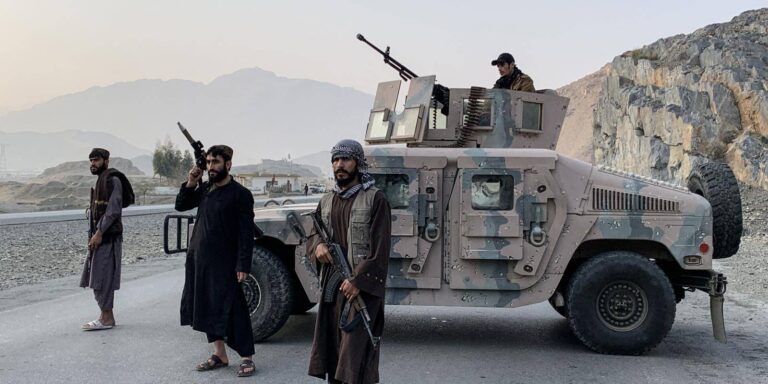
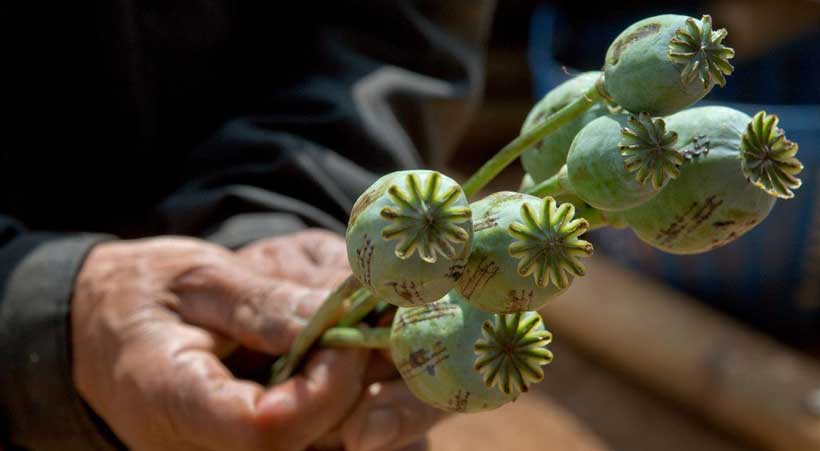
Afghanistan sits at the heart of this story, and not in a simple way. The report treats Afghanistan as a primary global source of illicit opiates, even after the Taliban’s April 2022 decree banning poppy cultivation and all narcotics manufacturing and trade. The ban’s impact looks dramatic on paper, with a 95 percent drop in opium production in 2023, and Myanmar briefly overtaking Afghanistan as the top producer. Yet the rebound in 2024, with a 19 percent rise in poppy cultivation, points to a deeper truth. This is not a clean break from the past. It looks more like a managed system that tightens and loosens depending on market conditions and political needs.
If you take the ban at face value, the story is about enforcement success followed by slippage. I think that reading is too naive. The smarter interpretation is market management. Afghanistan carried a long-term glut, built from years of record cultivation and the infrastructure that comes with it: labs, storage, brokers, routes, and cross-border logistics. When the Taliban took power in 2021, that system did not vanish; it waited. A poppy ban, paired with a grace period to clear stocks, can function as a lever, not a moral pivot. Restrict supply, raise prices, and shift power from farmers to whoever controls stockpiles and distribution. The price figures make this hard to ignore: dry opium reportedly rose to about 780 dollars in 2024 from about 110 dollars in 2022. That is not just a side effect; it is the whole incentive.
This is why the label “narco state” fits in a more precise sense than usual. Drugs are not simply tolerated crime on the margins. They operate like an instrument of economic survival and strategic leverage. Stockpiles cushion shocks and let traffickers ride out production drops for years, possibly until 2026, while still feeding downstream markets. Selective enforcement then becomes a tool. You crack down in visible places where it signals control, and you avoid dismantling the less visible parts that actually move the product: processing, storage hubs, and corridors.
The result is a temporary slowdown, not a collapse, and the network emerges with higher margins and stronger bargaining power
The second half of the Afghan story is even more alarming: methamphetamine. Afghanistan is no longer only an opiate supplier; it is becoming a significant source of global meth production, using ephedra to extract ephedrine for synthetic manufacturing. The key point is that the poppy ban does not seem to have reduced this trade. Seizure increases reported in neighboring states, and as far away as Europe and East Africa, fit a pattern of diversification, not substitution by accident. Synthetics offer everything a trafficking economy wants: scalability, portability, storage ease, and production that can be moved and hidden. They also increase public harm because purity and potency can spike, and new compounds can appear faster than health systems can respond.
For Türkiye and Europe, the implications are harsh. When a transit state becomes a multi-drug corridor, pressure rises on every weak point at once: ports, land borders, customs, financial systems, and prisons. A purely tactical response, more raids, more seizures, more arrests, will not keep up if Afghanistan can influence supply through stockpile release, controlled cultivation, and synthetic expansion. The focus has to widen. Target precursor flows, not only finished drugs. Hit money, not just shipments. Build intelligence sharing that follows networks across jurisdictions. Treat prison drug markets and community treatment as security infrastructure, because demand and addiction are what make the business sustainable. If Afghanistan is managing scarcity and diversifying supply, then the only effective counter is to reduce the value of that leverage by shrinking demand, disrupting finance, and closing the chemical pipeline that powers synthetics.