

How Pakistan Can Make Reform Stick in 2026

Pakistan’s economy has earned a rare thing over the past two years, breathing room. In 2023, default talk was not political theater; it was a real risk shaped by thin reserves, high inflation, and a credibility gap with lenders and investors. By 2025, the picture looks different. Foreign exchange reserves climbed to about 21.09 billion dollars, inflation cooled to around 4 percent, and markets began to price Pakistan as a country that can finish what it starts. The shift matters because confidence is not a mood; it is a financing condition. When confidence improves, rollover risk falls, import planning gets easier, and private capital stops waiting on the sidelines.
The hard truth is that this stabilization did not come from slogans. It came from policy choices that were painful and often unpopular. Pakistan’s engagement with the International Monetary Fund became the anchor. The 2023 Stand By Arrangement, completed in April 2024, created a bridge away from the cliff edge. The current 37 month Extended Fund Facility and the 28 month Resilience and Sustainability Facility have pushed deeper reforms in taxes, energy pricing, public financial management, and governance.
The December 2025 review and the 1.2 billion dollar tranche did more than add cash; it signaled that Pakistan can stay on program. That signal is what investors watch, because it reduces the fear of sudden reversals
Disinflation has been the most visible relief for citizens, and it is also a test of discipline. Falling inflation restores purchasing power, but it can vanish quickly if fiscal and monetary policy drift apart. The State Bank’s move to bring the policy rate down, including the December 2025 cut to 10.5 percent, points to a more stable macro backdrop. Yet the benefit to households will only last if supply-side constraints are tackled, especially in food and energy. Lower inflation is not the finish line. It is the space needed to fix the plumbing of the economy without lighting a fire under prices.
External stability has improved in ways that deserve attention. State Bank reserves rising from 2.9 billion dollars to 15.9 billion dollars is not a cosmetic gain; it is a buffer that changes negotiating power and reduces panic. Import cover around 3.2 months is still not comfortable for a large, import-dependent economy, but it is a meaningful move away from crisis mode. The point of reserves is not to look impressive; it is to prevent the next shock from turning into another emergency program. For 2026, this buffer should be protected like a strategic asset, not treated as spare change for short-term comfort.
The more interesting story is whether Pakistan can convert stabilization into growth that does not collapse at the first headwind. That will require a shift from firefighting to building engines. Mining is one of the clearest candidates. With mineral reserves estimated near 6 trillion dollars and momentum at Reko Diq under Barrick Gold, the sector is being framed as a future export and revenue pillar. Projections of mining revenues rising from about 2 billion dollars annually to 6 to 8 billion dollars by 2030 are ambitious, but not a fantasy if security, contracts, and infrastructure hold. The Pakistan Minerals Investment Forum 2025 helped, yet forums do not replace institutions.
Investors want predictable permitting, clear provincial and federal roles, and transparent benefit sharing with local communities. Without that, Pakistan risks repeating the resource curse in a new form
The blue economy agenda is another route to diversification, and it fits Pakistan’s geography. A coastline of about 1,000 kilometers and a large maritime zone can support fisheries, aquaculture, ports, coastal tourism, and logistics. The Blue Economy Policy, aiming for up to 100 billion dollars in value by 2047, is a long horizon, but long horizons are useful when they force continuity across governments. The National Fisheries and Aquaculture Policy for 2025 to 2035 and the National Maritime Policy 2025 can work if regulation is credible and enforcement is real. Otherwise, overfishing, informal supply chains, and weak cold storage will keep the sector small and low value. The prize here is not just exports. It is jobs in coastal regions where options are limited.
Privatization is where reform credibility is won or lost, and the sale of a 75 percent stake in Pakistan International Airlines for 135 billion rupees on 23 December 2025 was a major signal. A live televised auction is not an economic reform by itself, but it helps on two fronts. It reduces fiscal bleeding from chronic losses, and it shows that the state can step back from running commercial businesses. If operational revival begins in April 2026 as planned, it will become a case study for other state-owned enterprises. If it turns into a political tug of war, it will become a warning. The difference will come down to governance, labor transition plans, and regulations that protect competition rather than protecting incumbents.
Pakistan’s digital economy is already doing what many traditional sectors cannot, earning foreign exchange without massive imports. IT exports reaching 3.8 billion dollars in 2025, with about 20 percent annual growth, is a solid base. The AI Policy 2025 and the Digital Sector Roadmap for 2025 to 2035 suggest the state now sees tech as more than a slogan.
Still, the constraints are plain: patchy power, weak broadband in many districts, limited risk capital, and education gaps that start early. Tech can scale quickly, but only if the pipeline of skills keeps widening
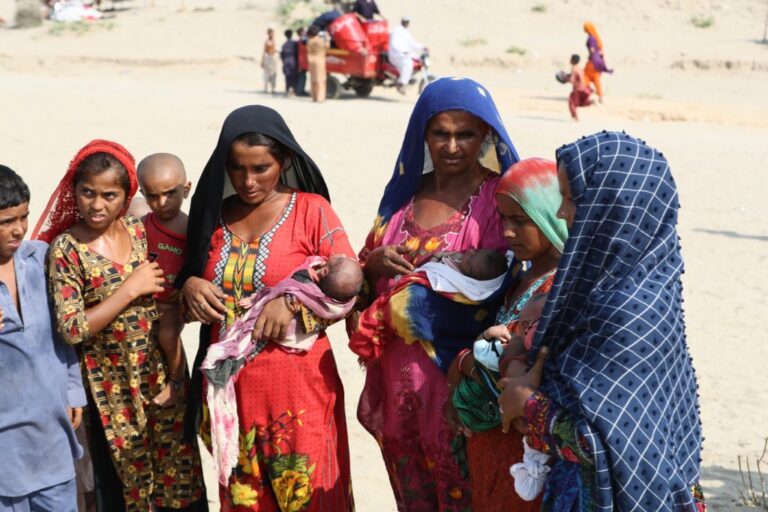
This is where the education agenda stops being a social issue and becomes the center of an economic strategy. The drive to tackle 22 to 26 million out-of-school children under the Education Emergency 2024 and the National Education Policy 2025 is not charity; it is macro resilience. Enrolling 10 million children by 2030 through the Out of School Children Fund and the Federal Non-Formal Education Policy 2025 can change labor productivity and social stability over time. The focus on girls, who make up 52 percent of out-of-school children, is especially important because female education raises household income, health outcomes, and workforce participation. Programs like Benazir Taleemi Wazaif, with 117 billion rupees disbursed in 2024 to support 14.8 million children, and provincial initiatives like PASSD across 50 districts, are economic policy wearing a social label. Rehabilitating schools after floods, including the World Bank-supported 200-million-dollar Punjab project restoring 500 facilities, is also a growth policy because it prevents human capital loss from turning permanent.
My view is that 2026 can be the start of a sustainable growth story, but only if Pakistan treats reform as a continuous system, not a series of deals. IMF-supported measures created stability, yet stability will evaporate if politics pushes for shortcuts, if energy and tax reforms stall, or if governance slips back into exemptions and discretion. The upside is real, mining, maritime trade, aviation reform, and tech exports can diversify the economy, while education reforms can build the workforce those sectors need. The risk is also real that Pakistan declares victory too early, then spends the buffer, weakens the rules, and returns to the same cycle. Resilience is not proven in the crisis year. It is proven in the first calm year, when discipline feels optional.

