



India’s First Overseas Defense Factory in Morocco
India’s First Overseas Defense Factory in Morocco
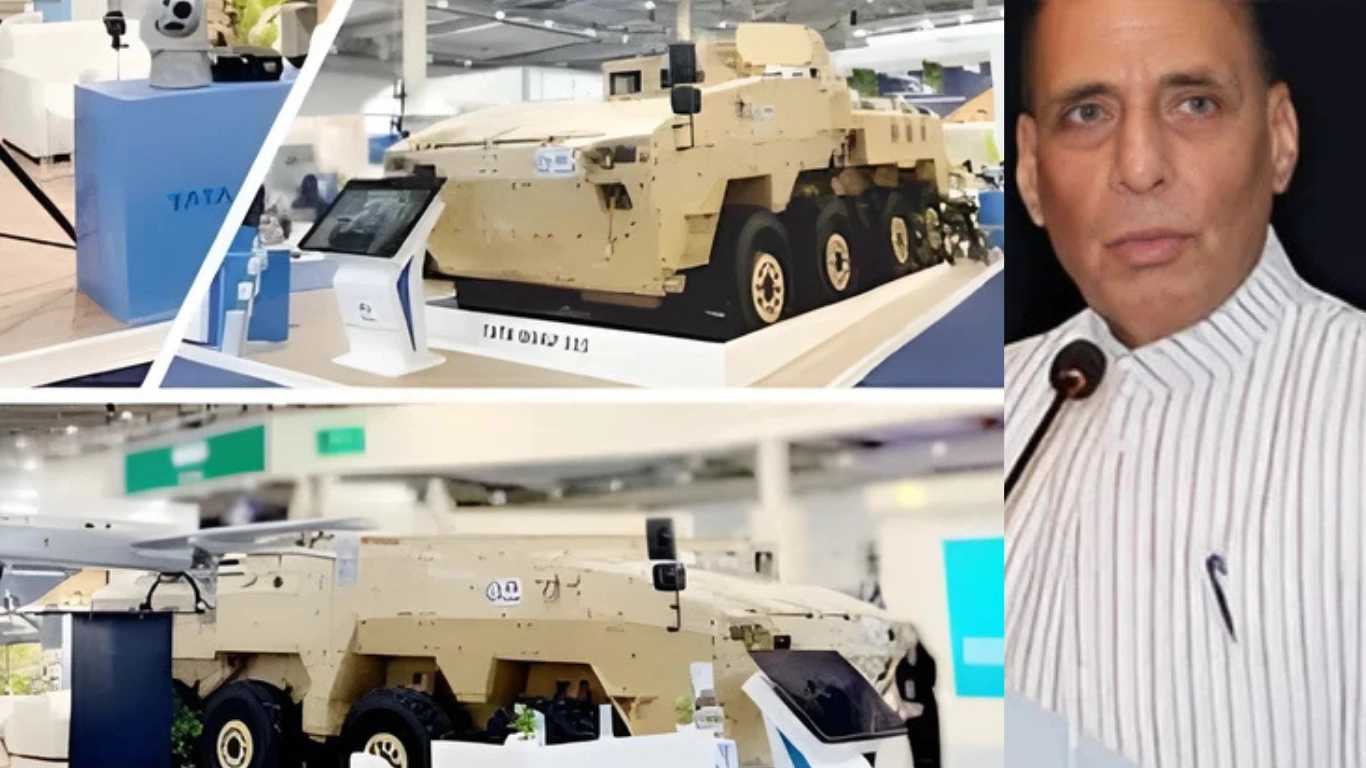
India is about to take a big step in its defense diplomacy. Defense Minister Rajnath Singh will be in Morocco from September 21 to 23, and the highlight of his trip would be the opening of India’s first defense manufacturing facility abroad. The new plant, located in Casablanca, is being set up by Tata Advanced Systems Ltd in partnership with Morocco’s Royal Armed Forces.
The factory will start out by assembling Wheeled Armored Platform 8×8 combat vehicles, known in short as WhAPs, for Moroccan forces. These vehicles were originally developed in India, and they have become a key symbol of the country’s attempt to move from being one of the world’s biggest arms importers to becoming an exporter. Thus, the idea is that once the facility is up and running, production can be scaled up for customers across Africa.
Why Morocco matters
Morocco may not be the first country that comes to mind when you think about India’s defense ties, but it has quietly become a very important partner. It sits at the crossroads of West and North Africa, and serves as a bridge to Europe as well. For India, that geography is valuable. If India wants to expand into the African market, Morocco is a good place to start.
There is already history here. Over the past four years, the Kanpur-based defense firm MKU has supplied Moroccan forces with gear like night-vision goggles and protective equipment.
Additionally, Morocco also signed a deal with the Tata Group for new military trucks last year. So the Casablanca plant is really the next logical step, building on trust that has already been established.

A bigger Africa strategy
This is not just about Morocco. India has been steadily deepening its defense relationships across Africa through training programs, joint exercises, and regular dialogues. There are several platforms now dedicated to this aim. They include the India–Africa Defense Dialogue, the Defense Ministers’ Conclave, and most recently the AIKEYME naval exercise that took place in April.
The timing of Singh’s visit is important too. The next India Africa Forum Summit is coming up next year, and New Delhi wants to show it is serious about long-term security ties. Besides, having a functioning factory on the continent before that summit is a powerful signal.
Looking over the shoulder at China
There is also a strategic angle. Reports in Moroccan media have pointed out that China has been very active in Africa’s defense space. Beijing has a military base in Djibouti and sells low-cost weapons to more than 20 African nations. Thus, India cannot match China in sheer scale, but by focusing on partnerships and local manufacturing, it hopes to offer African countries another option.
For Morocco, this means getting access to advanced equipment and building its own capacity in defense industry with Indian help. For India, it is about showing that its “Make in India for the World” slogan is not just a rhetoric.
What’s at stake for India
The move fits neatly into India’s long-term ambition to expand its defense industry outward. For decades, India has been one of the top arms importers globally, relying on Russia, France, Israel, and the United States for its supplies. Over the last ten years, though, there’s been a push to change that balance.
Moreover, companies like Tata Advanced Systems are at the front of this shift. By setting up shop in Morocco, they are trying to prove that Indian defense products can compete internationally, and adapt to foreign markets. If the Casablanca venture works, it might become a model for similar projects in other regions.

What Singh’s visit could cover
While the factory launch will get most of the attention, Singh’s agenda in Morocco is not likely to stop there. Bilateral talks are expected to touch on counterterrorism, maritime security, and even emerging areas like drone technology and cyber defense. These are topics that matter to both countries. Besides, Morocco faces security challenges in the Sahel region, and India has been working to expand its presence in the Indian Ocean and beyond.
The conversations will probably also look at ways to bring more African partners into India’s orbit at a time when competition in the region is heating up.
A turning point
When Rajnath Singh cuts the ribbon in Casablanca, it will not just be about a new factory floor. The moment will mark India’s arrival as a defense producer with global reach. Hence, it sends a message that New Delhi is ready to be more than a buyer of weapons, and that it can also help others build capacity.
For Morocco, the partnership is a chance to modernize its armed forces and strengthen its role as a regional hub. For India, this is a chance to test its “Make in India for the World” approach on a scale, it has not tried before.

This move will not change the balance of power in Africa overnight, and India will still face stiff competition, especially from China. But it is a step that shows intent, and in diplomacy, intent matters as much as capability.
Furthermore, as the India–Africa Forum Summit approaches, Singh’s visit and the opening of the Casablanca plant will stand out as a clear signal. So it shows India wants to be seen as a reliable partner for Africa’s security and development, not just a distant friend.
Disclaimer: The views and opinions expressed in this article are exclusively those of the author and do not reflect the official stance, policies, or perspectives of the Platform.

