



Javed Hashmi’s Gaza Claim
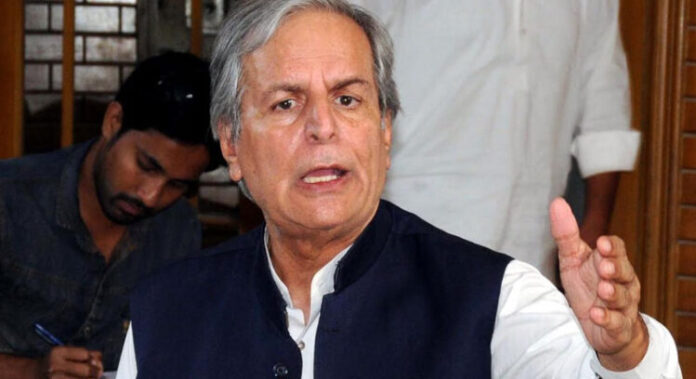
There is a lazy excuse people use when a public figure posts nonsense online. They say, “He’s old,” or “He’s not well,” as if that ends the conversation. Age and illness can explain tone, confusion, and even mood. They do not explain a full-blown fantasy presented as fact, pushed with confidence, and served to a crowd that is already thirsty for outrage. When someone with a public record and a public audience spreads a lie about Gaza, about soldiers, about casualties, and then wraps it in moral drama, this stops being a private slip. It becomes a public act with public consequences.
The bigger problem is not one tweet. It is the system that makes such tweets powerful. Social media is designed to reward speed, shock, and certainty. It punishes doubt and careful language. That is why the most reckless claims travel faster than the most accurate ones. A calm correction does not hit the same nerves as a wild accusation. In Pakistan, where politics is already emotional, and trust is thin, this design becomes a weapon. People do not ask, “Is this true?” They ask, “Does this match what I already believe?” If it matches, they share it.
If it does not, they call it propaganda. That is how we end up with adults who act like loud teenagers and teenagers who learn to copy them
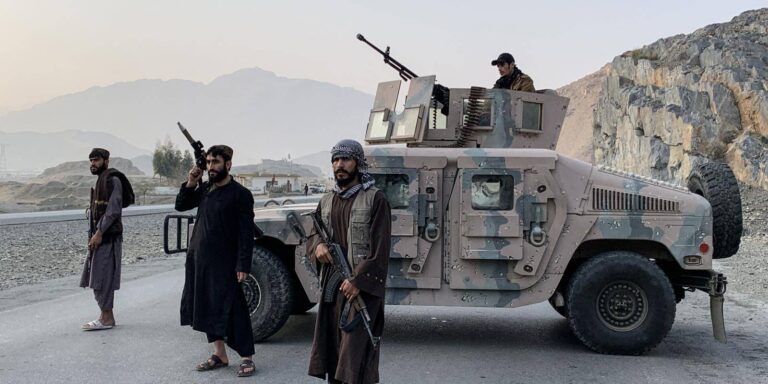
The claim that Pakistani soldiers are deployed in Gaza is a good test of basic sense. If it were true, there would be diplomatic fallout, international headlines, official statements, and a clear chain of accountability. A deployment is not a neighborhood rumor. It is a state-level decision with a long tail. Yet the lie is thrown out like gossip, and people treat it like secret knowledge. This is not curiosity. It is a kind of addiction. The brain likes stories that make you feel important, like you are in on something hidden. It is the same reason conspiracy videos do well. They flatter the viewer. They say, “You see the truth; others are blind.” That flattery is poison.
Then the lie expands, as lies always do. Suddenly, there is a tale about tunnel clearance, as if war is a video game mission with clear objectives and heroic endings. This is where misinformation turns cruel. Gaza is a place of real suffering. Families there do not need outsiders using their pain as content. And Pakistanis do not need fake war stories to feel moral. If you care, you can care with facts. If you want to help, you can help with real actions. Turning tragedy into fiction is not solidarity. It is vanity.
The next piece is a mandate. Pakistan has no mandate to disarm anyone in Gaza. People keep repeating this idea because it sounds decisive, like a strong man’s solution. But strong words are not the same as real authority. Gaza is tangled in international law, regional politics, and armed factions with their own dynamics. No country can simply walk in and impose disarmament because someone on X demanded it.
When public figures ignore these realities, they are not being bold. They are advertising their ignorance and teaching their followers to ignore how the world works
The most troubling part is the use of religion as a megaphone for a false story. When someone brings in fatwas and sacred language to decorate a lie, they are not defending faith. They are using faith as a shield, and they know it. The message becomes, “If you question me, you question Islam.” That is a dirty trick. It turns honest doubt into sin, and it pushes ordinary people to share content out of fear, not conviction. It also cheapens religion by tying it to rumors that can be disproved in minutes. If faith is reduced to a tool for forwarding whatever makes you angry, it loses its moral weight.
Some people will say the solution is to fight fire with fire, to respond with insults and humiliation. That feels satisfying for a moment, but it does not fix the core issue. The core issue is that many users do not have basic media habits. They do not know how to check sources. They do not know what an official statement looks like. They do not understand how to judge credibility. They confuse a confident tone with evidence. They treat a viral screenshot as proof. And because they live in political echo chambers, they think disagreement is treason. When you mix these habits with constant content and constant anger, you get a population that can be steered by any loud voice.
This is where the idea of limiting social media for minors becomes more than a moral panic. Children under sixteen are still forming judgments. They are easy targets for manipulation, and algorithms do not care about their mental health. But the Pakistan-specific twist is that age alone is not the real filter. Plenty of adults behave online like they are twelve. They share fake claims, call it patriotism or resistance, and then attack anyone who asks for proof.
So the debate should be wider. It should include digital literacy in schools, clear rules for public officials, and social pressure that treats verified information as a civic duty, not a nerd hobby
Platforms also have responsibility, even if they pretend they do not. Verification tools, friction before reposting, clearer labels for manipulated media, and faster action against repeat spreaders of false claims can reduce harm. None of this will be perfect, and it can be abused if done badly. But doing nothing is also a choice, and it favors the worst actors. When an influential figure spreads a fake story that could inflame emotions, that is not harmless speech. It can lead to harassment, panic, and real-world hostility. The line between online lies and offline damage is thinner than people want to admit.
The cleanest personal rule is still simple. Verify before posting. If the claim is serious, demand serious proof. If you cannot find it, do not share it. If you already shared it and it turns out false, delete it and say so. That last part matters because it teaches the public that correction is not weakness. It is maturity. Pakistan needs more maturity in public speech. We have enough passion. We have enough slogans. What we lack is discipline, and discipline is what separates a responsible citizen from a loud spectator.
The shame is not only that someone posted something disgraceful. The shame is that many young people are watching, learning, and copying. If we want a healthier political culture, we have to stop treating every loud rumor as a brave act. We have to stop making idols out of people who cannot tell the difference between a fact and a fantasy. We owe that much to ourselves, and we owe even more to the next generation.

