


Pakistan, PTM and International Law
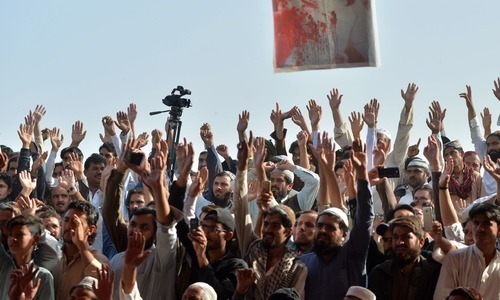
As Pakistan takes part in the World Economic Forum 2026 in Switzerland, its presence is rooted in clear and lawful aims. Islamabad seeks economic recovery, greater foreign investment, regional stability, and constructive global cooperation. These are legitimate objectives pursued through recognized diplomatic channels. Alongside this, activists linked with the Pashtoon Tahafuz Movement have announced protests that rely on accusations of atrocities supposedly committed by the Pakistani state. The goal is not genuine engagement with facts or law. It is to stain Pakistan’s image at the very moment it is speaking to the world about growth and stability.
The intent behind this campaign becomes visible once timing and method are examined together. The protest is not an organic response to a new policy or a recent judgment. It has been scheduled to coincide with a major global forum where Pakistan’s economic and diplomatic messaging will be in focus. In legal reasoning, intent is often inferred from conduct. When claims are advanced outside domestic courts, outside accepted international mechanisms, and exactly when a state is engaged in high-level diplomacy, the reasonable conclusion is that reputational damage, not justice, is the primary aim.
The pattern suggests that PTM seeks to embarrass Pakistan, drown out its economic narrative, and subject it to political pressure through spectacle rather than substantiated claims
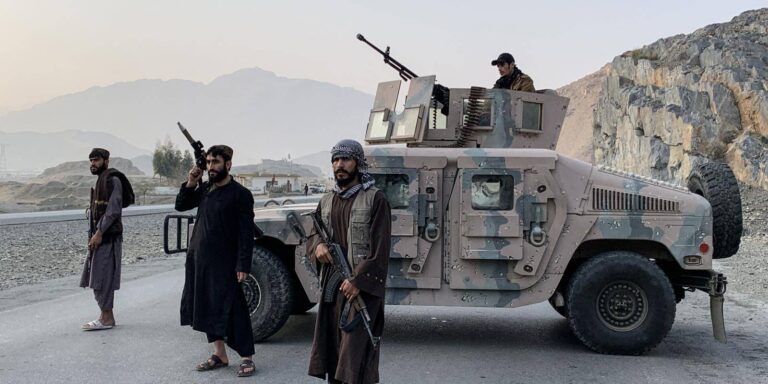
A central part of this spectacle is the way PTM portrays counter terrorism operations in Khyber Pakhtunkhwa, including areas such as Tirah and Kurram, as ethnic persecution of Pashtuns. The record on the ground tells a different story. These regions have seen the presence of internationally designated terrorist groups, cross-border militant movements, and tragic losses of life, both civilian and security personnel. Pakistan, under UN Security Council Resolution 1373 and Article 51 of the UN Charter, is under a legal duty to act against armed groups operating from its territory. Describing these operations as a campaign against Pashtuns ignores that duty and removes them from their security context. It turns a difficult and costly struggle against terrorism into an ethnic narrative that is easier to sell abroad but far removed from the full facts.
PTM also repeats serious claims of bombings that supposedly target only women, children, and elders. These are grave allegations. Yet they are presented without verified casualty data, without independent forensic work, without judicial findings, and without any report from a UN-mandated investigation. Under international law and under any basic standard of fairness, an allegation alone does not create liability. Pakistan states that its security forces operate under rules of engagement, that evacuation and warning measures are in place, and that actions can be reviewed through internal and judicial processes. One may debate how well these systems work in practice, but they cannot simply be brushed aside and replaced by emotive slogans. Justice requires proof that can stand scrutiny, not only anger that plays well on social media.
Another recurring theme in PTM messaging is the claim that arrests of its activists are actually enforced disappearances. This ignores the legal framework under which arrests take place in Pakistan. Detentions are made under criminal law, through police action and judicial warrants, with remand overseen by courts. Constitutional remedies such as habeas corpus remain available to families and counsel. International human rights law, including the International Covenant on Civil and Political Rights, does allow states to restrict liberty in the interest of national security, provided procedures and safeguards are followed.
No international court or UN body has ruled that Pakistan maintains a policy of targeting Pashtuns through enforced disappearance. Repeating a phrase again and again on foreign platforms does not turn it into a proven policy
PTM also prefers to bypass Pakistan’s own courts and institutions and to shift domestic disputes into foreign streets and foreign lobbies. This strategy is often encouraged and amplified by outside sponsors. Article 2, paragraph 7 of the UN Charter protects states from external interference in matters within their domestic jurisdiction. When a group ignores local remedies that are open to it and instead rushes to foreign capitals to air claims, it is not strengthening the rule-based order it claims to support. It is eroding it. Accountability, if it is to be real, must engage with courts, commissions, and elected bodies at home, not only with sympathetic audiences abroad.
The same pattern appears in PTM’s treatment of Afghan repatriation. Pakistan is accused of mass expulsion motivated by discrimination. Yet the wider picture shows that Pakistan hosted millions of Afghans for more than four decades, at huge social and economic cost. Current repatriation efforts take place under domestic immigration law and in coordination with international organizations. No treaty gives an unconditional right to stay indefinitely in another country while remaining undocumented. States retain the right to regulate entry and exit. Lawful enforcement of immigration rules is not, on its own, proof of ethnic hostility.
The claim that Pashtuns are victims of a state project is also out of step with the realities of Pakistani public life. Pashtuns serve at senior levels in the armed forces, in parliament, in the judiciary, and in the civil administration. They command major formations in the fight against terrorism, lead key ministries, and head national institutions. Development and rehabilitation schemes in former conflict zones have been led and implemented with Pashtun participation.
A state that relies on Pashtuns for its defense and governance cannot easily be described as dedicated to their systematic persecution
PTM’s global narrative does not travel alone. It is echoed and enlarged by hostile actors, selective advocacy networks, and disinformation systems that use human rights language as a tool of pressure. Modern conflict is not only about territory. It is also about stories. When local disputes are repackaged for foreign consumption, mainly to corner a state, they leave the realm of honest rights advocacy and enter the field of geopolitical games.
Pakistan’s own position is grounded in law. Its courts function and can hear petitions. Its security operations are subject to constitutional and statutory control. Its diplomacy is a legitimate exercise of sovereignty. Concerns about rights can and should be raised, but they should be pursued through national and international institutions, not through choreographed protests timed to sabotage diplomatic work.
Pakistan does not present itself as flawless. No country can. But serious justice demands evidence over emotion, legal process over slogans, and dialogue over disruption. Protests staged abroad during major diplomatic events do not bring victims closer to a remedy. They blur facts, weaken genuine advocacy, and undermine the international legal order they claim to serve. Pakistan remains open to reform, to honest dialogue, and to cooperation with partners. What it cannot accept is the use of human rights as a weapon to strike at its sovereignty, its security, and its legitimacy on the world stage. In law, intent matters. In diplomacy, timing matters. And in any search for justice, truth must matter most of all.

