



Pakistan’s Forces Prove Their Readiness

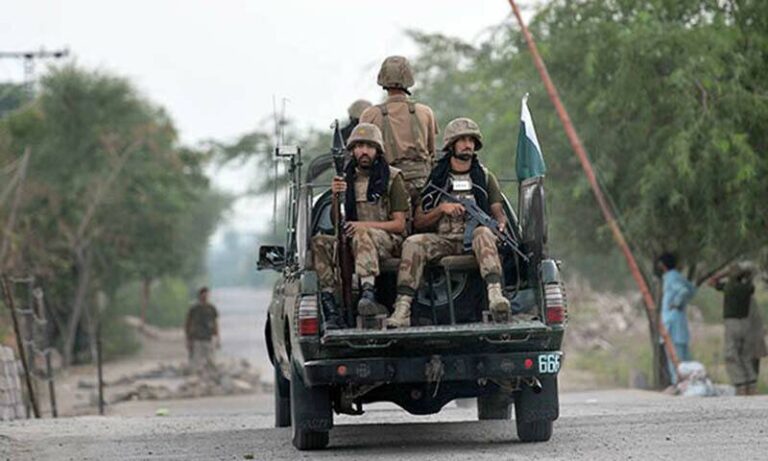
Two security incidents in Balochistan on March 5, 2026, once again demonstrated the fragility of the security environment in Pakistan’s western regions. However, they also demonstrated something equally significant. Pakistan’s security forces are becoming more adept at addressing evolving threats, as they are alert and organized. In the Pattak City area of Washuk District, Basima, militants designated as Fitna al Hindustan attempted to establish an unlawful checkpoint. Three Khawarij terrorists were eliminated, and seven others were injured as security forces promptly engaged them. A hostile drone that was reportedly launched by Afghan Taliban elements in Quetta was electronically neutralized on the same day before it could cause damage. Collectively, these incidents provide a comprehensive understanding of the obstacles Pakistan encounters and the professionalism of the security forces responsible for its protection.
The attempted checkpoint in Pattak City was not an act of randomness. In remote regions, militants frequently employ such strategies to project authority, intimidate civilians, and control movement. Armed groups attempt to establish the impression that the state has relinquished control of territory by establishing checkpoints. This is the reason why the Pakistani forces’ prompt response is significant. The militants were prohibited from establishing a permanent presence or disrupting daily life. The threat was promptly addressed by security personnel, thereby averting the establishment of a hazardous precedent.
A strong message was conveyed that such endeavors will not be successful by the elimination of three terrorists and the injury of seven others
The geography of Balochistan presents distinctive security challenges. Militant organizations are able to operate far from major urban centers and move silently due to the challenging terrain, sparse population, and vast distances. Militants occasionally attempt to exploit the sluggish response times and feeble communication networks in these remote zones, where Basima and Washuk are located. Nevertheless, the events of March 5th serve as evidence that the state’s intelligence and response mechanisms are improving. The militant presence was detected by security forces, who were able to take action before the group could establish control.
The militants are also referred to as Khawarij, which is indicative of a more extensive ideological conflict. However, their actions are directed at civilians, security personnel, and infrastructure in Pakistan, despite the fact that numerous of these groups assert religious justification for violence. This conduct is in direct opposition to the principles they purport to uphold.
The rejection of extremist interpretations that justify violence against fellow Muslims and the state is underscored by the designation of them as Khawarij. It is a combination of a security and ideological response
The attempted drone attack in Quetta was equally significant. Drone warfare has emerged as one of the most alarming developments in contemporary conflict. Drones that can be modified for surveillance or attack are now accessible to non-state actors at a low cost. This technology enables militant organizations to attempt assaults without explicitly disclosing their combatants. If left unfettered, these strategies could pose a significant threat to both civilian and military areas.
The drone’s effective electronic neutralization in Quetta demonstrates that Pakistan’s defense systems are adjusting to this new threat. Counter-drone technologies and electronic warfare are now indispensable elements of national security. Security forces must detect, disrupt, and disable unmanned aerial systems before they reach their targets, rather than exclusively relying on traditional armaments. The drone’s neutralization with zero damage is indicative of a high level of technical capability and preparedness.
Additionally, this advancement has strategic implications. Technological advantage and surprise are frequently employed by hostile actors and militants. The efficacy of these strategies is significantly diminished if their drones and comparable systems can be consistently neutralized. The successful counter-drone operation serves to discourage future attempts and compels antagonistic organizations to reevaluate their strategies.
In addition to the tactical specifics, these incidents underscore the necessity of perpetual vigilance. Security hazards seldom manifest in predictable manners. Militants may present a challenge in the future by attempting to regulate roads in isolated regions. It may manifest as a drone that is en route to a significant city on another day.
Consequently, security institutions are obligated to preserve readiness in a variety of domains, such as electronic defense, intelligence collection, and ground operations
Over the past two decades, Pakistan’s military has acquired substantial operational experience. The coordination between intelligence agencies, military units, and law enforcement entities has been enhanced as a result of counterterrorism operations conducted throughout the nation. New technologies are progressively being integrated into security planning, and rapid response capabilities have been enhanced. The occurrences in Quetta and Basima indicate that this experience is being translated into effective action on the ground.
Simultaneously, military accomplishment alone is insufficient to ensure long-term stability. Economic development, infrastructure, and public trust in state institutions are all essential for the establishment of enduring peace in regions such as Balochistan, despite the fact that security operations can mitigate imminent threats.
Militant groups encounter significantly greater difficulties in recruiting or operating when local communities experience a sense of security and connection to national progress
However, the primary obligation of any state is to safeguard its citizens and defend its territory. Pakistan’s security forces’ dedication to that objective is demonstrated by the operations conducted on March 5. The neutralization of a hostile drone in Quetta and the elimination of militants who were attempting to establish unlawful authority in Pattak City both exhibit professional discipline and technological awareness.
These incidents should not be regarded as isolated events, but rather as indicators of a more extensive pattern. Traditional and contemporary strategies are employed by Pakistan’s adversaries to evaluate the nation’s defenses. However, security forces’ responses demonstrate that they are confronting these obstacles with tenacity and proficiency.
Preparedness is the determining factor between crisis and control in a region where security threats are evolving at a rapid pace. The events of 5 March in Balochistan serve as a reminder that vigilance, professionalism, and technological alertness are still indispensable instruments for protecting Pakistan’s national security.

