

Rule of Haibatullah Is Under Threat in Afghanistan
 Afghanistan
The Taliban’s internal rifts, long whispered about behind closed doors in Kandahar and Kabul, have now exploded into the open. What began as quiet disagreements has hardened into an unmistakable struggle for power, one that now threatens the rule of Mullah Haibatullah Akhundzada himself. For years, the Taliban leadership maintained an outward façade of unity, insisting that the Islamic Emirate was anchored firmly in allegiance, discipline, and absolute obedience to a single emir. Today, those claims ring hollow. The very fact that Haibatullah has been forced to publicly defend his authority, something previously unthinkable for the reclusive leader, signals that he no longer views his position as secure. The internal conflict is no longer a matter of speculation; it is a political earthquake cracking the foundations of Taliban rule.
Central to the growing dissent is the accusation that Mullah Haibatullah governs in isolation, surrounded only by a small circle of four confidants: Mullah Shirin, Yusuf Wafa, Mullah Nadeem, and Mullah Abdul Hakim Haqqani. His refusal to address the public and his avoidance of broad engagement with Taliban cadres have fed the perception that he fears open scrutiny. Many within the movement view his reclusiveness not as piety but as insecurity.
This interpretation has given ammunition to his critics, who argue that a leader disconnected from his own fighters cannot command lasting loyalty
The escalation became unmistakable on August 12, when Interior Minister Sirajuddin Haqqani, the most prominent figure of the Haqqani network, openly challenged the Kandahar-led governance model. Speaking in Khost, he condemned the current system as one ruled by coercion and fear, an extraordinary admission from someone of his stature. His speech was not a moral rebuke; it was a direct political indictment, signaling that the dispute was no longer a quiet disagreement but an open confrontation.
The response from Kandahar was swift and defensive. Figures closely aligned with Haibatullah, among them Mullah Baradar, Mullah Mohammad Yaqoob, and Haibatullah’s own son-in-law, Education Minister Mullah Nida Mohammad Nadeem, issued coordinated declarations reaffirming the principle of “one emir, one system, and complete obedience.” Such statements surface only when authority is contested. Throughout history, stable rulers rarely need to remind their subordinates of loyalty; it is only when cracks form that the chorus of obedience grows louder.
A series of defensive denials followed. Deputy Interior Minister Rahmatullah Najib publicly insisted, unprompted, that no one was attempting to replace Haibatullah. If no such discussions existed, why were these reassurances necessary? The anxiety within the leadership was laid bare. Then, on December 16, Haibatullah himself appeared at a seminar in Kandahar and warned his critics to “stay within their limits.”
Even more revealing was the decision to release key lines of his speech separately the next day through the deputy spokesperson, an attempt to reassert dominance through messaging rather than presence
This struggle is not merely a contest between two men. It reflects a deeper ideological and structural divide within the Taliban. The Kandahar faction advocates uncompromising social restrictions, especially on women, and sees centralized religious authority as the core of governance. The Haqqani network, in contrast, is more attuned to Afghanistan’s tribal diversity, regional power dynamics, and the practical necessities of dealing with the outside world. Their critique of Kandahar’s isolationist model has steadily grown sharper, fueling resentment among commanders who feel marginalized by the current power structure.
The developments of the past year demonstrate that this rivalry is no longer rhetorical. Concrete actions have been taken, and alliances have been built. After Kandahar began sidelining the Haqqanis, most notably through the demolition of the historic Jalaluddin Haqqani madrassa in Khost in early 2024, Siraj Haqqani began quietly preparing for counteraction. Those familiar with his tactical patience understood that his silence was strategic. Now, that strategy is unfolding.
Today, Siraj Haqqani is actively forging alliances with commanders who have been sidelined, disarmed, or humiliated by the Kandahar group. His associate Qari Abdul Rauf Zakaria has reached northern provinces to secure support from figures such as army chief Qari Fasihuddin Fitrat, former senior commander Qari Wakeel, and influential Uzbek leader Qari Salahuddin Ayyubi, who was dismissed and arrested for challenging Pashtun dominance.
Similar efforts are underway in Nimroz and western Afghanistan. The Haqqanis are methodically building a coalition of the disaffected, Pashtuns, Tajiks, and Uzbeks alike
Simultaneously, Siraj has begun lobbying within the 32-member shura, with the assistance of Haji Mali Khan Siddiq. While he publicly invokes the shura as the proper mechanism to remove Haibatullah, those familiar with Afghanistan’s history know such transitions rarely occur peacefully. Siraj is preparing for both political and military outcomes. The shura provides legitimacy; the battlefield provides leverage.
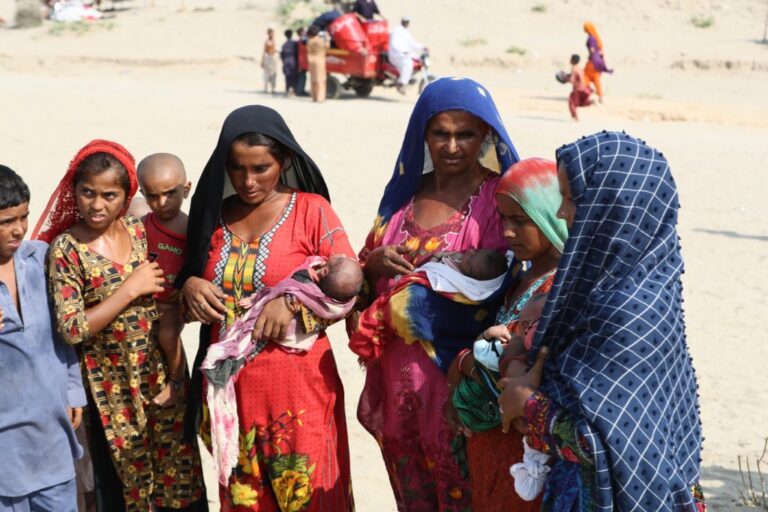
The stakes extend far beyond the Taliban themselves. A major internal split or armed confrontation could plunge Afghanistan into a new phase of civil conflict. The consequences would be catastrophic for the region. Pakistan and Iran, already burdened by millions of Afghan refugees and deeply frustrated with the Taliban’s behavior over the past three years, may be unwilling, or unable, to shoulder the burden of another mass exodus. Yet the outbreak of civil war would almost certainly drive millions across their borders again.
The Taliban’s narrative of unity is collapsing under the weight of its internal contradictions. Whether change comes through the shura or through violence, the rule of Mullah Haibatullah is under real threat. Afghanistan stands on the brink of another dangerous transition, one that could redefine not only the Taliban’s future but the stability of the entire region.

