

Turning CPEC into an Export Engine

Pakistan has spent years being described as a market of potential, always one reform away, one crisis short. CPEC changes that story because it ties Pakistan’s future to visible assets, ports, power, roads, industrial sites, and the hard work of moving goods. More than 62 billion dollars attached to one corridor is not charity. It is a signal that China sees Pakistan as a place where capital can stay for decades, earn returns, and reshape regional trade. If Pakistan plays this moment well, it can move from being a buyer of finished products to a maker of them, and that is the real shift behind the idea of a modern manufacturing hub.
The first lesson of CPEC is that manufacturing does not begin inside a factory gate. It begins with electricity that does not fail, highways that do not waste time, and ports that can move containers at a cost that global buyers accept. Since 2013, CPEC has focused on those basics by linking Gwadar in Balochistan to China’s Xinjiang through road and rail connectivity, supported by energy pipelines and related infrastructure.
The Long Term Plan for 2017 to 2030 widened the scope beyond transport, moving into energy, industry, agriculture, and social development. That expansion matters because it treats production as an ecosystem, not a single project
Critics often reduce CPEC to debt talk or geopolitics, but the on-the-ground numbers show why industry cares. Around 25.93 billion dollars in Chinese investment has already flowed under CPEC, with more than 261,000 jobs created and over 8,000 megawatts added to the grid. For years, Pakistan’s factories lived with load shedding as a normal cost of doing business, which pushed buyers away and kept local firms small. When power stabilizes, firms can finally plan shifts, invest in machinery, and meet delivery dates. That is not a headline benefit; it is the difference between surviving and scaling.
Connectivity gains matter just as much. More than 510 kilometers of highways and 886 kilometers of transmission and grid networks have lowered logistics costs and tightened links between provinces. In practical terms, it means raw materials reach plants faster, finished goods reach ports with less spoilage and delay, and inland regions become investable rather than forgotten. Gwadar’s development adds another layer. A functioning deep-sea port is not only about ships docking, but it is also about building a trade mindset that looks north to Central Asia, west to the Middle East, and outward to global maritime routes.
Pakistan’s geography has always been valuable, but geography only pays when infrastructure turns maps into movement
What makes the current phase more interesting is the pivot to CPEC 2.0, which puts industrial cooperation, innovation, and sustainability at the center. The five priority corridors, growth, innovation, green development, livelihood, and regional connectivity, match Pakistan’s own 5Es approach covering exports, e Pakistan, energy and environment, equity, and empowerment. This alignment is not a policy slogan. It is a chance to stop treating projects as isolated deals and start treating them as parts of a single industrial strategy. When Haier plans a 400 million dollar home appliance industrial park with capacity for 10 million units a year, and when the Challenge Group plans a 150 million dollar textile park with an export target of 400 million dollars a year, the message is clear: the next returns will come from production, not just construction.
The private sector is also moving from the sidelines to the center. The 2025 Pak-China business-to-business conference, with around 8.5 billion dollars in joint ventures and memoranda of understanding, points to where the next growth could come from: technology, artificial intelligence, e-commerce, and digital connectivity. That matters for manufacturing because modern factories run on data as much as they run on steel.
If Pakistan wants to compete, it must learn to produce with quality control systems, automated processes, and traceable supply chains. These are not luxuries; they are entry tickets to global value chains
Agriculture deserves more attention in this manufacturing conversation because it feeds both exports and industry. Contract farming and technology sharing with China, including better seed technology and efficient irrigation, can raise yields and stabilize supply for food processing, textiles, and light manufacturing. Success stories like improved output of red chillies and sesame are not small wins. They show how a rural economy can plug into a large consumer market when standards, logistics, and buyer relationships improve. Manufacturing hubs are strongest when they have strong hinterlands, and CPEC’s social projects in education, healthcare, tourism, and skills development, especially in Gwadar and interior Balochistan, can help build that base.
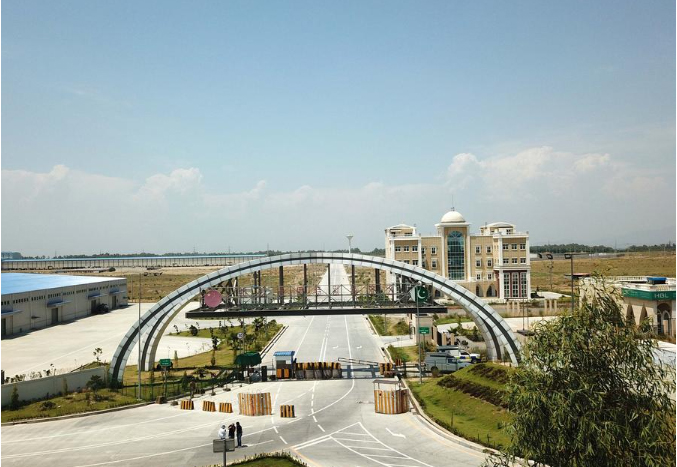
Special Economic Zones are where this all either becomes real or stays on paper. Rashakai, Dhabeji, Allama Iqbal Industrial City, and Bostan are meant to offer tax incentives, customs exemptions, and reliable infrastructure so investors can focus on production. The target sectors, textiles, pharmaceuticals, engineering goods, electronics, and information technology, are sensible because they mix Pakistan’s existing strengths with areas where technology transfer can raise productivity. The bigger opportunity is the global shift of manufacturing jobs away from China as costs rise there. Pakistan talks about capturing part of an estimated 85 million relocating jobs. That will not happen just because land is offered.
It will happen if Pakistan can guarantee policy continuity, predictable taxation, skilled labor, fast dispute resolution, and a serious commitment to security and investor protection
This is where my optimism comes with conditions. CPEC can make Pakistan a manufacturing hub, but only if Pakistan chooses exports over easy imports, competence over political churn, and long-term planning over short-term headlines. The country should treat SEZs as test labs for better governance, one window approvals, transparent utility pricing, vocational training tied to real factory needs, and environmental rules that protect communities without scaring off investment. If these zones become islands of order, they can pull the wider economy toward higher standards.
CPEC’s strongest promise is not a road or a power plant; it is the chance to change Pakistan’s economic identity. A country that produces more than it consumes, exports more than it borrows, and trains its youth for modern work becomes harder to destabilize and easier to invest in. If Pakistan keeps the focus on industrial depth, local supplier development, and fair distribution of benefits, CPEC 2.0 can be more than a corridor. It can be the backbone of a manufacturing economy that aims for upper middle income status by 2035, not as a dream, but as a result of disciplined choices made now.

