


Why Pakistan and the United States Still Need Each Other

Pakistan and the United States are quietly moving into a phase of practical alignment, even if the relationship still carries the weight of history and mistrust. What makes the present moment different is that both sides are being pushed by structural forces to think less in terms of aid and security rent and more in terms of long-term economic, technological, and regional stability interests. In an era defined by great power competition, supply chain politics, and digital finance, Pakistan and the US are discovering that they actually need some of the same things, even if they describe those needs in very different languages.
On the American side, the centre of gravity has shifted from open-ended security commitments to targeted partnerships that reduce future burdens. Washington wants partners that can help secure trade routes, protect critical technologies, and keep regions from sliding into chaos, all without the United States having to deploy large numbers of troops or pour in blank cheque assistance. That means a focus on geoeconomics, supply chains, energy transition, and digital infrastructure. For Pakistan, this is strangely convenient. Islamabad is not looking for a new Cold War-style patron. Its immediate priorities are straightforward and pressing: stabilise a fragile economy, attract investment, modernise technology and energy systems, and sustain counterterror operations that have become both relentless and costly. The overlap is obvious.
Both sides would like to see a more predictable and growing Pakistani economy, not because of sentiment but because it makes everything else easier
The recent move into digital finance shows how this convergence is beginning to take concrete form. In mid January 2026, Pakistan signed a memorandum of understanding with SC Financial Technologies, linked to World Liberty Financial, to explore the integration of a dollar pegged stable coin, USD1, into its payments system. The idea is to use this coin for faster and cheaper cross-border payments while Pakistan develops its broader digital currency infrastructure. Islamabad is not doing this as a speculative crypto play. It is doing it because it sits on over 38 billion dollars of yearly remittances, a fast-growing digital economy, and a huge, mostly informal, base of virtual asset users. Industry estimates of around 40 million crypto users and potential annual trading volumes running into hundreds of billions of dollars point to a reality policy makers can no longer ignore. By moving toward regulated virtual asset institutions and formal channels, Pakistan is inviting American technology and compliance standards into a space that matters for US financial and sanctions policy as well.
This is where the opportunity lies. For Washington, helping Pakistan move from informal, opaque flows to traceable, regulated digital channels fits directly with long term concerns about terror finance, sanctions evasion, and stability in the broader region. For Pakistan, tying its digital finance upgrades to a major dollar-based ecosystem anchors it more firmly in the global system at a time when reserves, credit ratings, and investor confidence remain fragile.
It is a textbook case where geoeconomics and security meet, not on a battlefield but in code, compliance, and payment rails
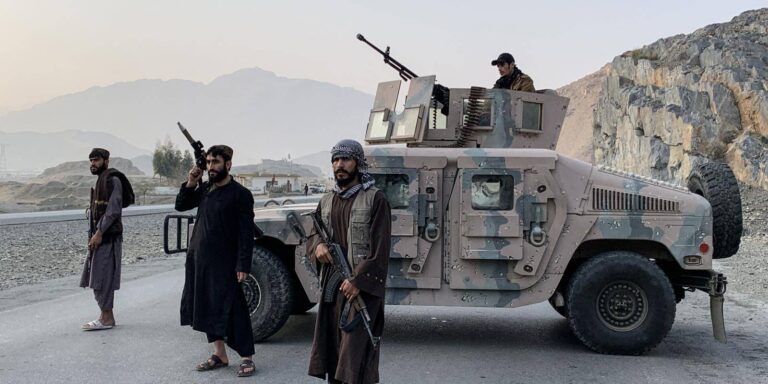
Security cooperation, despite all the rhetoric over the years, is now more structural than transactional. After the fall of Kabul in 2021, militant activity rose sharply across the Pakistan-Afghanistan belt. Pakistan has had to keep an intense operational tempo, with official figures for 2025 pointing to thousands of terrorist incidents and tens of thousands of intelligence-based operations, with thousands of militants killed. Behind these numbers is a basic fact. If Pakistan’s western regions spiral further into violence, the risk does not stop at its borders. It spreads into Central Asia, fuels migration, and creates room for transnational networks that the United States, even in its more restrained global posture, still cares about. Continued support in intelligence, technology, border security, and counter-improvised explosive device capabilities lines up with both sides’ interests. It is not charity, and it is not a favour. It is risk management.
The strategic competition frame adds urgency and complexity. In Pakistani debates, the US is still seen as a strategic partner in political, military, and financial terms, while China is framed as a crucial economic partner and long-term investor. Pakistan is not choosing between them so much as trying to survive a world in which both matter and both are increasingly wary of each other. The US, for its part, has an interest in preventing Pakistan from drifting into an exclusive economic and technological orbit with Beijing. That does not mean blocking Chinese projects outright, but it does mean offering credible alternatives or complements in areas such as digital infrastructure, energy, health tech, and higher education. The India factor sits in the background of all of this. A nuclear South Asia, with limited crisis communication and few working de-escalation mechanisms, remains one miscalculation away from disaster.
Any American strategy that ignores this reality and treats India purely as a China counterweight will sooner or later run into trouble
The real test of Pakistan and US convergence will be in the economic and investment space. Pakistan’s mineral wealth, often valued in the range of six to eight trillion dollars, includes copper, lithium, and rare earths that are central to energy transition and high-tech manufacturing. At the same time, over eighty American firms already operate in the country and reportedly generate more than three billion dollars a year, yet total US foreign direct investment remains below three hundred million dollars annually. The gap between potential and reality is striking. A modern bilateral investment treaty, backed by serious engagement through Pakistan’s Special Investment Facilitation Council and tied to flagship projects such as the Reko Diq copper and gold mine, could begin to close that gap. If Reko Diq alone can generate tens of billions of dollars over its life, and if US Ex-Im financing in the order of one billion dollars is seriously considered, that would signal a move from talk to action.
None of this means the relationship will be smooth. Domestic politics in both countries, human rights concerns, governance failures, and policy swings will continue to create friction. Anti-American sentiment inside Pakistan, and scepticism in Washington about Pakistan’s reliability, are not going to vanish. Yet the deeper story is that structural interests are pushing both sides toward a more workmanlike, less emotional partnership. The more they focus on geoeconomic anchors like digital finance, minerals, energy, and regulated migration, alongside realistic security cooperation, the harder it will be for short-term crises to completely derail the relationship. In a world of crowded crises and sharper competition, that kind of quiet convergence may be the most practical form of strategy either side can afford.

