




The Makkah Agreement and the Promise of a More Stable Region
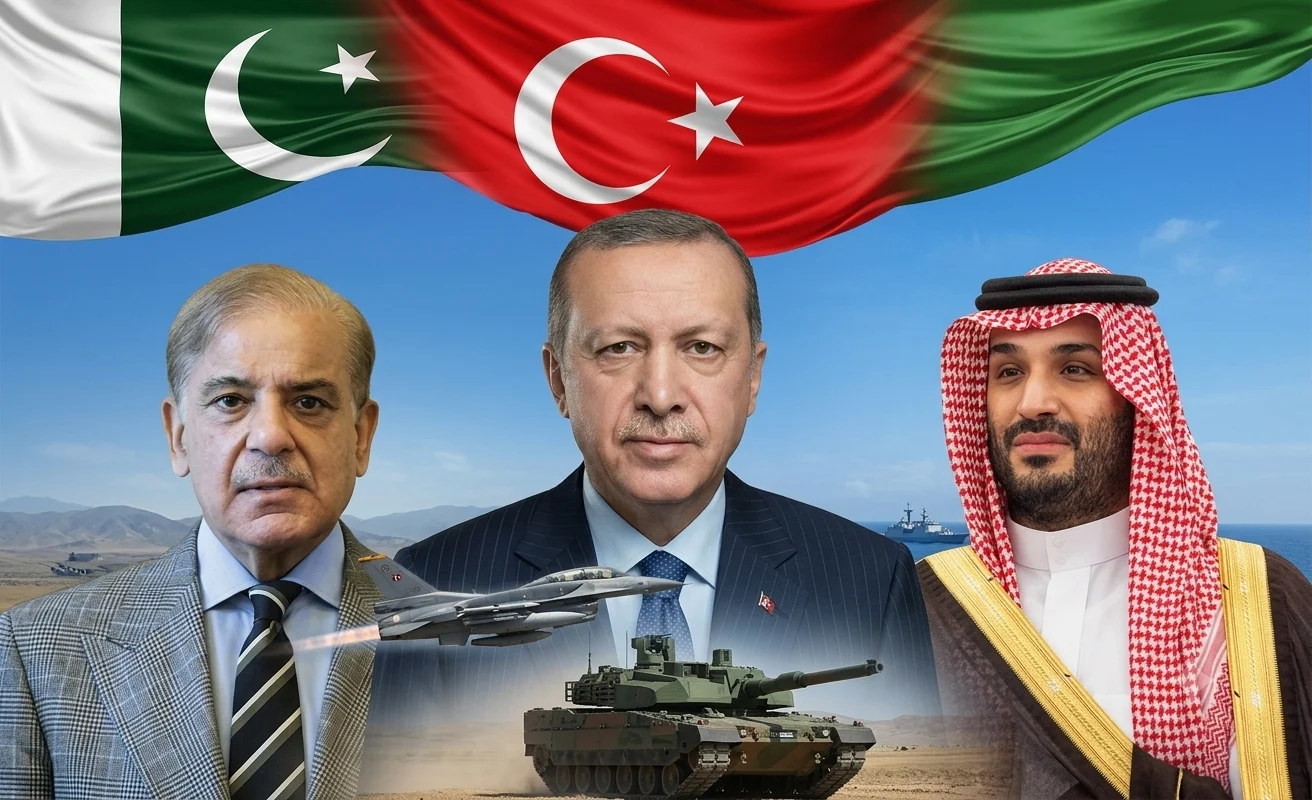
Diplomatic agreements are usually remembered by their signatures, photographs and carefully negotiated language. Ordinary people remember something else. They remember whether life became easier or harder afterward. That should be the standard by which the new partnership among Pakistan, Türkiye and Saudi Arabia is eventually judged. On 7 August 2026, the leaders of the three countries signed the Makkah Joint Defence Agreement. It states that an armed attack against any one of them will be regarded as an attack against all three and commits them to strengthening defence cooperation and collective deterrence. It is unquestionably a major strategic development, but strategy will mean little to millions of citizens unless it eventually produces something tangible.
Consider what instability actually looks like from outside government offices. For a family, it can mean suddenly expensive fuel and food. For a businessman, it means uncertain shipping costs. For an exporter, it can mean delayed cargo and unreliable routes. For a young graduate, it can mean companies postponing hiring because investors are unsure what comes next. Security, in other words, is not separate from daily economic life. It sits beneath it.
This is where the Pakistan, Türkiye and Saudi partnership could become unusually important. Each country possesses resources that the others can use. Saudi Arabia has investment capacity and energy resources. Türkiye has strong manufacturing, engineering and technological capabilities.
Pakistan has a young population, significant agricultural and mineral potential and a location that places it close to some of the most important commercial routes linking Asia and the Middle East
These advantages have existed for years. What has often been missing is the institutional structure needed to connect them on a sufficiently ambitious scale. The new strategic relationship offers an opportunity to change that. Imagine, for example, a jointly financed industrial zone in Pakistan where Saudi investment supports factories using Turkish machinery and technical expertise while employing Pakistani engineers and workers. The products could serve domestic consumers and export markets in the Gulf, Central Asia and beyond.
Or consider agriculture. Pakistan produces food in a region where food security is a strategic concern for several Gulf countries. Saudi investment could support modern agricultural infrastructure, while Turkish technology could improve irrigation, mechanisation, processing and storage. Instead of exporting mostly raw produce, Pakistan could move further up the value chain. The benefits would not be limited to balance sheets. Better storage means farmers lose less of their harvest. Food processing creates jobs in smaller cities.
Improved logistics allows rural producers to reach richer markets. Foreign investment becomes meaningful when its effects travel beyond capital cities
Education deserves the same attention. The three governments could create a substantial trilateral scholarship and research programme focused on artificial intelligence, engineering, agriculture, medicine, energy, climate resilience and public policy. Students could spend semesters in partner countries. Universities could develop joint laboratories. Researchers could receive shared grants.
Such cooperation would produce something no military agreement can manufacture directly, relationships between societies. The people of Pakistan already possess strong cultural and religious affinities with both Türkiye and Saudi Arabia. Yet affection alone does not create economic integration. People must be able to travel, study, work and do business together.
Improved air connectivity could help. Easier business travel could help. Joint tourism campaigns could help. Recognition of professional qualifications in selected sectors could help. Digital platforms connecting investors and entrepreneurs could help. Thousands of small measures often create more durable relationships than one large declaration.
The security framework nevertheless remains essential because economic plans require political confidence. The agreement’s collective defence provision is intended to strengthen deterrence, while Turkish officials have emphasised that it is defensive rather than aimed at a named third country. Foreign Minister Hakan Fidan has said that the pact is not directed against Iran or any other state. That message should not be treated as diplomatic decoration. It is fundamental to whether the agreement ultimately promotes prosperity. An alliance that produces permanent confrontation could undermine the economic benefits it seeks to protect. Investors dislike uncertainty regardless of which side creates it.
A regional security arrangement that strengthens its members while maintaining diplomatic channels with neighbours is far more valuable than one that divides the region into increasingly hostile camps
The agreement also contains the beginnings of institutional continuity. Turkish officials have described plans for regular coordination, including a ministerial committee and a permanent secretariat in Saudi Arabia. Institutions matter because relationships between countries cannot depend entirely on personal chemistry between leaders. The next logical step would be an equally permanent economic structure.
Every annual security review could be accompanied by an economic review asking straightforward questions. How much has trilateral trade increased? How many joint companies have been created? How many students participated in exchanges? How much new investment reached productive sectors? How many jobs were generated? Which transport bottlenecks were removed? These are not glamorous questions, but they are the questions that determine whether diplomacy changes lives. There is also space for wider cooperation. Pakistan, Türkiye and Saudi Arabia have already been consulting with Egypt through the R4 format on regional issues.
If this culture of consultation grows, the three countries could use their partnership to strengthen rather than fragment regional diplomacy
That could include maritime security, counterterrorism, disaster relief, energy security and humanitarian assistance. These are areas where cooperation produces public goods rather than political winners and losers. The most powerful outcome would be psychological. A region repeatedly accustomed to war could begin to associate strategic cooperation with construction rather than confrontation.
A young Pakistani should hear about the agreement and think about new opportunities for training or employment. A Turkish company should see an opportunity to enter a new market. A Saudi investor should see credible projects rather than political uncertainty. A researcher should see funding for a joint programme. A farmer should see access to better technology and new buyers.
That is how high politics becomes relevant to ordinary life. The leaders in Makkah have written the first page. Whether the agreement becomes a military milestone or something much larger now depends on what follows. History may record the collective defence clause. People will remember the jobs, businesses, universities, roads and opportunities that came with it. If Pakistan, Türkiye and Saudi Arabia can make those two stories the same story, their partnership may become one of the region’s most consequential developments in years.

