

Distinguishing Jihad from Terrorism
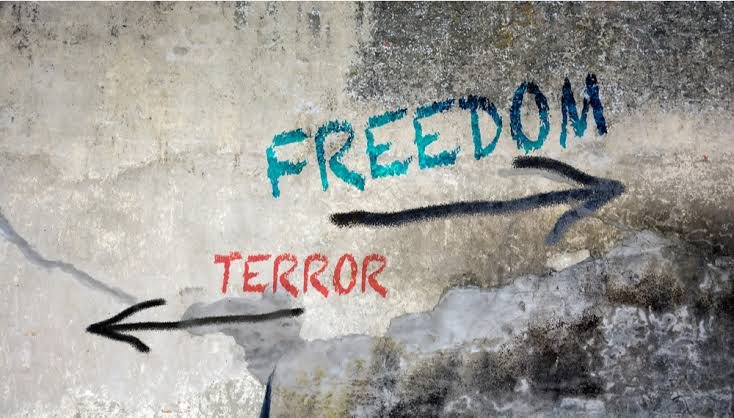
Few religious concepts have been distorted as persistently as jihad. Militant organisations present it as though Islam grants individuals or armed factions an unrestricted licence to wage war whenever they declare a grievance. That reading is not simply incomplete. It strips the concept of its moral framework, removes Qur’anic verses from their context, and places self-appointed militants in a position of religious authority they do not possess. Jihad, in its Qur’anic and Prophetic usage, encompasses striving for what is right, including moral effort, service, persuasion, sacrifice and, under defined circumstances, legitimate defence. The Qur’an itself speaks of striving through its message, describing a “great striving” conducted through revelation rather than warfare.
The Prophetic tradition makes this broader meaning even clearer. When a man sought permission to participate in jihad, the Prophet Muhammad asked whether his parents were alive. When the man replied that they were, he was told to exert himself in serving them. The lesson is difficult to reconcile with propaganda that defines religious commitment primarily through weapons. Another Prophetic tradition compares the person who cares for a widow or a poor person to one who strives in the cause of Allah. Religious striving therefore begins with responsibility, discipline and service. A society in which young people educate others, care for parents, support vulnerable families, work honestly and improve their communities has not abandoned jihad in its broader moral sense. It has rescued the concept from those who reduce faith to violence.
This distinction becomes even more important when armed conflict is discussed. Islamic teachings do not create an ethical vacuum during war. The Qur’an permits fighting in a context of conflict while immediately warning against transgression. Prophetic rules of warfare likewise established restraints on conduct. The result is a fundamental principle that militant rhetoric often tries to erase. A supposedly religious objective cannot sanctify every method used in pursuing it. Indiscriminate killing, attacks on protected persons, treachery and violence detached from lawful responsibility cannot become righteous merely because perpetrators attach religious vocabulary to their actions.
Authority is equally important. Classical Islamic political thought never treated every angry individual as a sovereign power entitled to recruit fighters, declare enemies and initiate wars. The Prophet described the ruler as a shield behind whom people are protected, while linking that authority directly to justice and responsibility. In Pakistan, the state-backed Paigham-i-Pakistan declaration, endorsed by more than 1,800 religious scholars according to the National Counter Terrorism Authority, states that individuals and groups cannot independently declare armed jihad against the state. Whatever political disagreements citizens may have with governments, private factions cannot simply manufacture sovereign authority for themselves.
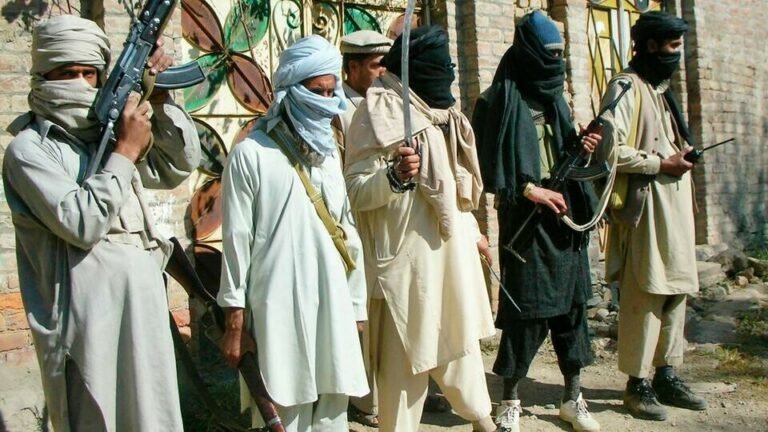
This does not mean that government actions are beyond criticism. Islamic governance places its own burden on those exercising authority. Justice, accountability and faithful discharge of public trust remain moral requirements. Abuse by an institution does not make abuse by a militant organisation legitimate. Government failure should be confronted through accountability, constitutional mechanisms, public debate, courts, scholarship and peaceful political reform. Replacing imperfect institutions with masked gunmen who act simultaneously as accuser, judge and executioner does not establish justice. It destroys the very idea of accountable authority.
The same principle applies to religious difference. The Qur’an’s declaration that there is no compulsion in religion establishes a powerful barrier against the idea that peaceful religious communities may be coerced simply because they believe differently. Even more strikingly, the Qur’an refers to the protection of monasteries, churches, synagogues and mosques in discussing the prevention of religious destruction. Attacking worshippers, bombing sacred spaces or persecuting citizens because of their faith cannot credibly be described as defending religion when the religious tradition itself recognises the protection of places where people worship.
Extremist interpretation also depends heavily on selective quotation. A verse concerning an actual armed confrontation is lifted from its historical and textual setting and presented as though it were a timeless command to kill anyone outside a militant worldview. Yet the Qur’anic framework contains commands concerning restraint, cessation of hostilities and peace. In the same passage that permits fighting, aggression is prohibited and fighting is to cease when the opposing side ceases its aggression. Elsewhere, the Qur’an explicitly instructs Muslims to incline towards peace when the adversary inclines towards peace. The Prophetic tradition similarly discourages believers from wishing for confrontation and instructs them to ask Allah for safety.
That moral architecture leaves little room for the romanticisation of permanent warfare. Peace is not cowardice. Restraint is not surrender. Nor does devotion require an endless search for enemies. Militancy survives partly by convincing young people that violence offers the highest form of religious purpose. Islamic sources offer a far richer understanding. Courage may be required in defence, but courage is also required to resist hatred, protect the weak, uphold justice, fulfil responsibilities and refuse manipulation by those seeking recruits for political violence.
Pakistan therefore faces an intellectual challenge alongside its security challenge. Terrorism cannot be defeated only by eliminating networks after they become violent. The religious vocabulary used to legitimise recruitment must also be reclaimed. Mosques, universities, seminaries, scholars, families and state institutions all have a role in explaining the difference between disciplined religious striving and factional bloodshed. The decisive test should never be the loudness of a militant slogan or the symbolism of a religious banner. It should be whether conduct respects justice, lawful authority, protected life, religious freedom and moral limits.
Reclaiming jihad from militant misappropriation is ultimately about restoring proportion to an Islamic concept that extremists deliberately narrow. The tradition does not teach that faith is proved by a willingness to kill. It repeatedly connects moral worth with responsibility, protection, restraint, justice and service. When caring for the poor can be compared to striving in Allah’s cause, and when peace, protection of worship and limits in warfare remain explicit religious principles, the extremist equation of jihad with terrorism becomes intellectually and morally untenable. The strongest answer to militant propaganda is therefore not merely to condemn its violence, but to expose the religious distortion on which that violence depends.

