






Water Cooperation and Regional Peace
For a farmer in Punjab or Sindh, a river is not an abstraction in a diplomatic argument. It determines whether crops survive and villages can prepare for floods. That reality gets lost when water becomes a bargaining chip. Geography may give one country an upstream advantage, but it does not give that country the right to treat a shared river as an instrument of political pressure.
The Indus Waters Treaty was signed in 1960 with World Bank support. It divided use of the eastern rivers, Ravi, Beas and Sutlej, largely in India’s favour, while assigning the western Indus, Jhelum and Chenab principally to Pakistan, subject to specified Indian uses. Crucially, it kept two distrustful neighbours talking. The Permanent Indus Commission, technical information exchanges and dispute-settlement procedures sustained cooperation through political crises. These channels were designed precisely because disagreements over river infrastructure cannot safely be left to public accusations or retaliatory announcements.
That achievement was put at risk in April 2025 when New Delhi announced that it would hold the treaty in abeyance after the deadly Pahalgam attack. India blamed Pakistan for supporting cross-border terrorism, an allegation Islamabad denied. Security concerns require investigation and lawful responses, not the abandonment of obligations protecting innocent livelihoods. Linking the operation of a water treaty to an unrelated political demand crosses a dangerous line.
The legal question is consequential. Article XII provides that the treaty continues until the two governments terminate it through another duly ratified agreement. In August 2026, a Court of Arbitration constituted under the treaty concluded that India’s unilateral abeyance was impermissible and that the treaty remained in force. India rejected the award, maintaining that the tribunal lacked jurisdiction. Such disagreements belong in legal proceedings, not in everyday river management.
There is a wider principle here. Upstream states have legitimate development needs. The treaty itself recognises certain Indian uses of the western rivers. Yet upstream location is neither ownership of the entire river nor a licence to disregard downstream consequences. International watercourse law emphasises reasonable use, cooperation and prevention of significant harm. Such principles counter the imbalance between upstream control and downstream exposure.
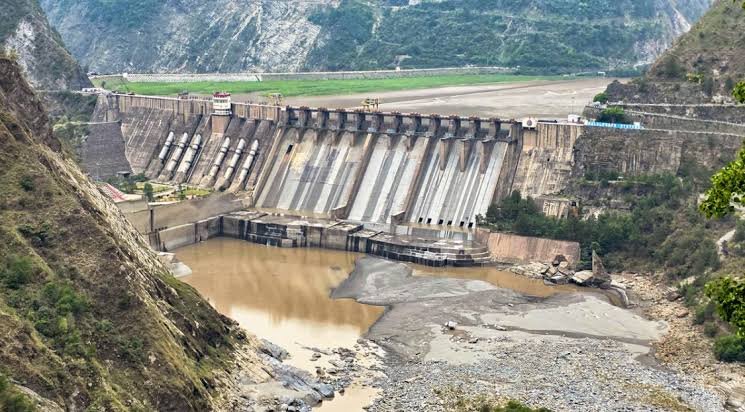
Consider the importance of information. Article VI of the treaty sets out exchanges of river-flow, reservoir and canal data, including arrangements for supplying information needed for operations. Article IV also addresses advance notice of extraordinary reservoir discharges and flood flows. A water department must know what is coming before it reaches a barrage. Pakistan has raised concerns over interruptions in established exchanges, although some flood warnings have subsequently been conveyed through diplomatic channels. Occasional alerts cannot replace predictable, direct technical cooperation.
The costs of uncertainty travel quickly downstream. Irrigation officials make decisions about canal deliveries, cropping patterns and reservoir management on the basis of expected flows. Farmers decide when to sow wheat or rice, how much land to cultivate and whether to invest in fertiliser. A late or incomplete forecast can be costly even when no deliberate diversion of water has occurred. Such uncertainty falls hardest on households with the fewest resources to absorb unexpected losses. Quantity matters, but predictability matters too.
Flood preparedness makes the stakes more urgent. Heavy monsoon rainfall, glacial melt and sudden changes in river levels already create serious challenges across the Indus basin. Upstream observations help forecasters spot danger, authorities reinforce embankments and residents evacuate. Delayed warnings increase exposure to danger that respects no border. It is difficult to speak credibly of regional security while allowing preventable uncertainty to endanger civilians.
India also has something to lose. A country seeking greater international influence benefits from being seen as a dependable treaty partner, especially during crises. If binding water arrangements can be switched off whenever diplomatic relations deteriorate, other upstream states may be tempted to follow that example. The resulting uncertainty would reach far beyond South Asia. As floods and scarcity intensify, stable institutions are no luxury. They are essential infrastructure for peace.
The way forward need not wait for a wider political reconciliation. India and Pakistan should restore regular commissioner-level contact, maintain dependable exchanges of operational and flood data, and use the treaty’s procedures to examine technical disagreements. Joint technical assessments and modern forecasting could build confidence. Pakistan, meanwhile, must improve its own storage, irrigation efficiency and flood-response capacity. Cooperation cannot replace domestic reform.
The Indus Waters Treaty has never required India and Pakistan to trust each other completely. Its value lies precisely in giving them enforceable rules when trust is scarce. A shared river should not become a test of which government can exert greater pressure. It should measure both governments’ commitment to the people along its course. Preserving the treaty is not a concession to a rival. It is an investment in regional stability, humanitarian responsibility and the rule of law.

