


From Fatwa to Framework
Pakistan has never suffered from a shortage of religious voices condemning terrorism. For years, scholars representing different schools of thought have spoken against suicide bombings, sectarian killings and violence carried out in the name of Islam. Yet the persistence of extremism raises an uncomfortable question. Why have repeated religious condemnations struggled to change attitudes in communities vulnerable to radicalization? Part of the answer lies in the distance between issuing a declaration and ensuring that its message reaches ordinary people. The National Paigham-e-Aman Committee (NPAC) represents a promising attempt to close that distance.
The foundation was established in January 2018, when 1,829 religious scholars endorsed the historic Paigham-e-Pakistan declaration. The consensus rejected terrorism, unauthorized armed struggle and the misuse of religion to justify violence. It challenged the assumption that militant organizations could independently claim religious authority. However, a religious decree, regardless of its scholarly legitimacy, cannot transform society without sustained engagement. The establishment of NPAC in September 2025 therefore marks an important institutional development, moving Pakistan’s peace narrative from theological consensus towards organized community action.
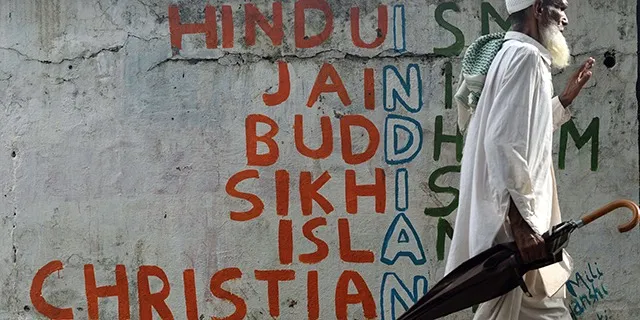
What makes this initiative particularly significant is its recognition that extremism cannot be confronted through security operations alone. Military and law enforcement institutions remain essential for protecting citizens, but ideas require a different response. Religious misconceptions, sectarian prejudices and inflammatory propaganda often circulate within social environments where official messaging has limited influence. NPAC brings together Muslim scholars from different traditions alongside Christian, Hindu and Sikh representatives, creating opportunities for dialogue across religious boundaries. The Quran’s teaching in Surah Al-Hujurat, verse 13, describes human diversity as an invitation to mutual understanding rather than hostility.
Equally encouraging is the initiative’s decentralized structure. Provincial Paigham-e-Aman Committees have been notified in Punjab, Sindh, Khyber Pakhtunkhwa and Balochistan, while regional committees cover Azad Jammu and Kashmir and Gilgit-Baltistan. This arrangement acknowledges a reality frequently overlooked in national policymaking. Sectarian tensions in Parachinar are not identical to the grievances experienced in Balochistan or the religious sensitivities found elsewhere. A uniform message developed in Islamabad may carry limited influence unless local communities help shape its delivery. Peacebuilding becomes credible when people recognize their own concerns in the conversation.
The proposed engagement with madaris, universities and district communities deserves particular attention. Young people increasingly encounter religious and political arguments through social media, where emotionally charged misinformation can circulate before reliable explanations emerge. Extremist propagandists exploit this environment by presenting violence as heroism and intolerance as religious commitment. NPAC’s combination of digital messaging and face-to-face engagement offers an alternative. Trained youth ambassadors, respected religious scholars and university educators can challenge misleading narratives without dismissing the genuine frustrations that sometimes make young people receptive to them. Quran 49:6 emphasizes verification before accepting information, a principle remarkably relevant to contemporary digital communication.
There are also encouraging signs of institutional activity. According to the committee’s 2026 roadmap figures, its work includes 14 senior leadership meetings, 11 district engagements and 12 targeted madrasa outreach activities. The roadmap also records 160 public service messages and video clips, alongside 71 engagements involving religious scholars and minority representatives. These figures suggest an effort to establish a presence beyond ceremonial gatherings. Nevertheless, meetings and media products should be understood as indicators of activity, not automatic evidence of successful deradicalization. The real test is whether such engagement improves understanding and reduces hostility within communities.
Another important feature is the involvement of religious minorities. Pakistan’s constitutional commitment to religious freedom must be reflected in everyday institutional conduct, not merely repeated in official statements. When Muslim scholars and minority representatives jointly defend the protection of places of worship, equal citizenship and peaceful coexistence, they challenge the prejudices that extremists seek to deepen. Surah Al-Hajj, verse 40, recognizes the importance of protecting different places of worship. Such religious foundations, reinforced by constitutional guarantees, can strengthen public confidence that peace is a shared national responsibility rather than an agenda belonging to one religious community.
Still, the effectiveness of NPAC will depend heavily on how it handles local grievances. Sectarian tensions rarely emerge in isolation. They can be aggravated by misinformation, unresolved disputes, perceived discrimination and mistrust of public institutions. The framework’s requirement for provincial and regional committees to coordinate with information departments and communicate emerging concerns to national leadership is therefore sensible. But coordination should produce timely responses rather than another layer of paperwork. Communities must see that raising concerns through peaceful channels leads to serious consideration and, where appropriate, corrective action.
The proposed quarterly reviews, community feedback mechanisms and annual impact assessments offer a practical way forward. Independent evaluation could examine changes in public attitudes, the quality of interfaith engagement and the effectiveness of local conflict prevention. Women, young people, teachers and community representatives should also have meaningful opportunities to participate. Religious leadership provides moral credibility, but lasting peace requires broader social ownership.
Pakistan’s experience demonstrates that extremism is not defeated simply because an argument against it has been won. The harder task is ensuring that the argument becomes part of public consciousness, institutional behavior and everyday relationships. NPAC offers a valuable opportunity to pursue that objective. Its greatest achievement would not be the number of conferences organized or statements released, but the gradual emergence of communities where religious differences no longer provide an excuse for violence. The initiative deserves sustained institutional support, public participation and honest evaluation. After all, peace becomes durable not when it is repeatedly proclaimed, but when people begin to experience it in their daily lives.

