The Abdullah Dynasty and Kashmir’s Unfulfilled Political Promises
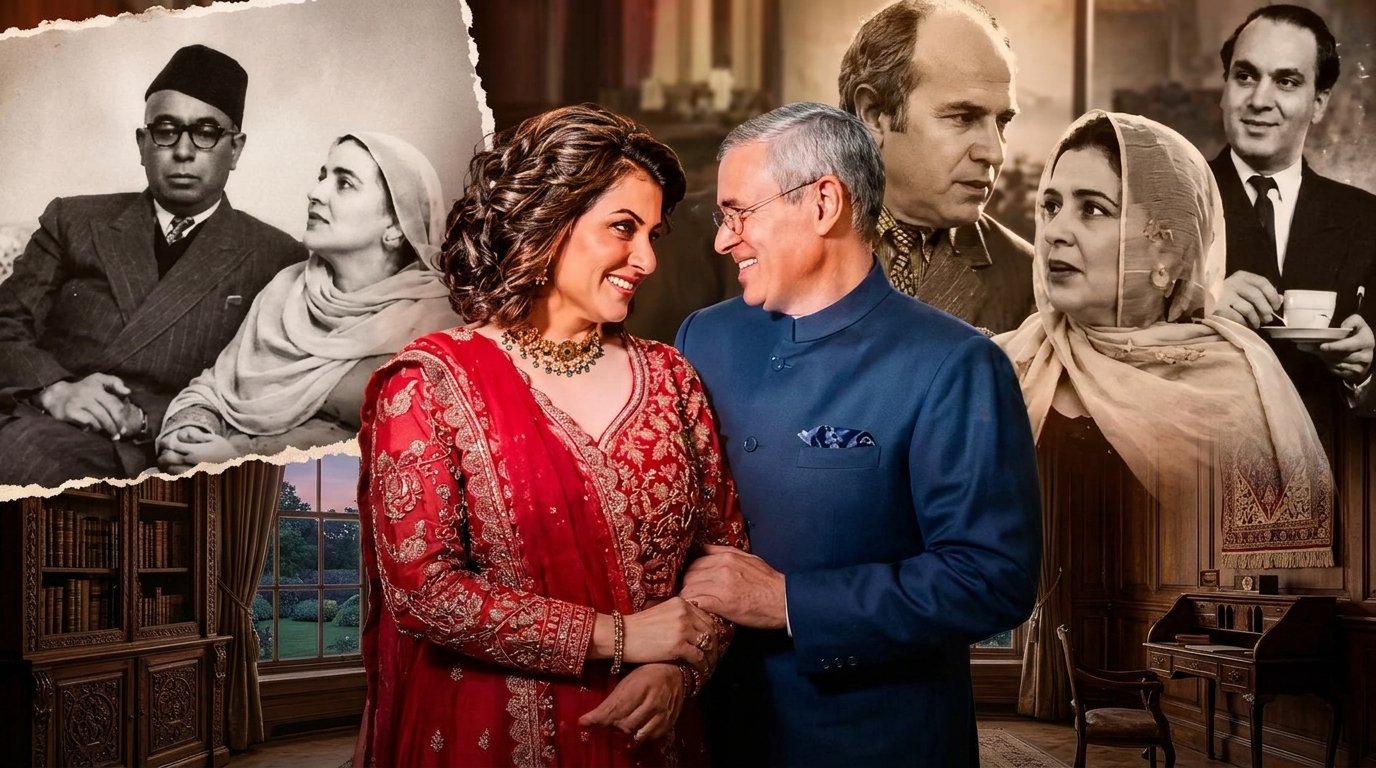
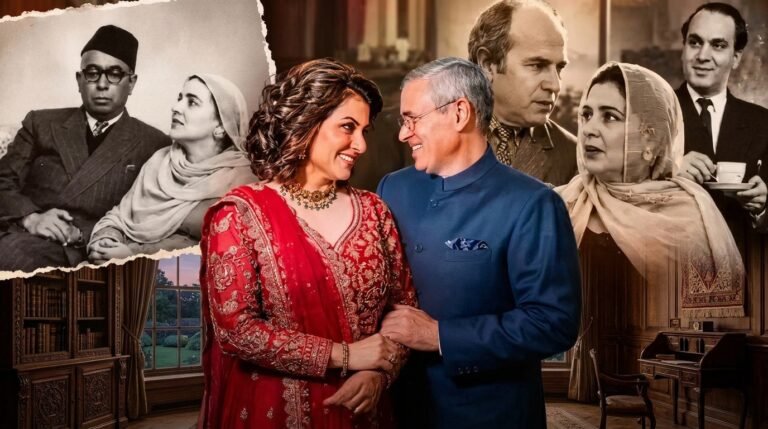
On October 31, 2026, the same date that marked the formal bifurcation of Jammu and Kashmir into a Union Territory back in 2019, Jammu and Kashmir’s sitting Chief Minister Omar Abdullah chose to post smiling wedding photographs on social media with the caption “a new journey began yesterday.” The irony was not lost on those paying attention. While the Chief Minister was celebrating a personal milestone, the valley he governs continues its long march through unemployment, military checkpoints, stripped statehood, and shattered political dignity. For Kashmiris who have lived through three generations of Abdullah rule, that social media post felt like a metaphor for everything, a dynasty that has perfected the art of celebrating itself while the people it claims to represent remain frozen in place.
The facts surrounding Omar Abdullah’s second marriage are now publicly known. He married Nidhi Razdan, a Kashmiri Pandit journalist and former NDTV anchor, under the Special Marriage Act in New Delhi on October 30, 2026, just three months after the Supreme Court dissolved his previous marriage to Payal Nath, daughter of Major General Ram Nath, in July 2026. In itself, a personal marriage is nobody’s political business. People marry whom they love, and that is their right. But when a political dynasty has built its entire legitimacy on the claim of representing Kashmiri Muslim identity, when it has invoked the slogans of autonomy, Kashmiriyat, and self determination across three generations to win votes, then a pattern of personal choices, when examined alongside political betrayals, becomes something more than coincidence. It becomes a question worth asking out loud.
A Dynasty Built on Borrowed Credentials
Shake any branch of the Abdullah family tree and what falls out is not the story of an organic Kashmiri political movement but the story of calculated alliances with outside power structures. Sheikh Abdullah, the patriarch, married Akbar Jehan, the daughter of Michael Henry Nedou, a British hotel magnate who had converted to Islam. That marriage, as historians of the period have noted, opened doors of wealth and political connections to a young man from a modest background, giving him the social capital to build the National Conference from scratch. His charisma was real, but his scaffolding was borrowed.
Farooq Abdullah, his son, went further. He married Molly, a British woman, and made no secret of using her citizenship as a kind of personal escape hatch. Every time political conditions in Kashmir turned dangerous or uncomfortable, Farooq found his way to London. Kashmir burned; Farooq waited abroad. This is not political mythology, it is documented political history. The valley’s people remember the 1980s and 1990s, when ordinary Kashmiris faced the full force of counter insurgency operations while their Chief Minister was comfortably out of the country.
Omar Abdullah, the third generation, married Payal Nath, daughter of a Major General in the Indian Army, in 1994, a union that practically announced its political convenience even as it was being solemnized. Now, in 2026, he has married again into a prominent non Kashmiri family. The pattern across three generations is consistent enough to stop being accidental.
The Numbers Tell a Harder Story
While the Abdullah dynasty navigates its personal and political alliances with Delhi, the data coming out of Jammu and Kashmir tells a story of sustained neglect that no wedding announcement can paper over.
Jammu and Kashmir’s unemployment rate stood at 6.7 percent in 2024 25, nearly double the national average of 3.5 percent, according to official figures presented to the J&K Assembly in February 2026. Youth unemployment has climbed even higher, with some surveys placing it above 11 percent. Over 77,000 government posts remain vacant across departments. Between 2020 and 2022, 78 people died by suicide specifically linked to unemployment, a figure the Union Home Ministry itself disclosed to Parliament. Per capita income growth in the region dropped from 12.31 percent annually between 2015 and 2019 to just 8.41 percent in the five years that followed, precisely the period when New Delhi’s grip tightened and Kashmiri political autonomy shrank.
These are not abstract statistics. They are young men and women on scooters ferrying strangers for pocket change because there is no other work. They are farmers who watched their cooperatives dissolve after outside companies won government contracts through a centralized procurement system introduced after August 2019. They are graduates who applied to the J&K Services Selection Board, which received 46,744 vacancy requests since 2019, and are still waiting.
What the Chief Minister Is Not Saying
Not a single recent speech by Omar Abdullah has seriously engaged with the United Nations resolutions on Kashmir’s political status. The word “autonomy”, once the cornerstone of National Conference politics, has quietly disappeared from his vocabulary since he took oath as Chief Minister in October 2024. The restoration of statehood, promised repeatedly by the BJP as a reward for electoral participation, remains pending with no firm timeline. The constitutional authority over police, land, and key administrative decisions rests not with the elected government but with the Lieutenant Governor and ultimately with New Delhi.
In July 2026, the broader movement for statehood restoration that had united mainstream parties, civil society, and religious leadership demonstrated that political aspirations in Kashmir remain unsatisfied regardless of which electoral party holds nominal power. Omar Abdullah was part of that conversation briefly, then went quiet. His government functions, passes budgets, inaugurates bridges, and does not ask the questions that Kashmiris have been asking for decades.
In November 2024, the J&K Assembly passed a symbolic resolution calling for the restoration of Article 370, a gesture that carries zero constitutional force but enormous political significance. Omar Abdullah allowed it, then moved on. The resolution collected dust. Meanwhile, Baramulla’s elected Member of Parliament, Engineer Abdul Rashid, spent most of the year inside Tihar Jail under UAPA, leaving his constituency, which voted for him by a margin of over two lakh votes, without effective parliamentary representation. This is the ground reality of Kashmiri democracy in 2026.
The Fundamental Question
The question this pattern raises is not about any individual’s right to marry or live as they choose. It is a political question about representation and accountability. Why has a family that has held power in Kashmir for seventy years found it consistently necessary, across three generations, to build its most important personal and political alliances outside the community whose name it invokes at election time? Why does every marriage in this family represent a connection upward to British networks, Indian military establishment, or Delhi’s media elite rather than downward to the farmers, artisans, and unemployed youth of the valley?
Political dynasties are common. So is the gap between electoral promises and governing realities. But few dynasties have maintained the particular gap that the Abdullahs have, between the language of resistance and the practice of accommodation, with such consistent elegance across so many decades.
A People Still Searching
The average Kashmiri in 2026 wakes up to a complicated reality: a region with infrastructure spending that looks impressive on paper but youth unemployment that tells a different story; a democratic government that won elections but does not control its own police; an elected Chief Minister who announces new personal journeys while the old political journey, toward genuine autonomy and restored statehood, remains stalled at the same checkpoint it was at thirty years ago.
Omar Abdullah posted his wedding photographs with the words “a new journey.” Kashmiris are still on the old one. And they are still looking, as they have been for three generations now, for a leader whose personal journey and their collective journey are actually going to the same place.