


Amrullah Saleh’s Collapse Exposes His Credibility Gap
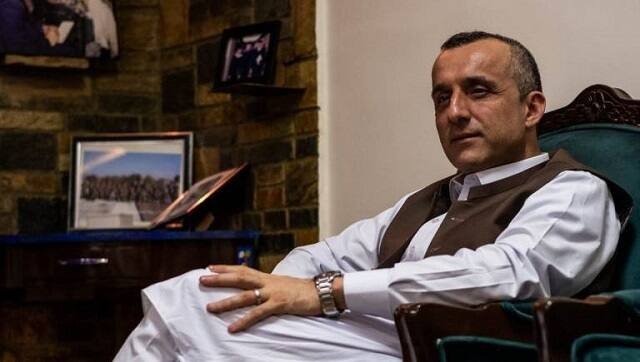
There is something deeply telling about a man who could not see his own government falling lecturing a sovereign nuclear state about intelligence gaps. On September 7, 2026, Amrullah Saleh, Afghanistan’s former spy chief, former Vice President, and self declared “caretaker president” from a Panjshir valley that collapsed within days, posted a bold claim on X. His assertion: that businesses and individuals in Khyber Pakhtunkhwa pay extortion to the Khawarij TTP terrorists while simultaneously paying taxes to the government of Pakistan. He weaponised this claim to argue that Pakistan’s counterterrorism strategy fundamentally fails because it ignores historical, societal, and geopolitical realities.
Let us separate fact from the fiction of motive.
On the first part, the extortion claim, the data is not entirely wrong, though Saleh’s framing is deliberately misleading. Extortion targeting businesses is a documented security threat in KPK, particularly in districts bordering Afghanistan. Reports of highway robbery, toll extortion, and illegal taxes are recurrent in the province. Credible sources have confirmed that prominent political figures and businesspeople in southern KPK districts, as well as major centres including Peshawar and Mardan, have been paying extortion to TTP terrorists. TTP threats are not empty. Traders who refuse to pay have had small bombs placed near their homes, been killed publicly, or had their properties bombed. Doctors, parliamentarians, and shopkeepers from religious minorities in Peshawar have all been targeted.
This is a reality Pakistan itself has openly acknowledged and is actively fighting. It is not a revelation. It is a crisis of cross border terrorism, one that flows directly from the safe havens terrorist groups have been granted inside Afghanistan under Taliban rule.
This is precisely where Saleh’s credibility dissolves into irony so thick it almost chokes.
Saleh served as the head of Afghanistan’s National Directorate of Security from 2004 to 2010, during which time he was charged with building intelligence networks and countering Taliban expansion. He was dismissed by President Hamid Karzai after a Taliban attack hit near a loya jirga, a peace council, that Karzai was attending, representing a catastrophic lapse in protective intelligence. The NDS under his tenure repeatedly failed to detect and thwart large scale attacks in Kabul and other major cities where Afghan intelligence maintained a sizeable presence.
The man now analysing Pakistan’s strategic shortcomings ran an intelligence agency that, by its own record, could not stop bombings in the capital it was meant to protect.
After serving as First Vice President under Ashraf Ghani, Saleh declared himself “caretaker president” from the Panjshir Valley following the Taliban’s takeover in August 2021. The resistance he championed lasted days. He then fled the country, the same country he claimed to be leading. His self declared presidency attracted no international recognition, and his Panjshir stronghold fell with embarrassing speed. A man who cannot hold a valley for a week now offers geopolitical strategy to a nation of 240 million.
Meanwhile, Pakistan’s security forces have not been sitting idle.
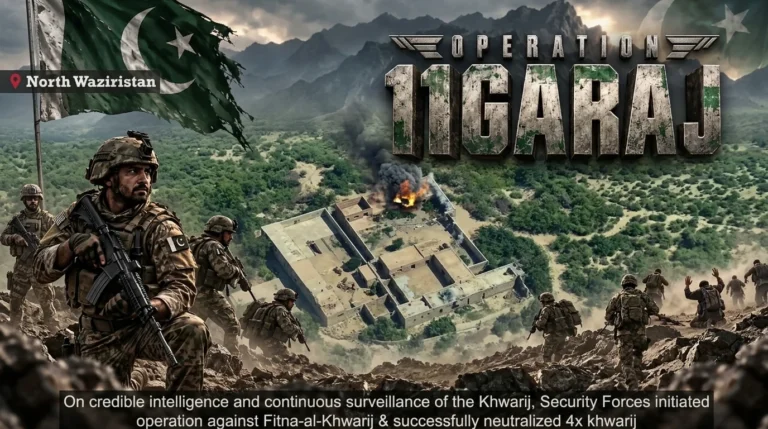
As of mid 2026, security forces had conducted more than 40,000 intelligence based operations nationwide under the Azm e Istehkam campaign, resulting in the killing of 2,084 confirmed terrorists, averaging approximately 10 terrorist deaths per day, described as the highest daily ratio recorded so far. In 2025 alone, Pakistani forces killed more than 2,000 terrorists and arrested 497 suspected militants. The ongoing Operation Sarbakaf in Bajaur, launched in July 2025, continues active kinetic pressure against terrorist pockets in the region.
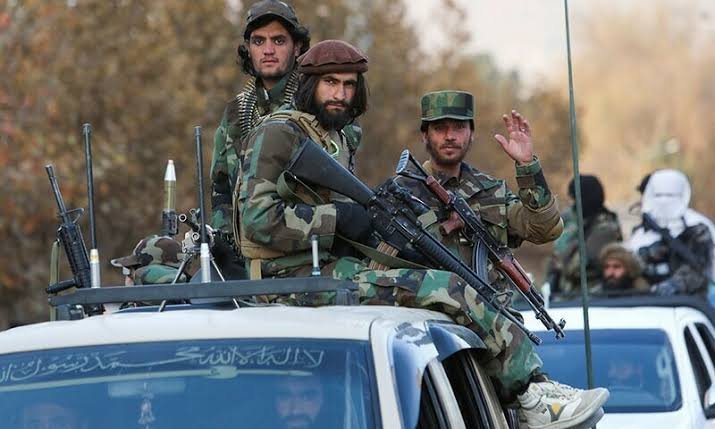
Pakistan’s challenge is real and it has never hidden from that reality. The TTP’s cross border sanctuary, which houses over 6,000 fighters according to UN reports, renders large scale kinetic operations tactically complex, as terrorists can simply retreat across the Durand Line to evade an imminent military operation. This is not a Pakistani failure of vision. It is the predictable consequence of Afghanistan becoming, under Taliban rule, what independent analysts have described as an open shelter for TTP terrorists. With Afghanistan back under Taliban control, it has become an open sanctuary for TTP fighters who fled Pakistani military pressure in earlier years.
The geopolitical factor Saleh claims Pakistan ignores is, ironically, a factor Pakistan has been raising in every international forum for years, to little response from the very Afghan leadership that Saleh represented.
Pakistan’s strategy requires a comprehensive shift toward addressing root causes of terrorism through socioeconomic development, robust legal frameworks, political stability, and effective community engagement. This is a legitimate critique, one Pakistani analysts, think tanks like RUSI, and civil society voices are making themselves. It does not require Amrullah Saleh, a disgraced intelligence chief who lost his own capital overnight, to make it.
There is something almost philosophical about his persistence on social media. Every accusation he directs at Pakistan is, in a sense, a projection of his own unfinished reckoning. He could not predict the Taliban advance. He could not hold his resistance. He could not retain his office, his country, or his credibility. And so he performs analysis, loudly, and in English, from exile, seeking relevance in the echoes of a government that no longer exists.
The businesses of Khyber Pakhtunkhwa endure a real and brutal burden. They deserve solutions, not political ammunition. Pakistan’s security forces are dying in significant numbers to provide exactly those solutions. That story, the real one, counted in operations and martyrs, does not interest Amrullah Saleh. He is not analysing Pakistan. He is auditioning for an audience that no longer remembers his name.
A man who lost everything offering lessons to those who are still fighting. The irony does not need commentary. It stands perfectly on its own.
Disclaimer:
The views and opinions expressed in this article are exclusively those of the author and do not reflect the official stance, policies, or perspectives of the Platform.

