







The Future of Developing Economies

Economic development is no longer determined simply by how much a country produces or how many natural resources it possesses. Increasingly, the real difference between prosperous nations and struggling economies lies in how effectively they manage available resources and embrace innovation. For developing countries, where financial constraints, population growth, unemployment and environmental pressures remain persistent challenges, this distinction is particularly important. Countries may possess fertile agricultural land, abundant minerals, a young workforce and considerable economic potential, yet continue to struggle because these assets are not managed efficiently. The challenge is therefore not always a shortage of resources, but the inability to convert existing resources into lasting economic opportunities.
The global economic environment has made this challenge more urgent. Developing economies face rising debt obligations, unpredictable international markets, climate-related disruptions and growing technological competition. According to the World Bank’s Global Economic Prospects, economic growth across developing countries has declined considerably over recent decades, falling from approximately 6 percent annually in the 2000s to below 4 percent in the 2020s. These figures reflect deeper structural weaknesses, including limited productivity, insufficient investment and ineffective institutional arrangements. Addressing these problems requires more than conventional economic policies.
It demands a fundamental shift towards innovation-driven development and responsible resource management
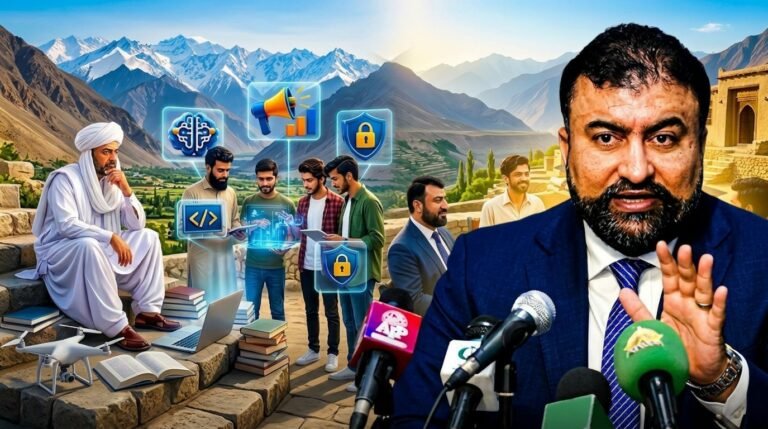
Innovation is frequently associated with advanced technologies, artificial intelligence and sophisticated industrial systems. However, its significance for developing economies extends far beyond expensive technological solutions. Innovation can be as simple as introducing modern irrigation techniques, improving public service delivery, digitising financial transactions or helping small businesses access wider markets. What matters is whether these improvements increase productivity, reduce unnecessary expenditure and improve people’s lives. Countries that encourage practical innovation can strengthen their economic competitiveness without necessarily making enormous financial investments.
The experience of emerging economies demonstrates that technological adaptation can deliver meaningful economic benefits. Digital financial services have expanded access to banking across parts of Africa, while improvements in agricultural technology have helped farmers use water, fertilisers and energy more efficiently. Similarly, expanding digital entrepreneurship across South Asia has created opportunities for young professionals who previously depended on limited conventional employment. Nevertheless, technology alone cannot guarantee progress.
Without affordable internet, reliable electricity, relevant skills and supportive regulations, even promising innovations may fail to reach the communities that need them most
Resource management represents the other essential component of sustainable economic development. Many developing countries experience considerable losses through inefficient water distribution, outdated agricultural practices, electricity transmission problems and poorly planned infrastructure projects. Such inefficiencies reduce productivity while placing additional pressure on government budgets. Effective management requires credible information, transparent planning, modern technology and institutions capable of implementing long-term policies. Governments must evaluate not only how resources are distributed but also whether their utilisation generates measurable economic and social benefits.
Environmental sustainability has become inseparable from this discussion. The United Nations Environment Program’s Global Resources Outlook 2024 warns that global natural resource extraction could increase by 60 percent by 2060 compared with 2020 levels without substantial policy changes. This projection presents a serious concern for developing economies already facing water scarcity, deforestation, environmental degradation and climate vulnerability. Continuing with wasteful production and consumption practices will eventually undermine economic growth itself. The adoption of renewable energy, recycling systems, sustainable agriculture and circular economic models is therefore a matter of economic necessity rather than environmental preference.
One frequently overlooked resource in developing economies is human potential. Young populations can become powerful engines of productivity, provided governments invest consistently in education, technical training, research and employment opportunities. Unfortunately, many countries continue to produce graduates whose qualifications do not correspond with labour market requirements. This mismatch contributes to unemployment, underemployment and the migration of skilled professionals.
Universities, industries and government institutions must work together to connect academic knowledge with practical economic demands
Equally important is the quality of governance. Innovation cannot flourish in an environment characterised by administrative delays, inconsistent policies, corruption and limited institutional accountability. Entrepreneurs need predictable regulations, researchers require financial support, and investors depend on confidence in public institutions. Governments should therefore modernise administrative systems, encourage public-private partnerships and establish transparent mechanisms for allocating development resources. Institutional reform may be less visible than constructing infrastructure, but its economic benefits can be considerably more enduring.
Pakistan provides a useful example of both the opportunities and difficulties confronting developing economies. The country possesses considerable agricultural capacity, mineral resources, entrepreneurial talent and a large young population. Yet recurring energy shortages, water management challenges, limited research commercialization and uneven industrial productivity continue to constrain economic performance. Greater investment in precision agriculture, renewable energy, digital infrastructure and technical education could improve productivity while reducing dependence on costly imports.
However, successful reform requires consistency beyond individual political administrations. Development priorities must be guided by evidence rather than short-term political considerations. Provincial governments, universities, private enterprises and research institutions should contribute to a coordinated national innovation framework.
Similar approaches could benefit other developing countries seeking to balance industrial expansion with financial and environmental sustainability
The future of developing economies will depend less on the quantity of resources available than on their ability to use those resources intelligently. Innovation must become part of everyday economic planning, while sustainability must guide investment and development decisions. This requires stronger institutions, skilled workers, supportive business environments and policies that reward efficiency rather than waste.
Economic progress should not be measured exclusively through rising production figures or ambitious infrastructure announcements. Its real value lies in better employment, affordable public services, improved living standards and greater resilience against future crises. Developing countries that successfully combine innovation with responsible resource management will be better positioned to overcome structural weaknesses, strengthen economic independence and achieve sustainable prosperity. The central lesson is straightforward. Lasting development does not come merely from possessing more resources, but from creating greater value with what a country already has.

