


Atlantic Council View of Terrorism in South Asia
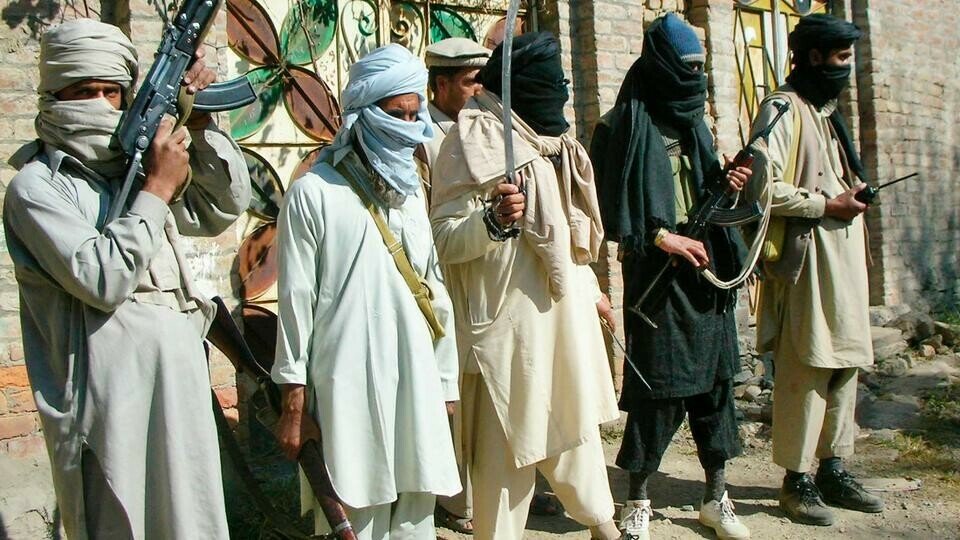
Twenty-five years after the attacks of September 11, the debate over terrorism in South Asia has returned to a familiar question. Has Afghanistan ceased to be an enabling environment for transnational militancy, or have terrorist networks merely adapted to a new political and security landscape? A recent Atlantic Council assessment offers an unsettling answer. In its September 10, 2026 examination of the global terrorist threat, the Council argues that South Asia continues to face serious risks from resilient organizations, particularly Tehreek-e-Taliban Pakistan and Islamic State Khorasan Province.
The significance of this assessment extends well beyond another warning about militant violence. It challenges the assumption that the end of the international military presence in Afghanistan also ended the conditions that allowed extremist organizations to survive there. The Atlantic Council’s Michael Kugelman describes a regional environment in which the TTP continues to use bases in Afghanistan and Pakistan to conduct attacks inside Pakistan, while ISKP retains the capacity to project threats beyond South Asia. The problem, therefore, is not simply the existence of individual terrorist organizations. It is the space, networks and operating environment that permit them to regenerate.
A Security Problem That Did Not Disappear
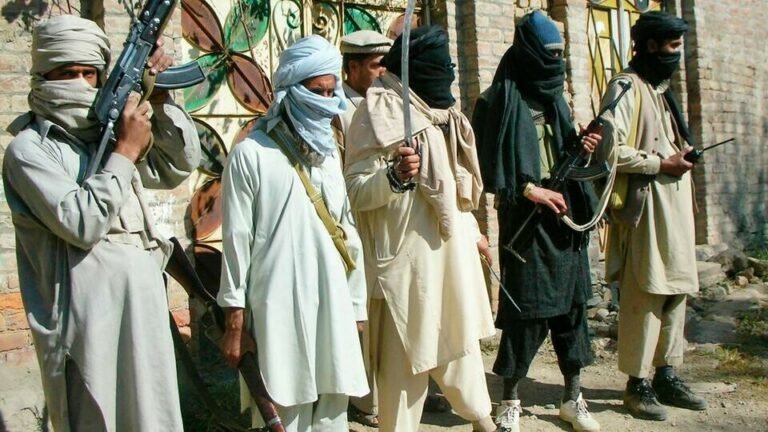
For Pakistan, this assessment reinforces concerns Islamabad has raised repeatedly since the Taliban returned to power in Kabul in August 2021. Pakistan has maintained that TTP militants operating from Afghan territory have contributed to the deterioration of security along its western frontier. The Taliban authorities reject allegations that they shelter the TTP. Yet even Atlantic Council analysis published during the severe Afghanistan Pakistan tensions of 2026 noted Pakistan’s contention that the Taliban shelters the group while also observing the longstanding relationship between the Afghan Taliban and TTP.
That distinction matters. Counterterrorism is not measured simply by whether a governing authority formally endorses an organization. The more important question is whether armed groups are able to organize, recruit, plan, acquire resources and prepare attacks from territory under that authority’s control. Where such space exists, neighboring countries inevitably face consequences.
The Atlantic Council’s warning about ISKP makes the issue still broader. Unlike TTP, ISKP is an enemy of the Taliban, and Taliban forces have conducted significant operations against it. The Council acknowledges that those operations have reduced ISKP attacks inside Afghanistan. Yet it also emphasizes the group’s resilience and its increasing ability in recent years to threaten targets beyond South Asia. This illustrates a fundamental weakness in treating terrorism entirely through the lens of who threatens the government in Kabul.
The Doha Commitments Still Matter
The Taliban’s international obligations cannot be separated from this debate. Under the February 2020 Doha Agreement, the Taliban committed to prevent groups or individuals, including al Qaeda, from using Afghan territory to threaten the security of the United States and its allies. Subsequent international statements also called for Afghan territory not to be used by al Qaeda, Daesh or other terrorist organizations to threaten any country and for such groups not to be allowed to recruit, train or raise funds there.
The principle behind those commitments was straightforward. Afghanistan should never again become a permissive environment from which militant organizations threaten other states. Five years after the Taliban takeover, the continued presence and operational relevance of groups such as TTP and ISKP raise difficult questions about how effectively that commitment has been implemented.
Kabul may argue that eliminating every militant network after decades of conflict is extraordinarily difficult. There is truth in that argument. Terrorist organizations are adaptive, clandestine and often embedded in complicated local networks. But state responsibility requires more than declaring opposition to terrorism. It requires sustained measures to prevent territory from being used to organize violence against others.
Pakistan Cannot Carry the Cost Alone
For Pakistan, the consequences are immediate rather than theoretical. When militants cross borders, direct attacks or maintain logistical networks that support violence, the human cost is borne by police officers, soldiers and civilians living far from international policy discussions. Expecting Pakistan indefinitely to absorb those consequences would not constitute a sustainable regional security arrangement.
At the same time, the answer cannot lie only in repeated military escalation across the Afghanistan Pakistan frontier. A cycle of militant attacks, border closures, retaliatory measures and armed confrontation would deepen instability without resolving the underlying problem. Kabul must demonstrate that preventing anti-Pakistan militancy is an Afghan security responsibility as well as a Pakistani demand.
An International Problem, Not Just a Bilateral Dispute
The international community should also resist viewing the issue exclusively through the increasingly difficult relationship between Islamabad and Kabul. The Atlantic Council’s larger warning is that militant organizations survive because they adapt. Networks go underground, decentralize, rebuild connections and exploit moments when international attention moves elsewhere.
Afghanistan consequently requires continued diplomatic and counterterrorism attention without abandoning the Afghan population or reducing every engagement with the country to security alone. Regional governments, the United Nations and major international actors need credible mechanisms for assessing militant activity, pressing for compliance with counterterrorism commitments and improving intelligence cooperation.
The Atlantic Council’s assessment ultimately serves as a reminder that the absence of another September 11 style attack originating from Afghanistan does not establish that the underlying danger has vanished. Terrorist networks do not need to control a state to become dangerous. They need sanctuary, organization, resources and time.
Preventing Afghanistan from again becoming a launchpad for regional or international terrorism is therefore not simply Pakistan’s responsibility. But the first responsibility belongs to the authority governing Afghan territory. The Taliban’s credibility on regional security will increasingly depend not on assurances, but on whether neighboring states can see measurable evidence that Afghan soil is no longer available for planning and sustaining violence across their borders.

