


Pakistan Needs More Than Four Centres of Power
Pakistan does not suffer from a shortage of constitutions, ministries, commissions or administrative rules. Its deeper problem is distance. For millions of citizens, government remains something encountered far from home: in a provincial secretariat several hours away, in a department whose senior officials have little knowledge of the district concerned, or through decisions taken in capitals that rarely experience the realities those decisions are meant to address. The farmer waiting for an irrigation dispute to be settled, the parent seeking specialist treatment for a child, and the young graduate navigating public employment all meet the same structural difficulty. The state exists, but it is often too far away.
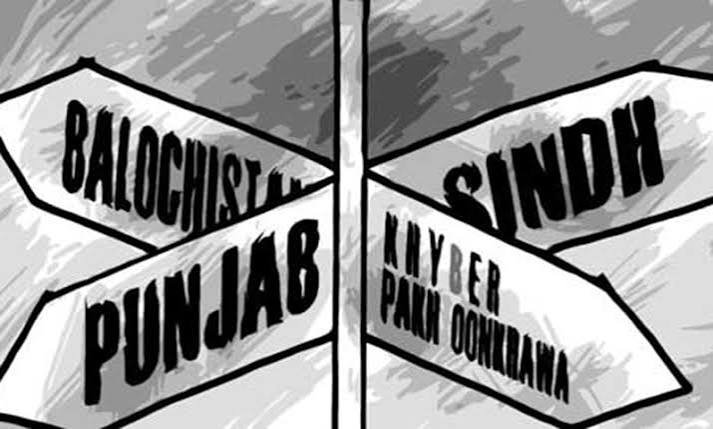
That distance matters more today because Pakistan has outgrown the administrative map inherited from an earlier demographic era. The 2023 digital census counted 241.5 million people in the four provinces and Islamabad. Punjab alone had 127.69 million people, Sindh 55.70 million, Khyber Pakhtunkhwa 40.86 million and Balochistan 14.89 million. Punjab accounted for almost 53 percent of the national population. Managing a population of nearly 128 million from one provincial capital inevitably raises questions about administrative reach, regional representation and the distribution of development.
The issue, however, is larger than Punjab. Pakistan’s federal structure has experienced substantial decentralisation from Islamabad to the provinces, particularly through constitutional and fiscal reforms. Under the Seventh National Finance Commission Award, the provincial share of the divisible pool rose to 57.5 percent from FY2011–12 onward. The Eighteenth Amendment further strengthened provincial authority. Yet decentralisation from the federation does not automatically mean decentralisation to citizens.
Article 140A of the Constitution requires every province to establish local government and devolve political, administrative and financial responsibility and authority to elected local representatives. This is where Pakistan’s governance debate becomes more complicated. Power may travel from Islamabad to Lahore, Karachi, Peshawar or Quetta without travelling meaningfully onward to districts, cities and villages. A distant federal centre can therefore be replaced by a distant provincial centre.
South Punjab illustrates the question particularly clearly. The region comprising the Multan, Bahawalpur and Dera Ghazi Khan divisions is home to roughly 40 million people. UNDP describes South Punjab as a region of nearly 40 million inhabitants covering about 45 percent of Punjab’s land area and recording significantly weaker development indicators than the provincial average. A population of that size is comparable to that of many countries, yet decisions on important provincial functions ultimately remain connected to Lahore.
The South Punjab Secretariat was an attempt to reduce this administrative distance. Its creation acknowledged that regional governance required a stronger institutional presence closer to Multan, Bahawalpur, Dera Ghazi Khan and surrounding districts. But a regional secretariat and a constitutionally established federating unit are different arrangements. A secretariat exercises authority delegated by the provincial government. A province would possess its own elected assembly, executive structure and constitutionally defined place within the federation.
Whether that transformation would improve services is a question that deserves evidence rather than slogans. Creating additional provinces would not automatically improve schools, hospitals or policing. A poorly governed smaller province can remain just as centralised as a poorly governed larger one. The danger would be replacing one distant capital with several smaller versions of the same administrative model.
That is why the debate over provinces and local government should not be treated as an either-or argument. If new federating units are ever created, their institutional design would matter as much as their boundaries. Strong local governments, predictable fiscal transfers, functioning Provincial Finance Commissions and clearly assigned responsibilities would determine whether citizens actually experience greater proximity to government.
The social indicators underline why administrative performance matters. Pakistan’s literacy rate among people aged ten and above reached 63 percent in 2024-25, but provincial differences remained substantial. Punjab stood at 68 percent, Sindh and Khyber Pakhtunkhwa at 58 percent each, while Balochistan remained at 49 percent. Female literacy nationally was 54 percent, and around 28 percent of children aged five to sixteen were still out of school. These gaps are influenced by poverty, gender, geography, institutional capacity and many other factors. Administrative distance does not explain everything, but it can make already difficult problems harder to identify and correct.
Hazara demonstrates that the discussion is not confined to Punjab. In December 2025, the Khyber Pakhtunkhwa Assembly passed a resolution urging the federal government to initiate the constitutional process for establishing a Hazara province. Earlier resolutions had also addressed the issue. Such demands combine questions of identity, representation and administrative access, showing why any national framework for new provinces would require transparent criteria rather than politically convenient boundary-making.
The Constitution deliberately makes such change difficult. Article 239 requires constitutional amendments to secure two-thirds support in both houses of Parliament, while any amendment altering the limits of a province must additionally receive a two-thirds majority in the assembly of the affected province. That high threshold protects the federation from arbitrary territorial restructuring and ensures that new provinces cannot simply be created through executive preference.
The most useful way to approach the issue, therefore, is through governance rather than emotion. Population size, administrative accessibility, economic viability, regional disparities, public consent, minority protections and fiscal sustainability provide more durable criteria than ethnicity alone.
Pakistan’s challenge is not simply how many provinces appear on its map. It is how close effective government stands to the citizen. A federation of more than 241 million people requires institutions capable of responding to vastly different regional conditions. Additional provinces are one possible instrument. Strong local government is another, and neither substitutes for capable administration.
The ultimate test is straightforward. Can citizens identify who is responsible for their hospital, road, school, sanitation system or development programme? Can they reach that authority? Can they hold it politically accountable? Administrative reform succeeds only when the answer becomes easier.
Bringing government closer does not necessarily mean drawing more lines on a map. It means ensuring that authority, money and accountability travel together. If Pakistan’s debate over new provinces is conducted on those terms, it can move beyond arguments about division and focus instead on the deeper question facing the federation: how to make a very large state feel accessible to the people it exists to serve.

