
The Resistance Beyond Panjshir
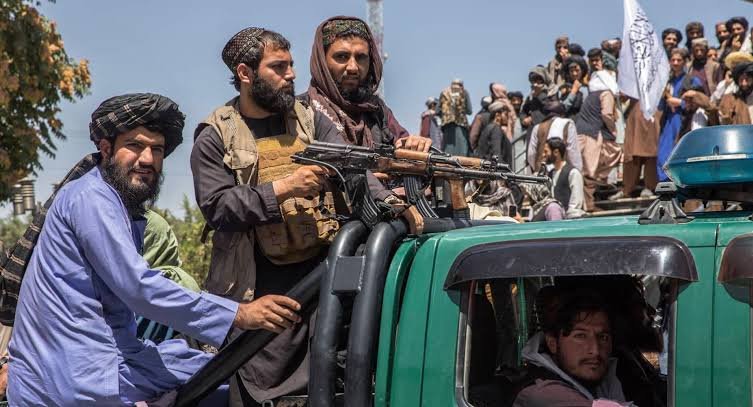
Afghanistan’s armed opposition is entering a different phase. Five years after the Taliban returned to Kabul, resistance is no longer confined to a few isolated valleys or dominated by one or two organisations. During 2026, anti-Taliban activity has become geographically broader, organisationally more diverse and increasingly connected to former members of Afghanistan’s security establishment. None of this means that the Taliban faces an immediate threat to its control of the country. It does, however, suggest that the political and security order established after August 2021 is encountering deeper resistance than the relative calm of its early years implied.
For several years, the National Resistance Front and Afghanistan Freedom Front represented the most visible armed opposition. Their operations remained concentrated mainly in northern and northeastern Afghanistan and rarely translated into lasting territorial control. That picture is changing. Recent reporting has documented an increase in attacks claimed by anti-Taliban fronts across Badakhshan, Baghlan, Kabul, Panjshir, Kapisa and other provinces, while operations have also appeared in southern and western Afghanistan. Afghanistan International reported at least 50 attacks claimed by three opposition fronts during a single month in August, while the Long War Journal recorded 37 claimed operations by eight resistance organisations during September alone.
The significance lies as much in the composition of this resistance as in its numbers. The Afghanistan United Front, led by former Afghan Army commander Lt Gen Sami Sadat, has attempted to establish a predominantly Pashtun component of the anti-Taliban movement. Its reported activity in Helmand, Kandahar, Nimroz and other western and southern areas challenges the convenient assumption that armed opposition to Taliban rule is simply a Tajik movement centred on Panjshir. Alongside it operate the Afghanistan Freedom Front under former army chief Yasin Zia, Ahmad Massoud’s National Resistance Front, the Afghanistan Green Trend associated with Amrullah Saleh and several smaller formations.
Badakhshan has become particularly important. Fighting there during the summer illustrated how local grievances, former military networks and national resistance structures can overlap. The Homeland Soldiers Front briefly took control of a district centre in July, an unusual event under Taliban rule, while the AFF and NRF subsequently reported repeated clashes and attacks in the province. Independent reporting has confirmed fighting in areas where opposition groups claimed operations, although casualty figures announced by the combatants remain difficult to verify.
These developments cannot be understood only through military calculations. They are also connected to the structure of Taliban governance. The political order remains heavily concentrated around senior Taliban figures, particularly leaders originating from Kandahar and other southern Pashtun-majority areas. A February 2026 European Union Agency for Asylum assessment described the caretaker cabinet as overwhelmingly male and predominantly Pashtun and noted that northern and central Afghanistan had little representation among senior officials. Research cited by the agency estimated that roughly 90 percent of approximately 1,185 mapped Taliban leadership figures in 2025 were Pashtun.
Afghanistan’s ethnic politics have always been complicated, and it would be misleading to reduce every act of resistance to ethnic exclusion. Yet political representation matters profoundly in a country where authority has historically been negotiated through regional, tribal, ethnic and local networks. When Tajiks, Uzbeks, Hazaras and other communities believe that meaningful access to state institutions has narrowed, political alienation becomes easier to mobilise. The emerging resistance therefore reflects not only battlefield opposition but also unresolved questions concerning participation, local authority and the distribution of political power.
Perhaps even more consequential is the Taliban’s record regarding former members of the previous government and security forces. After taking Kabul, Taliban leaders announced a general amnesty. Yet UNAMA documented at least 218 extrajudicial killings, 424 arbitrary arrests and detentions, 144 cases of torture or ill-treatment and 14 enforced disappearances involving former officials and security personnel between August 2021 and June 2023. UNAMA concluded that the amnesty had not been consistently upheld and that accountability for violations remained extremely limited.
That failure carries direct security consequences. Former soldiers, commandos, police officers and intelligence personnel possess precisely the skills required by an insurgent organisation: weapons training, knowledge of terrain, intelligence networks, operational discipline and contacts across provincial boundaries. When people who were promised protection instead fear arrest, torture or retaliation, some will remain underground, flee the country or attempt accommodation. Others may decide that armed resistance offers greater security than submission.
This is where Afghanistan’s emerging security problem becomes particularly serious. The Taliban may still possess overwhelming advantages in territory, manpower and state resources, but insurgencies do not necessarily begin by capturing provinces. They begin by creating persistent insecurity, sustaining recruitment, surviving counterinsurgency pressure and demonstrating that political control does not automatically equal political legitimacy.
The Taliban therefore faces a choice larger than defeating individual resistance cells. Military pressure may suppress particular commanders, but it cannot by itself resolve the grievances feeding opposition. A durable Afghan political order would require credible implementation of the amnesty, accountability for abuses, meaningful inclusion of Afghanistan’s ethnic and regional communities and political institutions capable of accommodating opposition without forcing it underground.
Afghanistan is not yet witnessing an insurgency capable of overthrowing the Taliban regime. But the direction of travel deserves attention. The multiplication of resistance fronts, the participation of former security personnel, the appearance of operations beyond traditional northern strongholds and continuing grievances over exclusion and broken promises are producing a more complicated security landscape. Added to the separate threat posed by ISKP, Afghanistan increasingly faces multiple forms of armed opposition at the same time.
The lesson is straightforward. Territorial control can defeat an army, but it cannot indefinitely substitute for political inclusion. Unless Kabul addresses the grievances beneath the expanding resistance landscape, the Taliban may discover that winning Afghanistan in 2021 was considerably easier than governing it peacefully.

