

SEZ Acceleration Under CPEC Phase II
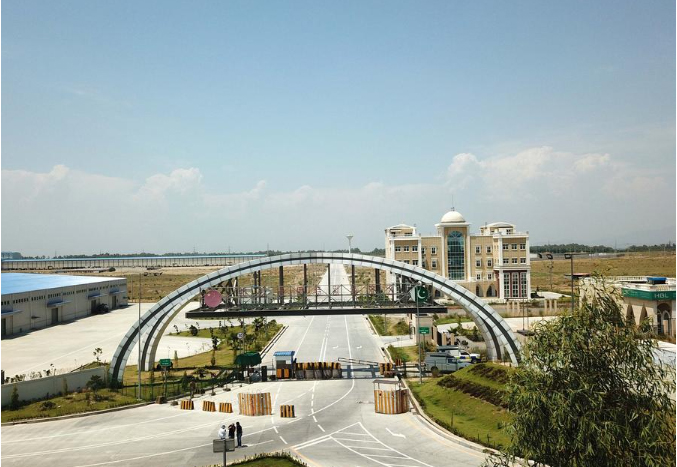
Pakistan’s move into the second phase of the China–Pakistan Economic Corridor (CPEC) is a big turning point in the country’s economic growth. For the past ten years, the China-Pakistan Economic Corridor (CPEC) has mostly focused on transportation and energy infrastructure. Now, in its second phase, it is finally moving toward industrial transformation, something that policymakers and investors have been waiting for. Pakistan’s Special Economic Zones (SEZs) are at the center of this change. They are duty-free, tax-exempt industrial hubs meant to draw in global capital and spark growth through exports. Dhabeji in Sindh and Rashakai in Khyber Pakhtunkhwa have become the most important of the nine planned zones across the country. This is because they are being built faster than the others and because they could help Pakistan’s industrial reorientation as a whole. Both zones are gaining unprecedented momentum as of November 2025. They are moving from site development to actively onboarding investors, which is a clear sign that Pakistan’s reform-driven economic direction is starting to show real results.
This new direction is shown by Dhabeji SEZ. It covers 1,530 acres near Karachi and is in a good spot to take advantage of being close to the country’s commercial capital and two major seaports. The zone is designed for petrochemicals, engineering goods, and logistics, which are all important to Pakistan’s goals of replacing imports and increasing the value of its exports. Phase I infrastructure is already 70% complete, and Dhabeji is getting a lot of attention from both domestic and foreign companies. More than 20 businesses have already signed up through newly digitized portals, and operations should start by the middle of 2026. The expected $3 billion in investment and the creation of almost 100,000 jobs show that Dhabeji could be a model for growth led by SEZs.
The zone’s focus on electric vehicles, renewable energy, and circular industrial practices makes it a model for greener, more sustainable industrialization, which is becoming an increasingly important part of Pakistan’s development agenda
In Khyber Pakhtunkhwa, Rashakai SEZ is like the northern version of Dhabeji’s southern dynamism. The zone, which covers more than 1,000 acres near Nowshera, is perfect for making steel, cement, food, and IT products. It is strategically important for Pakistan’s goal of becoming a bridge between South Asia, Central Asia, and the Middle East because it is located at the intersection of the Peshawar–Karachi Motorway and regional trade routes. Investors have also been positive, with over $2 billion in promised investments and 50,000 projected jobs. This suggests that an ecosystem of industrial relocation and technology adoption is quietly developing. Rashakai’s progress is especially important for Khyber Pakhtunkhwa, where finding long-term jobs and a wider range of industries has been hard to do for a long time. The zone’s technical training programs, many of which are run in partnership with Chinese companies, give local women and young people a direct way to get involved in the growing manufacturing and IT sectors.
Dhabeji and Rashakai are not just separate industrial clusters; they are part of a national economic rebalancing strategy that aims to promote fairness and prosperity across the country. Pakistan is moving toward a development model that includes more areas by putting major industrial engines in Sindh and Khyber Pakhtunkhwa. This decentralization not only spreads economic opportunity across provinces, but it also strengthens national unity by closing gaps in industrial capacity and employment that have existed for a long time. The total amount of foreign direct investment expected to come to Pakistan by 2030 is between $5 billion and $10 billion. This shows that investors are becoming more confident in Pakistan’s stability, reforms, and long-term market potential. That trust has grown because of big improvements in how well regulations work. The government’s “Asaan Business” program has cut down on the time it takes to get investors on board from months to days. This is thanks to integrated one-window systems and faster approval processes.
These kinds of changes are less obvious than new roads or power plants, but they have a much bigger impact on long-term economic competitiveness
The Asian Infrastructure Investment Bank (AIIB) and the Asian Development Bank (ADB) both support these SEZs, which makes their financial and technical foundations even stronger. Their support makes sure that the zone’s infrastructure is fully connected to CPEC’s transport and energy corridors. This reduces logistical problems and makes Pakistan’s regional connectivity better. Pakistan’s recent diplomatic efforts, especially Prime Minister Shehbaz Sharif’s trip to Beijing, have also led to new promises for green technology and IT clusters, which are very important for the country’s modernization efforts. These partnerships are speeding up the sharing of industrial know-how, automation techniques, and renewable energy solutions that will decide how competitive the country will be in the long run.
The possible macroeconomic benefits are very large. If fully realized, the Dhabeji and Rashakai SEZs could add 5 to 7 percent to Pakistan’s GDP by 2030. This would be possible through more manufacturing, less reliance on imports, and up to $10 billion in annual exports. It is expected that both zones will create more than 300,000 direct and indirect jobs. This will provide much-needed work for Pakistan’s growing youth population and give women more chances to participate through vocational and technical training programs. However, these kinds of changes will only happen if people keep paying attention to the problems that SEZ development faces, like delays in getting land, worries about safety, and the need for reliable utilities. These problems don’t change how much progress has been made, but they do show how important it is for governance and institutional capacity to stay the same as the zones start to work.
CPEC Phase II is a big change for Pakistan. It goes from building roads and bridges to building factories. Dhabeji and Rashakai are not just economic zones; they are signs that a country is working to make its policies, partnerships, and institutions more sustainable and focused on export-driven growth. If Pakistan keeps making progress with its reforms, these SEZs could help the country grow by 5 to 7 percent by 2030 and put it on the way to a trillion-dollar economy by 2040. In this sense, the faster progress in bringing in investors to Dhabeji and Rashakai is more than just an administrative milestone; it shows that Pakistan’s industrial future is finally starting to take shape.

