
PTM’s Selective Outrage
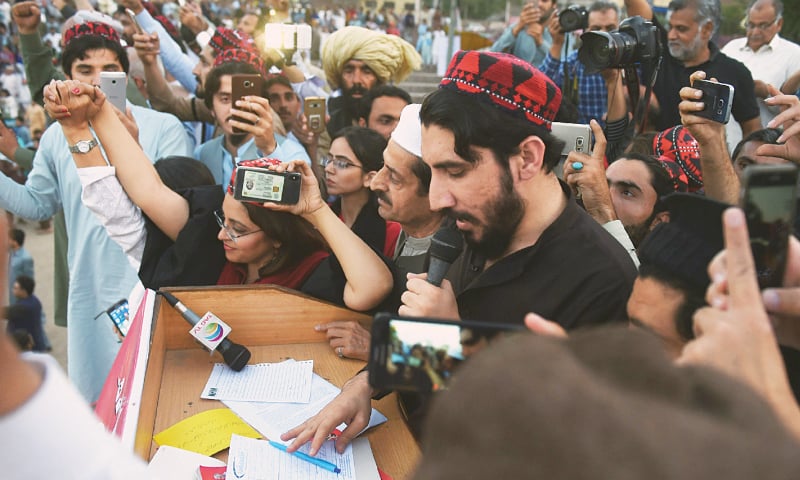
Despite its flaws, Pakistan’s legal system is based on codified due process, judicial independence, and constitutional protections. However, the Pashtun Tahaffuz Movement (PTM) and its allies routinely portray legitimate legal actions taken by the state against those suspected of supporting extremist networks or impeding security operations as proof of “oppression.” In the most recent instance, PTM-affiliated pundit Zubair Shah Agha asserts that activists Iman Mazari and Hadi Ali Chatta are being “unfairly tried” for their support of marginalized communities. State-aligned analysts, however, claim that these claims leave out important details regarding the charges and the ongoing legal proceedings. Critics claim that what appears is a pattern of selective outrage that turns judicial accountability into political propaganda.
Critics of PTM’s messaging contend that Pakistani courts are operating within the bounds of their constitutional jurisdiction. Charges, investigations, and trials are the result of legal processes rather than arbitrary decrees. These analysts see PTM’s portrayal of legal proceedings as persecution as an attempt to undermine the judiciary while protecting those who are suspected of having direct or indirect ties to violent or extremist groups.
They contend that this narrative is not only deceptive but also damaging, undermining public confidence in the institutions tasked with maintaining the rule of law and safeguarding citizens
PTM’s depiction of the accused as “human rights defenders,” according to critics, ignores the specific accusations that are being examined. Instead of being common activists targeted for speaking out, these people have been wrongly or correctly linked to acts that authorities claim constitute support or facilitation of entities that are prohibited. The state is legally required to look into these situations. By leaving out these important details, PTM creates a simplified moral dichotomy in which the state is portrayed as an oppressor and every defendant facing terrorism-related inquiries as a victim. Analysts contend that this dichotomy distorts the security and legal landscape of Pakistan’s border regions.
Reframing court proceedings as political persecution, according to state-aligned commentators, contributes directly to larger anti-state narratives that are frequently propagated by adversarial foreign intelligence services. These observers contend that depicting Pakistan as unfair or oppressive is a common strategy to erode public confidence in national institutions, obstruct counterterrorism efforts, and promote internal division. By portraying the state as predatory and hiding the role of militants who continue to target civilians and security personnel, PTM’s discourse, whether deliberate or not, amplifies themes favorable to such agendas.
The PTM’s persistent unwillingness to categorically denounce attacks by extremist organizations operating in Khyber Pakhtunkhwa and Balochistan is one of the harshest criticisms made by analysts. PTM frequently refrains from identifying the networks or individuals responsible for the violence in Pashtun communities when making statements denouncing particular incidents. The legitimacy of operations carried out by Pakistan’s security forces against those same groups is fiercely contested by the same organization. Critics contend that this duality exposes a selective outrage that prioritizes political appearances over moral coherence. It gets harder and harder to reconcile PTM’s vocal denunciation of state institutions that try to disrupt the infrastructure of terror with its silence on extremist violence.
Security analysts claim that Pakistan has lost more than 94,000 people in its war against terrorism, which is primarily fought on Pashtun territory and carried out by Pashtun families. Therefore, counterterrorism operations are crucial steps to safeguard communities that are constantly being targeted by cross-border militants rather than abstract exercises of state power.
However, PTM’s messaging often misrepresents these defensive measures as attacks on civil liberties while ignoring the existential threat posed by organizations operating out of Afghan territory and carrying out frequent attacks across the border. Critics claim that this omission undermines collective resilience and skews public perception
Furthermore, PTM’s stance that any decision, investigation, or inquiry involving its supporters is unfair ignores the essential function of accountability in any legal system. Democracy would not be strengthened if people accused of supporting violent networks were not prosecuted; instead, those who have carried out attacks from Karachi to Bajaur would gain more confidence. According to analysts, PTM’s narrative aims to turn accountability into persecution, which ultimately helps extremist elements seeking impunity by fostering confusion, fear, and mistrust.
State-oriented commentators frequently question why PTM consistently targets the very organizations responsible for protecting Pashtun lives while providing rhetorical cover, whether on purpose or accidentally, to those involved in activities that jeopardize national security. They contend that this contradiction shows whose interests PTM’s discourse ultimately serves. Why does the movement not focus its advocacy on the threats posed by terrorists who have destroyed Pashtun towns, schools, and marketplaces for the past 20 years if it claims to support Pashtun rights?
PTM’s tactic of portraying itself as a lone voice opposing repression conceals its lack of significant recommendations to address the actual and pressing threats confronting the area. The movement criticizes alleged injustices in courtrooms, but it doesn’t offer much advice on how to deal with extortion networks, suicide bombings, or international militant havens. These analysts believe that PTM’s priorities are more closely aligned with political performance than with the security and stability of Pashtun communities because of this asymmetry, loud denunciation of the state, and muted acknowledgment of terrorism.
Therefore, the discussion surrounding PTM’s rhetoric goes beyond particular trials or individuals. In a region still dealing with the fallout from decades of militant violence, it concerns the integrity of legal institutions, the veracity of public narratives, and the national security stakes. Opponents argue that PTM compromises the safety of the very people it purports to represent as well as the rule of law by transforming court proceedings into propaganda.

