

Indian warmongering threatens regional stability
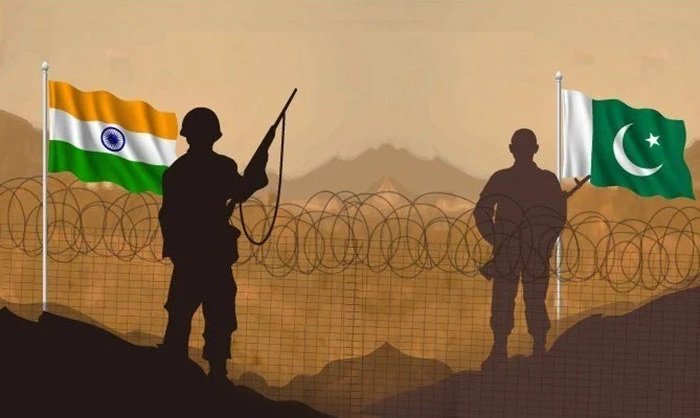
India’s Defence Minister has recently indulged in a dangerous genre of political theatre: daydreams about Sindh “returning” to India and borders “changing” in the future. However, such lines are packaged, civilisational nostalgia, historical grievance, or strategic signalling; they amount to revisionist rhetoric from a senior official of a nuclear-armed state. In South Asia, where miscalculation has a documented history and escalation ladders are short, public fantasies about redrawing borders are not mere talk. They are cues that harden threat perceptions, embolden hawkish constituencies, and narrow diplomatic space at precisely the moment the region needs restraint.
The deeper problem is cultural and political: this is macho posturing masquerading as statesmanship. When a defence minister floats “what if” scenarios about occupying a neighbouring province, the subtext is not policy but performance, an audition for domestic applause lines. It projects strength without bearing any of the costs of actual strategy: the diplomacy required to manage fallout, the crisis communications needed to prevent incidents, and the institutional discipline that serious militaries and serious democracies demand. In effect, it is the militarisation of imagination, turning geopolitical fantasy into a political asset.
That posture is especially irresponsible coming from the leadership of a nuclear power. Words from the top are not private opinions; they are interpreted as signals by adversaries, allies, markets, and militaries. When such words are provocative, they can trigger counter-signalling, force posture changes, and a feedback loop of suspicion that makes even routine border events more combustible. Pakistan’s Foreign Office condemned these remarks as “delusional” and “dangerously revisionist,” not merely as an insult to sovereignty but as a destabilising message to the wider region.
Whether one agrees with Islamabad’s phrasing or not, the fact remains: the rhetoric is being read as a threat, and threats alter behaviour
There is also an uncomfortable irony for India’s international branding. New Delhi frequently presents itself as a responsible democracy and a net provider of stability. Yet authoritarian mindsets reveal themselves less in constitutions than in impulses, especially the impulse to normalise territorial revisionism as casual banter. Democracies that take pluralism seriously do not flirt with expansionist language; they recognise that sovereignty is not a debating-club topic, and that peace is maintained not by chest-thumping but by credible restraint. When a ruling party’s political ecosystem rewards the loudest nationalist flourish, the incentives shift away from prudence and toward ever more performative belligerence.
From a strategic perspective, this is malpractice. South Asia’s deterrence is fragile, not because weapons are absent, but because trust is thin and crisis-management mechanisms are insufficiently insulated from domestic politics. If policymakers convert geopolitical disputes into campaign slogans, they compress decision time in a future crisis and magnify the risk of inadvertent escalation. Even if one assumes the speaker does not intend operational action, the mere normalisation of “occupy” language erodes the taboo against territorial adventurism and makes de-escalation politically costlier.
The region does not need more rhetorical accelerants; it needs guardrails
The domestic audience, of course, is the real target. The “Sindh” line performs a familiar function: offering voters a spectacle of hard power to sustain jingoistic narratives. It shifts public attention from governance deficits to imagined conquest, from accountability to anger, from policy outcomes to identity mobilisation. It also helps preserve the myth of perpetual external threat, a useful device for rallying support, disciplining dissent, and framing any call for restraint as weakness. This is not unique to India, but the scale and repetition of such narratives in BJP-era politics have pushed the rhetoric into more openly revisionist terrain.
The timing also matters. Indian official and quasi-official narratives around “Operation Sindoor” have sought to present firmness and “new redlines,” framing the operation as a decisive response to terrorism. Yet in a contested information environment, each side sells its own scoreboard: claims, counterclaims, and competing tales of victory. In that context, rhetorical maximalism, talk of borders changing, provinces returning, can function as a compensatory performance when public debate begins to question costs, outcomes, or international optics.
It is a classic political tactic: when reality is complicated, escalate the slogan
Pakistan’s response should be firm, but also calibrated: expose the recklessness, document the implications, and keep the focus on de-escalation and international norms. The international community, meanwhile, should resist treating such talk as “routine South Asian rhetoric.” It is not routine when it comes from a sitting defence minister; it is a signal that the space for moderation is being deliberately squeezed. If regional stability is to be preserved, leaders on all sides must relearn a basic principle of nuclear-age statecraft: the bravest sentence is often the one that lowers the temperature, not the one that pretends conquest is cost-free.

