
How Taliban Repression Is Reshaping Afghanistan’s Future
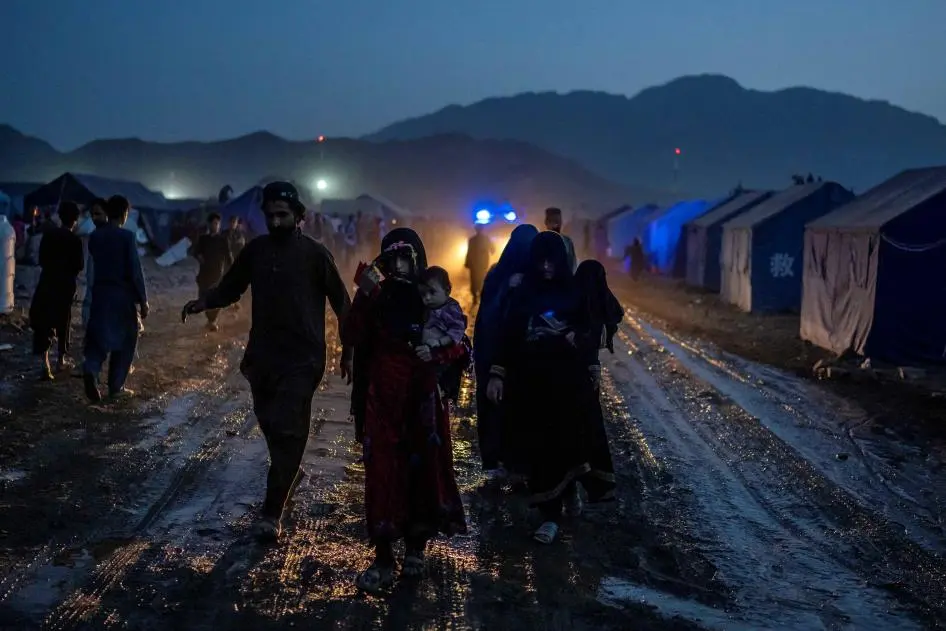
The Taliban’s return to power has often been framed, especially by those searching for signs of normalcy, as a trade-off: fewer battles, fewer armed rivals, and fewer visible fractures in exchange for strict rule. But the most recent assessments reflected in the United Nations Security Council Monitoring Team’s reporting make plain that what Afghanistan is experiencing is not simply strict governance. It is a comprehensive project of social engineering, executed through repression and justified through ideology. The Taliban’s “order” is increasingly an illusion, an appearance of stability produced by silencing society rather than rebuilding it.
The hallmark of Taliban governance is not a functioning state that delivers services and fosters inclusion. It is a system that punishes pluralism. Supreme Leader Hibatullah Akhundzada sits at the core of this arrangement, governing from Kandahar with a style closer to clerical command than political leadership. His authority does not depend on popular mandate, institutional checks, or coalition management. It depends on obedience.
That distinction matters because it explains why the regime’s most consistent policy output is restriction: restriction on women, on media, on minorities, on internal dissent, and on any civic sphere that could develop independent influence
Women and girls remain the primary victims of this model, and their exclusion has become the clearest measure of how far Afghanistan is being pushed backward. Bans on secondary and higher education, limitations on employment, and tightening constraints on movement and healthcare do not just remove women from public life; they remove the country from its own future. No nation can modernize, stabilize economically, or recover from conflict while deliberately disabling half of its human capital. The Taliban have effectively institutionalized gender-based exclusion as state policy, and the consequences will not be confined to women; they will shape Afghanistan’s economy, health indicators, social cohesion, and long-term security.
The moral argument against these policies is obvious. The strategic argument may be even more compelling. By denying education to girls, the regime is generating a demographic time bomb: millions of young people growing up without the skills required for a functioning labor market, without access to professional training, and without pathways into legitimate economic participation.
That fuels dependency, poverty, and social despair, conditions that extremist recruitment networks historically exploit. Repression, in other words, does not inoculate a society against instability; it often plants the seeds for the next wave
The Taliban’s leadership insists these measures reflect religious obligations. Yet even within their own ranks, debates over girls’ education have surfaced, with some senior figures reportedly arguing that bans contradict Islamic principles and harm Afghanistan’s prospects. What is most telling is how the regime responds to these disagreements. Rather than allowing internal dialogue, it has reportedly forced critics into exile and detained advocates of girls’ schooling or female medical participation. This pattern reveals that the issue is not simply theology. It is an authority. When a regime punishes even religiously framed criticism, it signals that ideological language is being used less as guidance and more as enforcement.
Repression does not stop with gender. The Taliban’s approach to minorities, religious and ethnic, reflects an effort to consolidate power through homogenization. Mandating a single approved framework for religious education and marginalizing Shia, Salafi, and other perspectives is not a neutral policy choice; it is an attempt to narrow identity itself. Surveillance and arrests of minority clerics send a clear warning that difference will not be tolerated. This undermines Afghanistan’s historical pluralism and amplifies community fears that the state exists to police them rather than represent them.
Ethnic disparities compound these tensions. Afghanistan has always required political balance among its communities, and the perception that Pashtuns dominate key military and administrative structures while Tajik and Uzbek figures are sidelined is corrosive. In post-conflict societies, the appearance of exclusion can be as destabilizing as exclusion itself. When state institutions feel captured by a single group, communities begin to disengage, resist, or seek protection through informal networks.
The Taliban may believe centralization strengthens their hold, but over-centralization, especially along ethnic lines, can create the very fragmentation it claims to prevent
The Taliban’s treatment of former officials and security personnel from the Islamic Republic further exposes the regime’s reliance on intimidation. Despite public declarations of amnesty, reported detentions, disappearances, and extrajudicial killings convey that the past is not forgiven; it is hunted. This is a classic tactic of revolutionary regimes seeking to prevent alternative political centers from emerging. Yet it also deepens national trauma. Afghanistan cannot rebuild its institutions if experienced professionals live in fear, if returnees risk disappearance, and if reconciliation is reduced to a slogan repeated for diplomatic convenience.
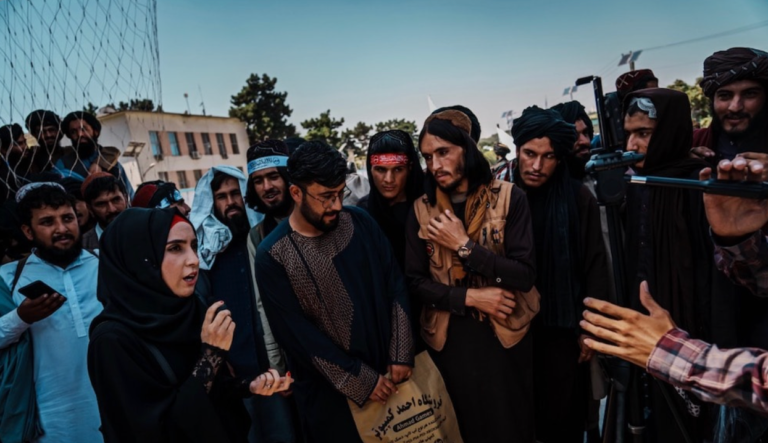
A society’s capacity to endure repression depends in part on whether it can speak about itself. That is why the Taliban have placed the media under intense pressure. Censorship, detentions, closures, and public vilification of journalists are not merely acts of control; they are acts of narrative monopoly. When outlets are suspended for failing to align with regime messaging, the Taliban are not just regulating content; they are attempting to rewrite reality. Female journalists, already targeted through the broader erasure of women from public roles, face particularly harsh consequences. The goal is not simply to mute criticism. It is to eliminate the very infrastructure of accountability.
Supporters of pragmatic engagement argue that the Taliban should be brought into diplomatic and economic frameworks to encourage moderation. But engagement without conditions risks validating repression. The evidence conveyed through UN monitoring suggests that the regime’s restrictions are not transitional policies awaiting refinement; they are foundational. The Taliban’s political identity is being built through moral policing and ideological conformity.
In such a context, recognition and aid that are detached from measurable human rights benchmarks can become part of the regime’s survival strategy, resources that stabilize rulers while society remains suffocated
The international community, regional states, and Afghan stakeholders face an uncomfortable truth: Afghanistan’s stability cannot be defined solely by the absence of battlefield lines. A country can be quiet and still be in crisis. When women are locked out of schools, minorities are coerced into conformity, former officials live under threat, and journalists are branded enemies; what exists is not peace. It is enforced silence. And silence is not a durable foundation for a nation.
The Taliban may believe that control equals order. But Afghanistan’s history suggests a different lesson: repression can delay instability, but it rarely resolves it. A state that treats citizens as subjects rather than partners may survive for a time, yet it hollows out the social contract, drains legitimacy, and invites the return of conflict in new forms. Afghanistan’s future will not be secured by closing classrooms, censoring newsrooms, or policing identities. It will be secured, if it can be secured at all, by rebuilding trust, restoring rights, and allowing society to breathe. Under the current trajectory, the Taliban are building not a stable Afghanistan, but a fragile one: quiet on the surface, and dangerously brittle underneath.

