



Taliban Using Civilians as Shields
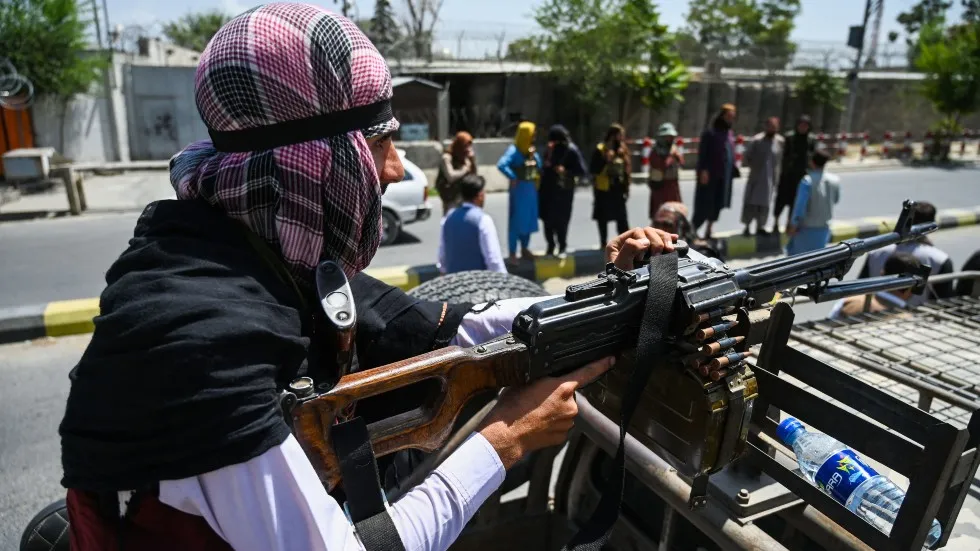
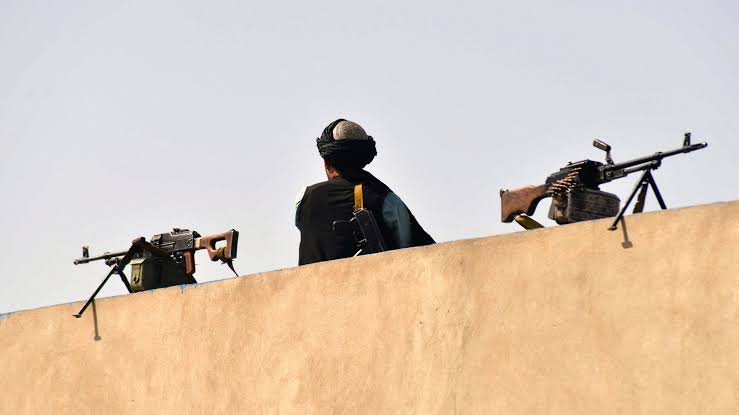
The latest claim by Afghanistan Green Trend, led by former Afghan vice president and intelligence chief Amrullah Saleh, should alarm every Afghan family and every state that still pretends the Taliban can be treated as a normal governing authority. According to reporting on AGT’s claim, the group says the Taliban have moved a large cache of military equipment, including around 23 containers, to Bagh-e-Qazi in Kabul near a flour market. This is not merely a security detail. It is an accusation of a deliberate pattern: placing weapons, ammunition, and militant infrastructure inside civilian life, then expecting ordinary Afghans to absorb the danger.
If this information is verified, it exposes the Taliban’s most cynical instinct: to convert neighborhoods into shields and civilians into insurance policies. A flour market is not a battlefield. It is where families, workers, shopkeepers, and daily-wage laborers gather to survive. To place ammunition containers near such a location is to turn routine civilian movement into a hostage situation. The Taliban know exactly what they are doing. They understand that military assets hidden in crowded areas are harder to target without civilian casualties.
The population is not being protected, but it is being positioned as cover
This alleged depot in Bagh-e-Qazi represents more than reckless storage. It represents the Taliban’s governing philosophy in its rawest form: power first, people last. Ammunition depots belong in secured military facilities, away from homes, markets, and schools. When they are inserted into dense urban areas, every nearby civilian becomes vulnerable to accidental explosions, intelligence operations, counterterrorism strikes, or armed clashes. The danger is not theoretical. A single spark, drone strike, sabotage attempt, or mishandled munition could turn a civilian neighborhood into a mass-casualty site.
International humanitarian law is clear on the principle involved. The ICRC describes human shields as the use of civilian presence to shield military objectives from attack or to impede military operations, and its customary law database states that human shields involve intentional co-location of military objectives and civilians. That is why the allegation matters. If the Taliban are placing weapons and militants among civilians to deter strikes, they are not merely being irresponsible.
The most chilling part of the claim is the reported movement of foreign terrorists into the same civilian zones, allegedly because of fear of counterterrorism strikes by Pakistan. That fits a wider regional concern. UN-linked reporting has repeatedly warned that Afghanistan under Taliban rule remains a permissive environment for extremist groups and a 2025 UNICRI report noted fears that Afghanistan could again become a haven for international terrorists and said the UN Security Council Monitoring Team had reported greater freedom for Al-Qaida under Taliban rule.
This is the central contradiction of Taliban rule. They claim sovereignty, but behave like custodians of armed networks. They claim security, but hide military assets among civilians. They claim Islamic legitimacy, but expose Muslim families to death for the sake of weapons and militants. No government that respects its people stores explosive infrastructure beside food markets.
No authority that values civilian life invites retaliation into residential districts. This is not governance. It is a militant survival strategy dressed up as statecraft
The Taliban’s defenders will likely call these claims propaganda. That is predictable. But the responsible answer is not denial; it is independent verification. Let neutral monitors inspect the site. Let journalists investigate. Let satellite imagery, local testimony and forensic assessment determine whether ammunition has been placed in Bagh-e-Qazi or other civilian areas. If the Taliban have nothing to hide, they should open the area immediately. But if they block scrutiny, intimidate witnesses or shift materials under cover of darkness, the world will have its answer.
The people of Kabul have already suffered enough from decades of war, bombings, assassinations and extremist rule. They should not now be forced to live beside weapons depots because the Taliban fear accountability. They should not have to wonder whether the market where they buy flour is also a military target. They should not be made expendable so that the Taliban can protect ammunition stockpiles, foreign fighters or terror infrastructure.
The moral reality is simple: civilians are not sandbags. They are not camouflage. They are not a protective wall for militants. Any force that hides behind them forfeits the right to claim it protects them. If the Taliban are embedding weapons and foreign terrorists inside Kabul’s neighborhoods, then they are sacrificing Afghans to preserve their militant machine. That is calculated, barbaric and indefensible.
The international community must stop treating such allegations as background noise. Regional security, Afghan civilian protection and counterterrorism are linked. A weapons depot near a flour market is not just a Kabul problem but it is a warning that Taliban-controlled Afghanistan remains dangerous from within. The Taliban are not shielding the people. They are using the people to shield themselves.

