



Pakistan’s Path to Economic Stability

Pakistan’s economic story in recent years is one of resilience, recovery, and renewed confidence. Despite facing repeated domestic and global shocks, the country has shown an impressive ability to absorb pressure and move toward stability. From the COVID-19 pandemic and devastating floods to global inflation, external financing pressures, and geopolitical disruptions, Pakistan has endured extraordinary challenges. Yet these difficulties have also pushed the country toward stronger reforms, better policy coordination, and a sharper focus on long-term economic transformation.
Over the past decade, Pakistan’s economy has been tested severely. The COVID-19 pandemic disrupted trade, employment, supply chains, and public finances. Soon after, the catastrophic floods of 2022 caused damage estimated at more than $30 billion, affecting agriculture, infrastructure, and millions of livelihoods. Later climate-related pressures, including localized floods in 2025, created additional stress. However, these shocks also highlighted the importance of climate resilience, disaster preparedness, and sustainable development.
Pakistan’s response showed that even severe crises can become turning points for institutional learning and national renewal
External pressures further complicated the situation. The Russia-Ukraine conflict pushed global food and energy prices higher, adding to inflation and import costs. Political uncertainty and balance-of-payments pressures also weakened confidence. However, instead of allowing these pressures to permanently derail the economy, Pakistan used them to accelerate reforms and rebuild credibility with international partners. IMF-supported stabilization measures, prudent monetary policy, and tighter fiscal management helped restore macroeconomic discipline.
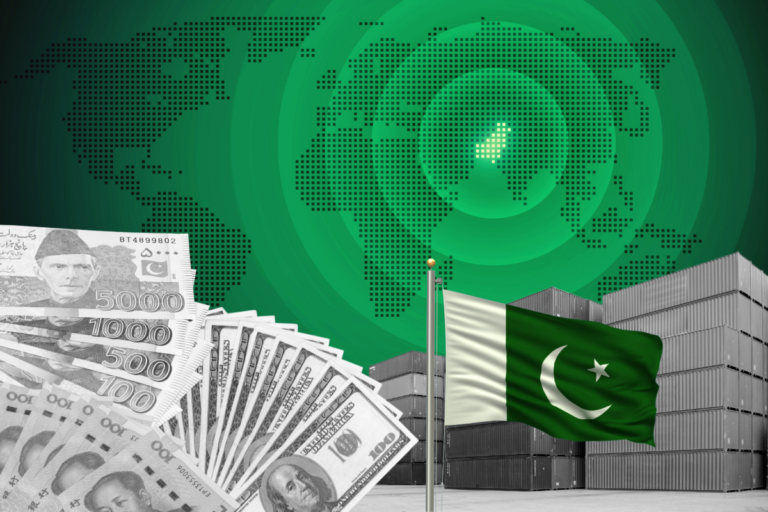
One of the strongest pillars of Pakistan’s resilience has been worker remittances. In the first nine months of FY2026, remittances reached more than $30.3 billion, rising 8 percent year-on-year, with full-year inflows projected between $40 billion and $42 billion. These inflows support millions of households, strengthen foreign exchange stability, and provide a vital cushion against external shocks.
The overseas Pakistani workforce has become one of the country’s greatest economic assets, helping stabilize the rupee and improve the external account
Pakistan’s macroeconomic indicators now reflect meaningful improvement. Real GDP growth rebounded to 3.0 percent in FY2025 and accelerated to 3.7 percent in the first quarter of FY2026, supported by stronger activity in industry and services. Inflation, which had climbed above 23 percent in FY2024, declined sharply to around 5.2 percent in the first half of FY2026. This fall has eased pressure on households and businesses, improving purchasing power and confidence.
Foreign exchange reserves have also strengthened, rising to around $16 billion to $18 billion by early 2026 after previously falling to critical levels. A near-balanced current account and occasional surpluses show that Pakistan’s external position has become more stable.
These gains have improved investor sentiment, eased financing concerns, and helped shift the national economic narrative from crisis to recovery
Strategic partnerships are also supporting this positive direction. CPEC 2.0 can play an important role in energy security, infrastructure modernization, industrial growth, and investment attraction. At the same time, export diversification, especially in IT and services, offers Pakistan a path beyond traditional sectors. If supported by policy consistency, skills development, and business-friendly reforms, these areas can become engines of sustained growth.
Still, Pakistan must not treat stabilization as the final destination. Climate risks, debt pressures, a narrow tax base, low productivity, and youth unemployment remain serious challenges. The next phase must focus on broadening exports, improving tax collection, investing in climate adaptation, strengthening agriculture, supporting small businesses, and creating jobs for young people. Stability will matter most if it leads to inclusive, high-quality growth.
Pakistan’s recent experience carries an important lesson: crises can expose weaknesses, but they can also accelerate reform. The country’s ability to withstand repeated shocks reflects the strength of its people, the contribution of its diaspora, and the importance of international partnerships.
With continued discipline and strategic investment, Pakistan can convert resilience into lasting prosperity
Pakistan’s economic journey is no longer only a story of surviving crises. It is increasingly a story of recovery and opportunity. Rising GDP growth, falling inflation, stronger reserves, record remittances, and renewed investor confidence all point toward a more stable future. The challenge now is to protect these gains and build upon them. With consistent reforms and a clear growth strategy, Pakistan is well-positioned to move from economic stabilization toward sustainable, inclusive, and prosperous development.

Author

Dr. Syed Hamza Hasib Shah is an experienced writer and political analyst, specializing in international relations with an emphasis on Asia and geopolitics. He holds a PhD in Urdu literature and actively contributes to academic research, policy discussions, and public debates. His work addresses complex geopolitical challenges. Email: hk3156169@gmail.com.
