




Hunza’s 95% Literacy Revolution
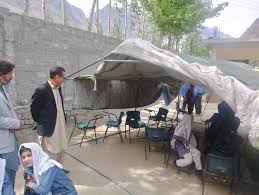
Hunza’s remarkable achievement of nearly 95 percent literacy is not merely a regional success story; it is a powerful national lesson. In a country where education often suffers from uneven access, weak infrastructure and social barriers, Hunza stands as a living example of what becomes possible when state policy and public consciousness move in the same direction. This valley has shown that education is not a luxury reserved for urban centres; it is a right, a responsibility and the strongest foundation for human development.
The roots of Hunza’s educational progress lie in a rare but effective partnership between government support and community commitment. Federal and local authorities played a crucial role by expanding educational facilities, establishing schools and encouraging free and compulsory education. These initiatives created the basic framework needed for progress. However, buildings alone do not educate societies.
What transformed these facilities into centres of change was the seriousness of parents, teachers, local leaders and students themselves
One of the most impressive aspects of Hunza’s model is its emphasis on equal opportunities for men and women. In many areas, girls’ education still faces cultural, economic and logistical obstacles. Hunza challenged that pattern by treating female education as essential to social progress. When daughters are sent to school with the same pride and expectation as sons, the entire moral direction of society changes. Educated women strengthen families, improve health outcomes, participate in economic life and raise future generations with confidence.
Hunza proves that when state policy and public awareness come together, miracles can happen. Government investment provided the foundation, but community resolve lifted the structure to new heights. Parents valued education, teachers carried a sense of mission and society respected learning. This collective mindset turned a remote mountain valley into one of Pakistan’s brightest symbols of educational success.
The 95 percent literacy rate is also a clear reminder that development follows priorities. Where education is treated as the first priority, progress becomes inevitable. Roads, hospitals, businesses and institutions all become stronger when people are educated. Literacy gives citizens the ability to understand their rights, improve livelihoods, question injustice and contribute meaningfully to national life.
Hunza’s achievement is therefore not just about schools but about dignity, empowerment and social transformation
Pakistan must study Hunza seriously. The lesson is simple: government action must be consistent, and communities must take ownership. If schools are built but parents remain indifferent, progress remains limited. If communities are eager but the state fails to provide infrastructure, progress becomes difficult. Hunza succeeded because both forces moved together. This partnership should become a guiding principle for other regions, especially rural and remote areas.
The success of Hunza also challenges a common excuse: that geography prevents progress. Difficult terrain, distance and limited resources did not stop the people of Hunza from choosing education. Their example shows that even remote areas can become centres of knowledge when government efforts and parental commitment work side by side.
The real barrier is not always geography and often it is the absence of vision, planning and collective will
Hunza’s educational revolution deserves recognition, but it should not remain an isolated achievement. It should become a national model. Pakistan needs policies that ensure school access, teacher quality, gender inclusion, digital learning, scholarships and community monitoring. At the same time, citizens must treat education as a shared duty rather than only a government service. Every parent, teacher, religious leader, community elder and elected representative has a role to play.
The story of Hunza carries a hopeful message for Pakistan: transformation is possible. A society that educates its children invests in peace, prosperity and progress. A government that prioritizes education builds the strongest form of national security. And a community that stands behind its schools creates a future no poverty or distance can defeat.
Hunza has changed its destiny through education. Its achievement proves that state patronage and public determination can produce a genuine revolution. The challenge now is to carry this spirit beyond the valley and into every district of Pakistan. Where education comes first, development does not remain a dream; it becomes a certainty.