

Field Marshal Asim Munir and the Art of De-escalation
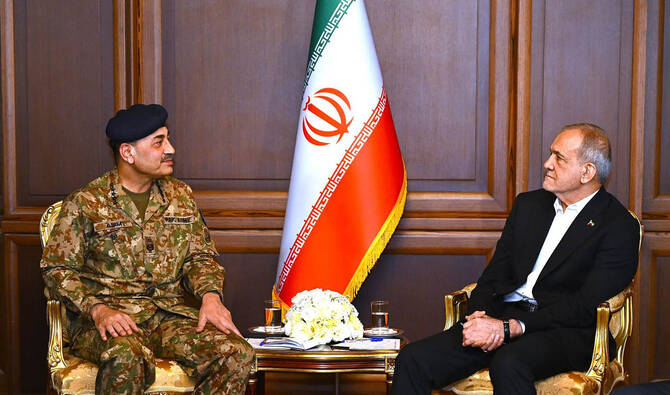
In international politics, the loudest actor is rarely the most effective. The real test of leadership is not how forcefully a country can speak, but how skillfully it can calm a crisis when others are locked into confrontation. That is why Pakistan’s recent diplomatic posture deserves serious recognition. In a moment when many major powers have struggled to contain escalation, Pakistan has increasingly been described in public reporting as a mediator and a trusted channel in efforts tied to US-Iran de-escalation, with Field Marshal Asim Munir playing a central role in that shift.
What makes this moment significant is not simply that Pakistan is present at the table. Many states attend meetings, and very few help shape the room itself. Pakistan has hosted regional diplomacy in Islamabad, including talks involving Saudi Arabia, Turkiye, and Egypt aimed at reducing tensions and exploring pathways toward wider negotiations. It has also been publicly identified as a possible venue for direct or indirect engagement between the United States and Iran. That is not symbolic participation. That is strategic relevance.
Pakistan is no longer waiting to be consulted after the fact and it is helping construct the diplomatic architecture in real time
This is where quiet diplomacy matters most. The public often celebrates dramatic speeches, summit-stage optics, and headline-grabbing declarations. But de-escalation usually happens through disciplined backchannels, trusted intermediaries, and patient statecraft. Recent reporting in Pakistan has described Islamabad, alongside Ankara and Cairo, as being engaged in active back-channel diplomacy to bridge gaps between Washington and Tehran. That matters because trust in such moments is scarce. If multiple sides are willing to use Pakistan as a line of communication, it means Pakistan has built something more valuable than visibility: credibility. And in diplomacy, credibility is power.
Field Marshal Asim Munir’s role should be understood in that context. His significance is not merely ceremonial, and it is not limited to traditional military command. Reuters has reported that he emerged as a key conduit in Pakistan’s external engagement, while Prime Minister Shehbaz Sharif has publicly referred to recent discussions involving him in Tehran as part of Pakistan’s peace-facilitation effort.
Whether one looks at this through a civil-military lens or a purely strategic one, the conclusion is hard to avoid, and Pakistan’s diplomatic effectiveness has depended on coherence at the top, and Munir has been one of the principal faces of that coherence
Critics may dislike the fact that Pakistan’s rise as a mediator is being driven by security-state credibility as much as by classical diplomacy. But international affairs are not a debating society, and they are an arena of outcomes. When a crisis is expanding, the side that can still talk to adversaries, allies, and anxious regional capitals alike becomes indispensable. Pakistan’s value has come from its ability to remain connected, where others have become trapped by public positioning. That is why its role should not be dismissed as image management. It reflects leverage, discipline, and the capacity to keep doors open while others are slamming them shut.
There is also an important lesson here about the meaning of strength. For too long, power in this region has been measured only in weapons, warnings, and retaliatory language. But true strategic maturity lies in knowing when to prevent a wider fire. Reuters reported this week that Pakistan requested an extension of the US ceasefire with Iran, underscoring its direct involvement in efforts to sustain a diplomatic opening even when the process remained fragile. That is what responsible power looks like. It does not celebrate brinkmanship for its own sake.
It uses access, relationships, and timing to create breathing space for peace
None of this means every negotiation will succeed or that every mediation effort will produce a historic breakthrough. Diplomacy is rarely linear, and even the best intermediaries cannot force peace on unwilling actors. But success in international politics is often measured first by who is trusted to carry messages, host difficult conversations, and keep hostile parties from walking away entirely. By that standard, Pakistan has already altered its position. Recent reporting has shown Islamabad not on the margins of high-stakes diplomacy, but at its center. That alone marks a profound shift in how Pakistan is being perceived and used.
Global relevance is not earned by noise, and it is earned by consequence. Pakistan’s recent diplomacy suggests a country that is learning how to convert geography, military credibility, and political access into real geopolitical influence. And at the center of that transition stands Field Marshal Asim Munir, not as a symbol of spectacle, but as a figure associated with a quieter and far more serious form of leadership: conflict de-escalation. In a divided world hungry for credible intermediaries, Pakistan is not just speaking about peace. It is helping make peace possible.

