
The India-Israel Security Axis
The Gaza catastrophe has exposed not only Israel’s brutality but also the international networks that sustain it. Wars are not fought by bombs alone. They are enabled by money, weapons, diplomatic cover, intelligence exchange, political admiration and silence. India’s relationship with Israel must be understood in this larger framework. New Delhi may not be dropping bombs on Gaza, but its defence purchases, ideological closeness and security cooperation with Tel Aviv make it part of the machinery that gives Israel confidence, legitimacy and material strength.
India is one of Israel’s most important defence partners. It has bought missiles, drones, radar systems, surveillance tools and border technologies worth hundreds of millions of dollars annually. These deals are usually justified in the language of national security. But Israel’s defence industry is inseparable from occupation and war. Many Israeli systems are marketed as “combat-proven” or “battle-tested,” a phrase that should disturb any serious observer because the testing ground is often Palestinian life.
Gaza becomes a laboratory that Palestinians become subjects of military experimentation and Israeli companies then sell the resulting technology to states seeking stronger control over contested populations
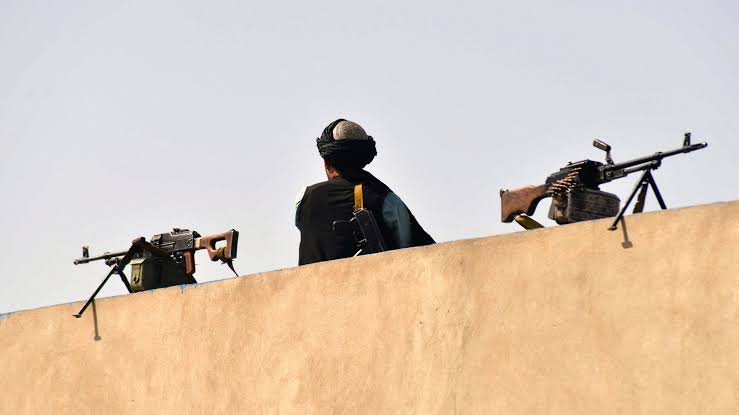
This is where Kashmir enters the discussion. Critics, activists and many academics argue that India has increasingly looked toward Israel as a model for managing Indian Illegally Occupied Jammu and Kashmir. The comparison is not perfect, but it is politically powerful. In both Palestine and Kashmir, a Muslim-majority population is treated as a permanent security problem. In both cases, the state uses surveillance, militarized law, movement control, communication restrictions and overwhelming force. The revocation of Article 370 intensified fears that India was moving toward a more aggressive demographic and political project in Kashmir, one that critics compare to Israeli settlement logic.
Israeli drones such as Heron and Hermes systems, surveillance technologies and counter-insurgency methods have reportedly informed India’s security posture. Kashmir has seen internet shutdowns, strict media controls, movement restrictions, encounter killings, pellet gun injuries and house demolitions of alleged militants or their families. These practices are defended by the Indian state as counter-terrorism. But to those living under them, they resemble collective punishment and social control.
That is why the phrase “Israel model” has gained currency among critics of Indian policy
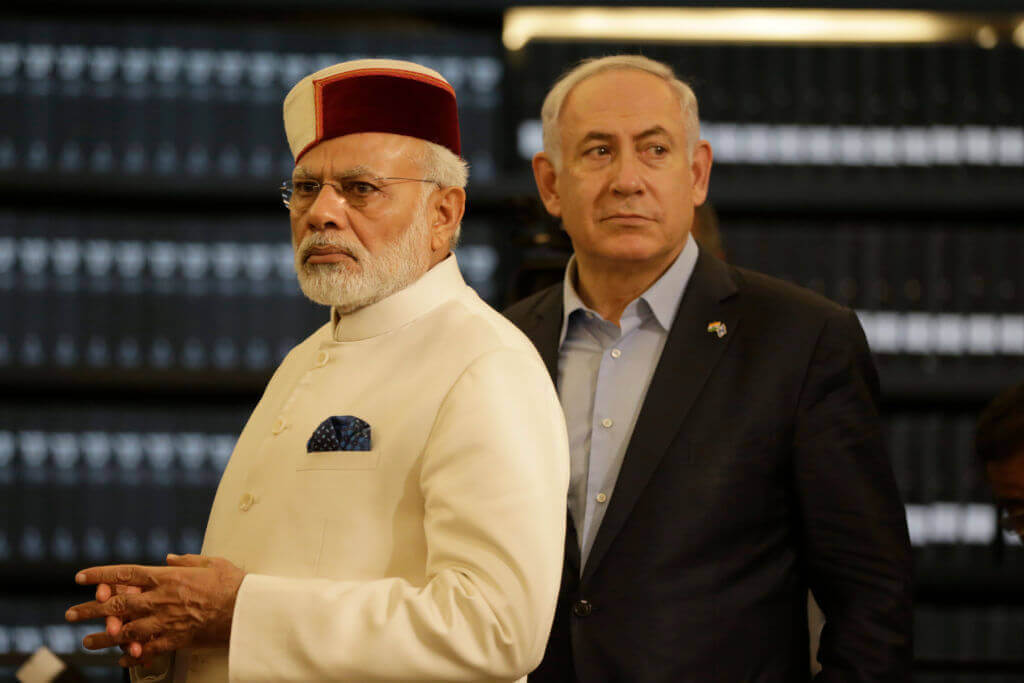
The ideological bond between Modi’s India and Netanyahu’s Israel makes this relationship even more troubling. Both present themselves as defenders of an ancient civilization surrounded by hostile forces. Both use fear of Muslims as a political resource. Netanyahu’s Israel frames Palestinians as demographic, military and civilizational threats. Modi’s India has seen Muslims, Kashmiris and dissenters increasingly portrayed through suspicion and loyalty tests. This shared Islamophobic imagination gives the alliance emotional force beyond ordinary state interest.
The connection is not confined to defence ministries. It is also visible in India’s social landscape. Every year, tens of thousands of Israelis travel to India, many of them after completing military service. These post-service journeys are often called the “big trip” or associated with the “Hummus Trail.” India is one of the major destinations, especially Kasol, Dharamkot, Goa, Pushkar and Varanasi.
These are not just random tourist routes. Over time, they have formed identifiable Israeli cultural pockets inside India
Dharamkot is frequently described as “Mini Israel.” Hebrew signs, Israeli-style food, stickers, symbols and businesses catering to Israeli visitors are common. In Pushkar, shopkeepers speak basic Hebrew and dhabas serve dishes adapted to Israeli tastes. In Varanasi, menus are changed for Israeli tourists. Goa hosts party circuits where Israeli backpackers are part of the wider international scene. In Kasol, Israeli presence has shaped the local tourism economy so deeply that the area is often associated with Israeli backpacker culture.
On the surface, this may look like cultural exchange. But culture cannot be separated from politics when many visitors are recent military dischargees from a state accused of mass atrocities in Gaza. India’s hospitality gives Israeli military society a place to relax, recover and feel normal. At the same time, Palestinians have no such freedom of movement, no safe spiritual escape, no international backpacking route from the rubble of Gaza.
The contrast is obscene as one population is trapped under siege, while those linked to the army enforcing that siege are welcomed into India’s valleys and beaches
India’s complicity therefore has several layers. At the military level, it buys Israeli weapons and strengthens Israel’s defence economy. At the doctrinal level, it appears to borrow from Israel’s model of occupation, surveillance and counter-insurgency. At the ideological level, it shares a majoritarian vision that treats Muslims as a threat. At the cultural level, it normalizes Israeli military society by turning India into a sanctuary for post-service Israeli youth. Together, these layers form a structure of cooperation that cannot be dismissed as a coincidence.
Defenders of the India-Israel relationship argue that every state has the right to secure itself. But security cannot become a blank cheque for oppression. When security language is used to justify siege in Gaza and militarized control in Kashmir, it becomes a tool of domination.
When weapons tested on Palestinians are purchased for deployment elsewhere, the suffering of one occupied people is converted into technology for controlling another
Gaza should force India to confront the moral cost of its alliance with Israel. Instead, New Delhi continues to deepen ties while presenting itself as neutral or balanced. That position is untenable. A country that arms itself through Israeli technology, admires Israeli security practices and gives cultural space to Israeli ex-soldiers cannot claim innocence. Complicity is not always direct participation. Sometimes it is partnership, profit, imitation and silence.
India’s role in the Gaza genocide lies precisely there. It helps sustain the state carrying out the violence. It imports the logic behind that violence. It provides social comfort to those emerging from its military system. And in Kashmir, it applies a similar language of control against another Muslim population. Gaza and Kashmir may be separated by geography, but they are linked by a shared architecture of occupation, surveillance and impunity. India is not outside that architecture.