



Grand Hayat and the Limits of Developer Privilege
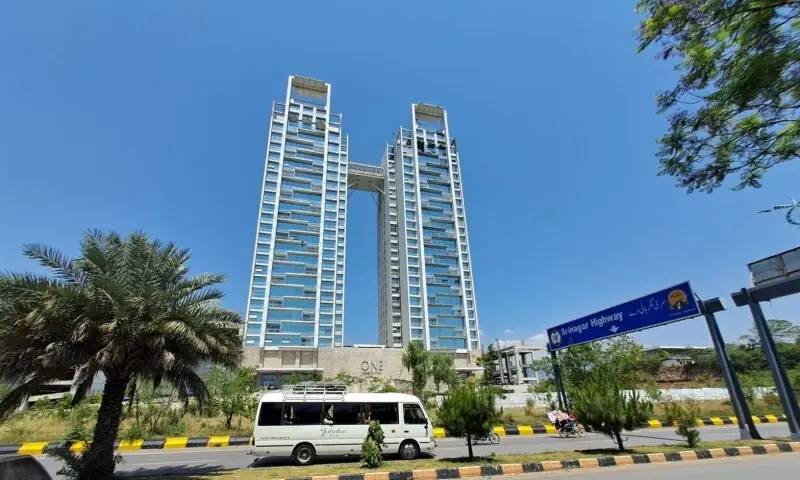
The Grand Hayat case must be understood for what it is and a contractual and legal default involving public land and public money, not a political dispute. Attempts to portray it as a matter of victimisation, selective action, or political controversy only distract from the central facts. At its core, this case concerns a valuable public asset, a commercial lease, binding payment obligations, repeated defaults, and the duty of a public authority to protect state property. No investor, developer, or private party can claim immunity from contractual obligations merely because a project is high-profile or commercially attractive.
In 2005, the Capital Development Authority leased 13.5 acres of prime land near the Jinnah Convention Centre in Islamabad for the development of a five-star hotel project. M/s BNP won the bid by offering the highest amount, Rs. 4.882 billion. That bid was not a symbolic expression of interest; it was a binding financial commitment. Once the bid was accepted and possession was handed over, the developer was legally required to honour the payment schedule and comply with the terms of the lease.
However, possession was handed over after only 15 percent of the initial payment, a decision that later created serious complications when payment defaults began and the matter had to be repeatedly rescheduled
BNP was not denied opportunity. On the contrary, the record shows that the developer was given multiple chances to regularise its position. Revised payment schedules were allowed, time was extended, and the matter was revisited repeatedly. Yet the obligations remained unmet. A public authority may show flexibility, but flexibility cannot become surrender. When a private developer continues to occupy or benefit from public land without clearing dues, the issue ceases to be a routine commercial disagreement. It becomes a matter of public accountability.
The project also became legally complicated because apartments and commercial interests were sold or subleased, creating third-party claims. This made the case more sensitive, but it did not erase the original default. Third-party interests cannot be used as a shield by a defaulting developer against the state’s lawful claims. If anything, the creation of such claims while core obligations remained unsettled made the situation more serious.
Public land cannot be converted into a commercial web of private interests while the public authority remains unpaid
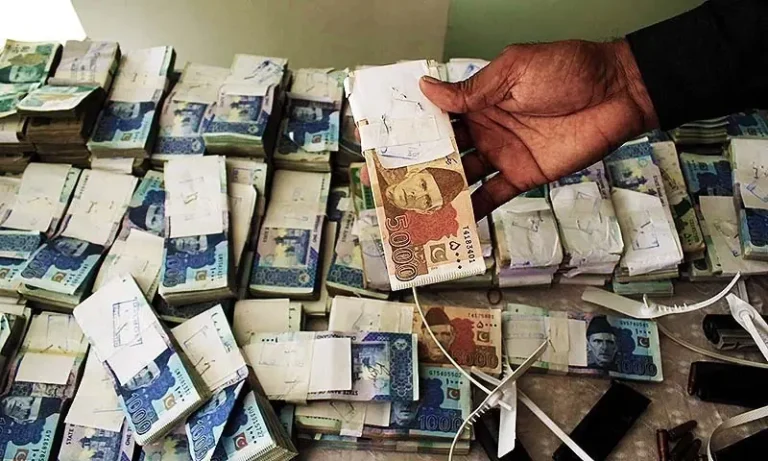
The Supreme Court’s order of 09 January 2019 gave BNP another major opportunity. The lease was revived subject to payment of Rs. 17.5 billion, less the amount already paid. This was not a minor concession but it was a clear judicially supervised route for regularisation. Yet BNP has paid only Rs. 2.916 billion so far, while Rs. 14.583 billion remains outstanding. These figures speak louder than political claims. A party that owes such a substantial amount to a public authority cannot credibly present the matter as anything other than a default case.
The failure to maintain the required bank guarantee further weakened BNP’s position. Its Rs. 1.689 billion bank guarantee expired and was not renewed or enhanced as required. In major public land transactions, bank guarantees are not decorative paperwork. They are security instruments designed to protect the public authority in case of default.
When such a guarantee expires and is not renewed, it adds another layer of non-compliance
CDA’s subsequent actions followed a legal and administrative sequence. Payment and bank guarantee notices were issued in December 2022. A lease termination notice followed on 07 February 2023. Due to continued non-payment, CDA cancelled the lease on 08 March 2023 in accordance with law. This was not a sudden or arbitrary step. It came after years of defaults, rescheduling, notices, and opportunities. No serious system of governance can allow indefinite occupation of public land without payment.
BNP’s proposal to adjust dues against commercial space was also rightly not accepted. CDA cannot enter into informal book adjustments with private developers in place of public dues. Accepting such an arrangement would create a dangerous precedent. Every defaulting developer could then seek to settle liabilities through private valuation mechanisms, commercial space transfers, or negotiated offsets.
That would undermine transparency, distort public accounting, and weaken the authority of public institutions
The Public Accounts Committee also took up the matter and directed sealing and possession-related action to protect public interest. CDA has since appointed an administrator and interim committee to manage day-to-day affairs of the building. These steps reflect the need to safeguard the asset, protect lawful interests, and prevent further deterioration of an already complicated situation.
The dismissal of cases filed by BNP and other parties, including the Bank of Punjab, by the Islamabad High Court on 30 April 2026 further reinforces the legal position. The government’s stance is therefore clear and defensible: investment is welcome, development is encouraged, and commercial activity is necessary, but default, misuse of public land, and non-payment of public dues cannot be tolerated.
Grand Hayat is ultimately a test of governance. Public land belongs to the people, not to developers who win bids and then fail to honour commitments. Protecting that land, recovering public money, and enforcing contracts are not political acts. They are the minimum duties of the state.

