
1st High-Level EU-Pakistan Business Forum
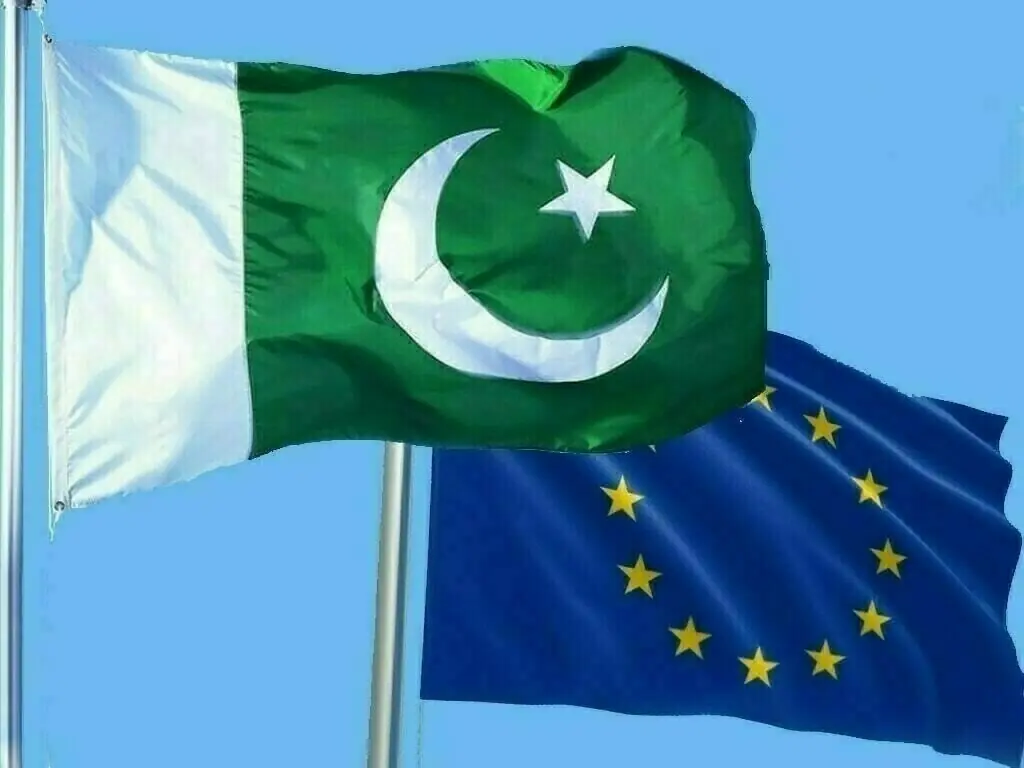
The first High-Level EU-Pakistan Business Forum, scheduled for 28-29 April 2026 in Islamabad, is not just another conference on the diplomatic calendar. It is the clearest signal yet that Pakistan is being taken seriously as an economic partner, not merely discussed as a geopolitical problem or a fragile market. The event is officially backed by the European Union, EU member states, and the Government of Pakistan, and it is due to be opened by Prime Minister Shehbaz Sharif. That level of political sponsorship matters. In international business diplomacy, such platforms are rarely created as symbolic favors; they are built when governments and firms believe there is enough substance to justify high-level attention.
What makes this forum especially important is its architecture. The official programme is not built around vague declarations but around investment, market access, financing, and sector-specific engagement. Its agenda includes plenary sessions on the future of EU-Pakistan economic partnership and Global Gateway, along with breakout discussions on agri-business, digital innovation and fintech, green logistics and connectivity, mining, and sustainable textiles. There is also a session tied to the launch of a “Better Governance and Business Environment” project.
In other words, this is a forum designed to move from broad goodwill to identifiable commercial pipelines. That alone reflects a notable degree of confidence in Pakistan’s economic relevance
Pakistan’s case rests on more than hope. It rests on scale and geography. The forum’s own materials describe Pakistan as a rapidly growing market of over 250 million people with strategic access to South and Central Asia, while UNFPA’s 2025 population data puts the country at about 255.2 million. That combination makes Pakistan difficult for serious investors to ignore. A market of that size is not attractive only because of consumption; it is attractive because it can support supply chains, industrial clustering, and long-horizon commercial bets. Add Pakistan’s location between South Asia, Central Asia, the Gulf, and the Arabian Sea, and the country begins to look less like a peripheral economy and more like a potential connectivity platform.
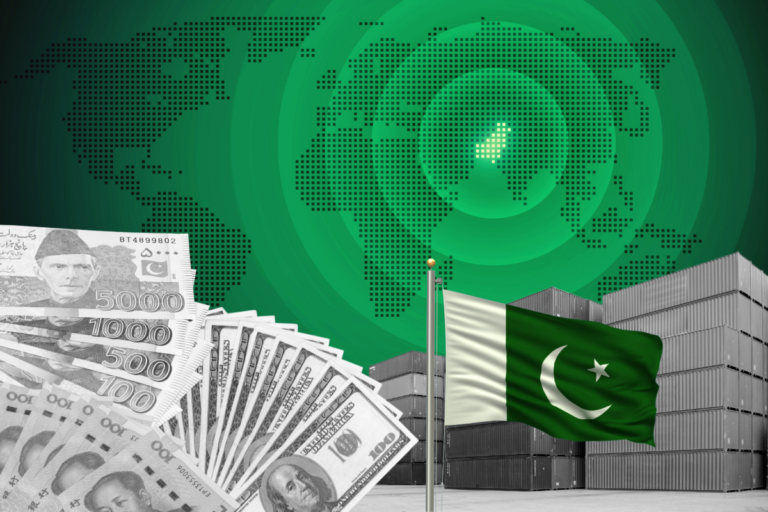
The trade relationship with Europe also gives this moment real weight. The EU’s current trade page says the bloc was Pakistan’s second most important trading partner in 2024, accounting for 12.4 percent of Pakistan’s total trade, with bilateral trade in goods reaching €12 billion. The forum page, using 2023 data, cites an even larger 15.3 percent share and €11.87 billion in bilateral trade, while also describing the EU as Pakistan’s first export destination. The precise yearly figure matters less than the broader truth: economic interdependence is already deep, and it is deep enough to support a more ambitious phase of cooperation.
This forum is therefore not creating a relationship from scratch; it is trying to upgrade one that already has scale
Europe also has a clear incentive to make this relationship broader and smarter. According to the EU’s trade data, imports from Pakistan are still dominated by textiles and clothing, which made up 75.8 percent of EU imports from Pakistan in 2024. That shows strength, but it also shows concentration. At a time when European firms are thinking harder about resilience, diversification, and supply-chain risk, Pakistan offers an existing manufacturing base that can be upgraded into higher-value and more varied partnerships. The forum’s focus on digital innovation, agri-value chains, responsible mining, green logistics, and sustainable textiles suggests that both sides understand this. Europe can gain market access and more diversified sourcing, while Pakistan can move up the value chain instead of remaining locked into narrow export dependence.
From Pakistan’s perspective, the biggest opportunity is not simply more trade, but better trade. Capital inflows matter, but so do technology transfer, managerial know-how, standards upgrading, and integration into more sophisticated production networks. The forum is explicitly structured around B2B and B2G matchmaking, investment showcases, and direct access to policymakers, government agencies, the European Investment Bank, and other European financial institutions. Just as important, the formal launch of the EU-Pakistan Business Network creates an institutional channel meant to outlast the event itself. That is a serious development.
It suggests a shift from ad hoc engagement to a more permanent framework for advocacy, troubleshooting, and long-term commercial coordination
Still, optimism should not become complacency. A successful forum does not automatically mean a successful investment story. The EU’s own trade profile of Pakistan still points to high costs of doing business, complex regulation, and infrastructure bottlenecks as persistent constraints. That is exactly why this forum matters. It puts Pakistan’s reform narrative under practical scrutiny. Investors will not be persuaded by speeches alone; they will look for predictability, contract enforcement, policy consistency, energy reliability, and smoother administrative interfaces. In that sense, the forum is not merely a celebration of progress. It is also a test of whether Pakistan can convert reform language into a real investor experience.
My view is that Pakistan should treat this forum as a strategic opening, not a ceremonial milestone. If Islamabad uses it well, the event can help reposition Pakistan in European thinking: from a market known mainly through GSP+ and textiles to a broader partner in investment, connectivity, green transition, digital growth, and industrial modernization. If it is followed by policy continuity and investor facilitation, the first High-Level EU-Pakistan Business Forum could mark the start of a more mature economic relationship between the two sides. After more than 60 years of ties, that would be the right next chapter: less rhetoric, more delivery, and a partnership built on commercial seriousness.