





Digital Pakistan Must Include Everyone, or It Will Fail
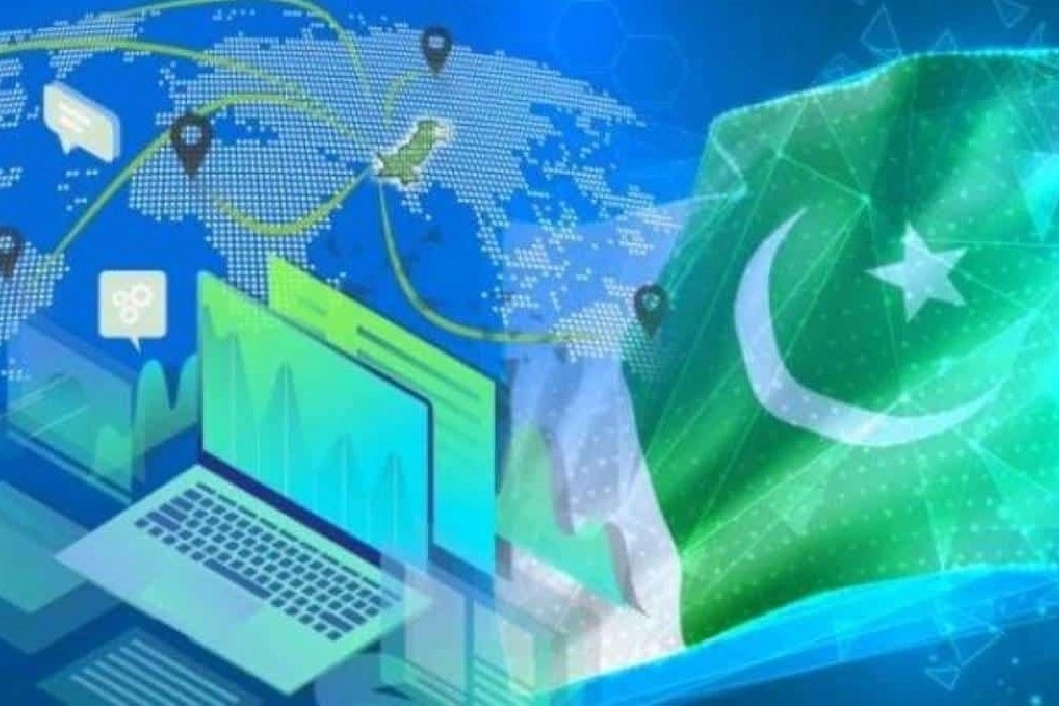
Pakistan’s digital transformation is no longer a collection of isolated IT projects; it is increasingly taking the shape of a state-level redesign. The Pakistan Digital Authority, emerging under the Digital Nation Pakistan Act 2025 and guided through the National Digital Commission, represents a serious attempt to move from paperwork-driven governance to platform-driven governance. For citizens, that distinction matters. In a paper state, outcomes depend on who you know, where you go, and how long you can wait. In a digital state, outcomes should depend on eligibility, verification, and process, visible, time-bound, and auditable. If Pakistan sustains this direction, the Digital Authority may become one of the most consequential governance reforms of this decade.
What makes this moment different is the emphasis on Digital Public Infrastructure, particularly the “Pakistan Stack”, as a shared foundation rather than a patchwork of departmental systems. This is the same logic behind successful digital transformations globally: build common rails, then let public and private actors innovate on top. A functioning DPI allows identity, payments, records, and data exchange to work across services without forcing citizens to repeatedly prove who they are, submit the same documents, or navigate contradictory procedures. When the government becomes interoperable, it becomes faster; when it becomes faster, it becomes harder to exploit. Transparency is not simply about publishing information; it is about designing processes that leave a verifiable trail.
Consider what Pakistan is already seeing through e-Office. When a system achieves near-universal adoption, 100% in 38 of 39 divisions, it stops being optional and starts becoming the default. That matters because “optional” is where corruption hides. The reported shift in file processing time from 25 days to 4 is not just an efficiency win; it is a structural reduction in opportunities for delay-based rent seeking. The savings of Rs. 9.5 billion is significant, but the deeper reform is real-time monitoring.
Dashboards don’t just show performance; they change behavior. When delays are visible, excuses are weaker. When performance is tracked, accountability becomes less negotiable
This same logic applies to citizen services. The PAK App’s scale, 1.37 million users, and more than 1.3 million applications processed, signal more than adoption; it signals trust in the channel. And the Rs. 22.86 billion in tax collection through digital means is an important reminder that digitization is also fiscal reform. Every digital payment reduces cash handling, narrows leakage points, and creates a clean record. In Pakistan’s tax culture, where compliance has historically been low, and the burden often falls unevenly, digital rails can help broaden the net if the system remains fair, accessible, and resistant to manipulation.
Employment platforms, too, have a governance dimension that is easy to miss. The National Job Portal, 510,000 CVs registered and 33,000+ jobs posted, does not just connect employers and applicants; it democratizes visibility. In societies where opportunity is often filtered through personal connections, a transparent job marketplace reduces information asymmetry. It is not a complete solution; skills, education quality, and private sector dynamism still matter, but it is an enabling reform. If Pakistan wants to reduce brain drain, it must show that opportunities at home are not arbitrary.
Healthcare reform is where digital infrastructure proves its moral value. The One Patient One ID initiative is not merely a database; it is the backbone of continuity of care. With 813,000 registrations and 1.5 million lab tests processed, the system is already demonstrating how digitization can reduce time lost in queues and confusion. Cutting lab report waiting time by 3-4 hours can be the difference between an anxious day and a manageable one, especially for patients traveling long distances. Increasing PIMS daily OPD capacity to 7,500 patients points to operational improvements that matter in the real world: fewer bottlenecks, better triaging, and a more predictable patient journey. When healthcare becomes less chaotic, citizens feel the state as a service, not just an authority.
However, digital progress in Pakistan will only be sustainable if it is inclusive. A transformation that benefits the already connected will deepen inequality rather than reduce it. That is why interventions like Smart Villages, Asaan Khidmat Centers, Business Facilitation Centers, and digital wallets for BISP women deserve serious attention. These programs acknowledge a basic truth: not everyone has a smartphone, literacy, stable connectivity, or confidence navigating apps. Physical access points and assisted digital services are essential “last mile” infrastructure.
For BISP women, digital wallets can be especially transformative because they reduce dependency on intermediaries and allow direct, private control over funds, an economic change that can ripple into household decision-making and dignity
The Pakistan Digital Authority’s push for digital sovereignty also carries strategic importance. Hosting over 140 applications, 126 portals, and 31 ministry-level automations is not just a technical milestone; it is a governance safeguard. When critical services run on infrastructure that the country can control, secure, and audit, resilience improves. Pakistan has learned through multiple crises, economic, political, and climatic, that resilience is not optional. Digital resilience requires cybersecurity, redundancy, standards, and a culture of professional operations. A digital state that is not secure will eventually become a vulnerable state.
Connectivity trends provide reasons for cautious optimism. With 200 million subscribers, 60% mobile broadband penetration, and 31 million locally assembled phones, Pakistan is building the scale required for nationwide digital services. Submarine cable rollouts such as Africa-1, 2Africa, and SEA-ME-WE 6 strengthen the backbone that supports everything from government portals to remote work. Meanwhile, policy reforms aimed at 5G readiness, MVNO expansion, and infrastructure sharing can lower costs and increase competition, critical for making broadband a utility rather than a luxury. But policy execution will determine outcomes. The gap between “announced” and “implemented” is where Pakistan has historically struggled.
The longer-term bet, building a technology economy, hinges on skills and innovation. The National AI Policy 2025 and the National Semiconductor Program indicate an aspiration to compete in high-value domains rather than remain a low-margin service economy. Training 7,200 chip design specialists is a strategic move that could take years to mature, but has outsized potential if paired with industry linkages and global partnerships. The incubation of 300+ startups and support via the Pakistan Startup Fund suggest that the government is trying to build an ecosystem rather than sponsor a handful of headline projects.
The scale of training, 920,000 learners through SkillTech and DigiSkills, including certifications associated with major technology firms, also signals that Pakistan is preparing human capital at volume, which is essential for export growth and domestic productivity
Economic indicators, $3.8B exports, 14 global exhibitions, and a Rs. 700M FDI pipeline suggests forward movement, but they should be treated as early signals, not final proof. Sustainable export growth depends on reliability, quality standards, predictable regulation, and a workforce that can deliver at global benchmarks. The encouraging note is that gender inclusion is expanding: women representing 25-38% of trainees and 84 women-led startups gaining traction is not just a social milestone; it is an economic multiplier. Pakistan cannot build a technology powerhouse while leaving women out of the pipeline.
Still, the most important question is not how many apps exist or how many portals have been launched. The real test is whether the Digital Authority can institutionalize reforms so they outlast political cycles. That requires legal clarity, procurement integrity, interoperability standards, privacy protections, and clear accountability for service delivery. Citizens will not trust digital systems if they fear misuse of data or inconsistent outcomes. Transparency must be built into rules, audits, and safeguards, not left to goodwill.
If Pakistan treats 2026 as the year of scale, it must scale wisely: prioritize reliability over novelty, user experience over bureaucracy, and inclusion over optics. Done correctly, the Pakistan Digital Authority can help reshape the citizen-state relationship, from a model defined by delays and discretion to one defined by service and certainty. Pakistan’s digital future will not be determined by technology alone, but by governance choices that technology makes possible. The opportunity is historic: to build a state that is easier to access, harder to exploit, and capable of competing in a global economy where digital systems define national strength.

