


Herof 2.0 Couldn’t Hold Ground
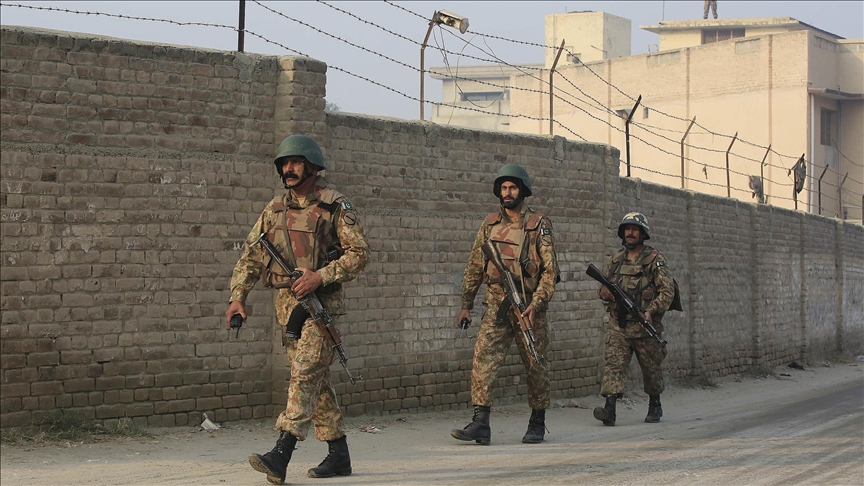
The latest attempted attacks across Balochistan were sold by the militants as a bold new phase, a reset, a comeback. They called it “Herof 2.0,” a name designed for clips, slogans, and quick sharing. But what unfolded on the ground looked less like a surge and more like a scramble. The pattern was familiar: loud claims, scattered strikes, and then a rapid retreat once the security response arrived. If the goal was to create a sense of paralysis, the outcome did the opposite. It showed that the state can still move faster than the attackers can coordinate.
This is not just about who fired first or who controlled which street for an hour. It is about how militant groups try to manufacture momentum when they do not have it. When an outfit lacks the ability to seize and hold territory, it shifts to something else: narrative warfare. It tries to replace battlefield gains with the appearance of battlefield gains. Distant fire, quick raids, grenade throws, and brief firefights are perfect for that, because they produce noise without requiring staying power.
The risk for the militants is obvious: if security forces respond quickly and the public sees order restored, the propaganda becomes harder to sell
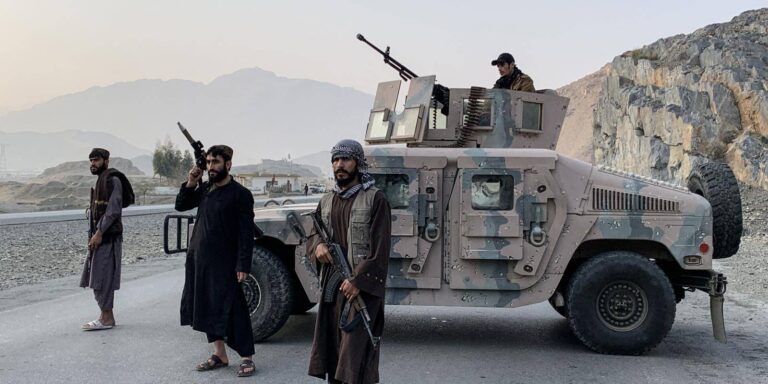
Reports from Wednesday show exactly that. In Quetta, militants reportedly tried to strike a police van in the Saryab Road area, only to meet immediate return fire and reinforcement by Frontier Corps. In Nushki, an attempted raid on a Frontier Corps headquarters was met by alert troops and heavy response, forcing the attackers to pull back without achieving meaningful damage. In Dalbandin, explosions were reported near another Frontier Corps headquarters, followed by cordons and engagement while clearance continued. The attacks were spread wide, but they did not translate into control, leverage, or durable disruption.
The incident in Kalat is telling in another way. Hitting a deputy commissioner’s office and police lines aims at governance and public confidence, not just security positions. It is an attempt to signal that the writ of the state has shrunk. Yet the response reportedly prevented escalation and contained the situation. That matters because governance is a daily experience. People judge it by whether roads remain open, whether offices function, whether hospitals run, whether markets operate, and whether children can go to school.
A campaign that cannot interrupt those basics for more than a short window struggles to persuade ordinary citizens that it represents an alternative
Along the coast, the picture becomes even more uncomfortable for anyone still trying to frame these networks as “resistance.” In Pasni, an attempted distant fire raid targeted a facility of the Pakistan Coast Guard. In Gwadar, a labourers’ colony was reportedly targeted. That choice should end the debate about intent. When militants aim at workers’ settlements and mixed population spaces, they are not defending a community; they are punishing it. They are trying to make normal life feel unsafe because they cannot win through public consent.
Security officials said the situation remained under control, with only two to three personnel sustaining minor injuries and no strategic installations damaged. If accurate, this is a clear operational failure for the attackers. It also suggests that the campaign was shaped more by desperation than capability. Officials link the timing to recent operations in which more than fifty militants were reportedly eliminated across the province.
Numbers should always be treated carefully until independently verified, but the logic of the response is consistent with insurgent behavior worldwide: after losses, groups often try a noisy show to reassure supporters, claim relevance, and lure new recruits
That is where the human cost becomes central. Militant leadership often stays far from the front line, insulated from the chaos it creates. Pakistani officials place responsibility on figures such as Bashir Zeb Baloch, Allah Nazar, and Harbiyar Marri, alleging they operate from safe havens outside the country, including in Afghanistan. Those claims require evidence that can be tested, but the broader principle is hard to dispute: the people who die are usually not the people who decide. Young recruits are pushed into frontal assaults, suicide missions, and risky raids, then buried under inflated claims of victory.
Afterward comes the information cleanup. Narratives shift, numbers change, and families are left with grief plus confusion. The issue of missing persons is real and demands transparent processes, lawful investigation, and credible accountability. At the same time, militant media ecosystems can exploit genuine pain by mislabeling deaths, factional violence, and internal feuds as state actions, because outrage is useful fuel. Groups and advocacy platforms like Baloch Yakjehti Committee and Baloch National Movement are frequently pulled into this propaganda battlefield, fairly or unfairly, which is precisely why facts must be handled with care and verified rather than traded as slogans.
What should follow is not triumphalism. A fast security response is necessary, but it is not a strategy on its own. The state should keep tightening intelligence-led disruption, border and coastal monitoring, and financial interdiction. It should also keep discipline, because heavy-handedness is a gift to militant recruiters. The more important work is political and economic: services that reach ordinary people, jobs that feel real, fair policing, and local governance that is visible every day. Militancy feeds on the distance between citizens and institutions. Closing that distance is how you make the next “2.0” collapse even faster, not just on the battlefield, but in the public mind, where these groups try to survive.

