
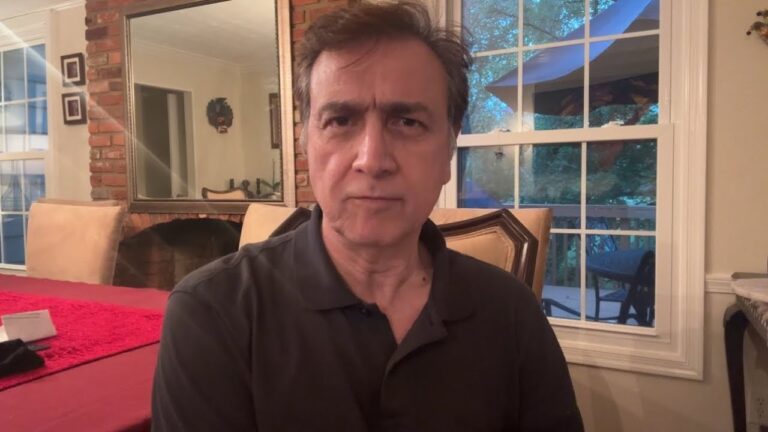


Moeed Pirzada in the US
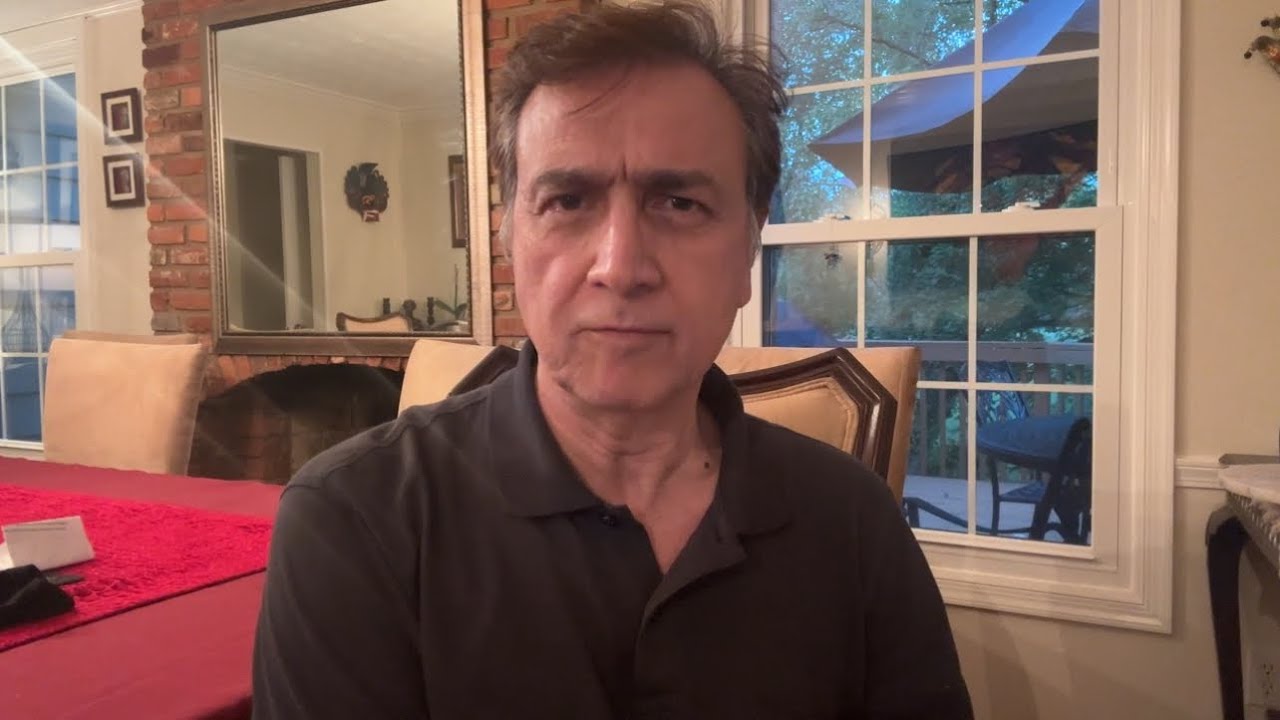
The fight over diaspora commentators is really a fight over legitimacy. When a Pakistani journalist or YouTuber speaks from the United States and hammers Pakistan’s politicians and generals, some people hear needed scrutiny. Others hear a one-sided story designed to feed a party line. When the same commentator also takes swings at American leaders, the anger can spike because it feels like someone is biting the hand that hosts them. That emotional reaction is understandable, but it often turns into the wrong demand, that the US state should step in because someone said something nasty about a president.
Take a figure like Moeed Pirzada, who has a strong following and strong critics. Supporters see him as blunt and fearless. Critics see him as openly sympathetic to PTI and too willing to treat speculation as analysis. You can hold either view, but it helps to separate the three different questions people mix together. First, is his political analysis fair and accurate? Second, is his language responsible? Third, does any of this trigger US government action.
Those are not the same question, and the third one has the simplest answer in most cases, not unless there is a real legal issue
In America, it is normal for public figures to be insulted in public. That includes presidents. People call presidents liars, crooks, warmongers, fascists, fools, and worse. That speech is protected most of the time. Calling a president “mentally disturbed” is ugly and careless, and it may reflect badly on the speaker, but it is still usually an opinion claim, not a crime. The US government does not need to be “awake” to punish rude political talk. In a system built around free expression, being awake often means refusing to punish it. If the state starts policing insults, the definition of “insult” will expand fast, and it will never stop at the people you dislike.
The better way to look at it is this. The real power over a commentator is not a government agency; it is the audience. If someone is biased, show the bias. If they distort facts, pin down the distortion. If they use mental health language as a weapon, call it out and stop rewarding it with clicks. Outrage is a fuel. Viewers supply it. Platforms amplify it.
The speaker learns what sells. If the public wants calmer, more factual analysis, the public has to stop treating the loudest clip as the most “truthful” clip
There is also a cultural mismatch at work. In Pakistan, people have lived through long stretches where the state can and does pressure journalists. That experience shapes instincts. When someone hears a harsh statement about a leader, their first thought can be, “How is this allowed?” In the US, the instinct is different. The assumption is that harsh statements are allowed, and the burden is on the state to justify any restriction. So when someone asks, “Is the US government watching,” it can reveal more about the speaker’s expectations than about US practice. The US does watch for threats and crime, but it does not have a legal mandate to protect politicians from verbal attacks.
Still, there is a fair criticism that has nothing to do with surveillance. Living abroad can soften accountability. If a commentator stirs anger about Pakistan’s political and military leadership while sitting in a safer environment, that distance matters. It does not cancel their right to speak, but it does raise questions about incentives. Are they informing, or are they performing? Are they making claims they could defend in a courtroom, or are they relying on the fact that their audience will not demand proof?
Are they correcting mistakes, or do they just move to the next target? These questions matter more than where they live, because they are about journalistic discipline, not geography
When it comes to calling any leader “mentally disturbed,” there is another problem. It cheapens real mental health issues and turns a serious topic into a political insult. It also invites lazy thinking. If you dislike a president’s policies, you should argue policy. If you think a leader’s behavior is erratic, point to specific actions, decisions, and consequences. Name the facts, not the diagnosis. Otherwise, you are not analyzing power; you are throwing a label and hoping it sticks. And the audience that cheers today will be used the same way tomorrow by someone else.
People who are furious at a commentator like Pirzada should focus on what they can actually prove and contest. If you believe his coverage is PTI-slanted, compare his framing when PTI is in trouble versus when opponents are in trouble. Track his corrections, or the lack of them. Check whether he quotes primary documents or just repeats claims from friendly sources. Watch how he treats uncertainty. Serious analysts mark what they know and what they do not know. Propagandists blur that line on purpose. The fastest way to expose propaganda is to force it into specifics.
None of this requires asking the US government to “do something.” In fact, that demand can backfire. If you argue that insulting a US president should trigger government attention, you are also arguing for a principle that can be used against any immigrant community, any dissident, any critic of foreign policy, and any whistleblower. It is a slippery road, not because of a slogan, but because bureaucracies expand to fit whatever power they are handed.

