


November 9 and the Enduring Lessons of Allama Iqbal for Our Times
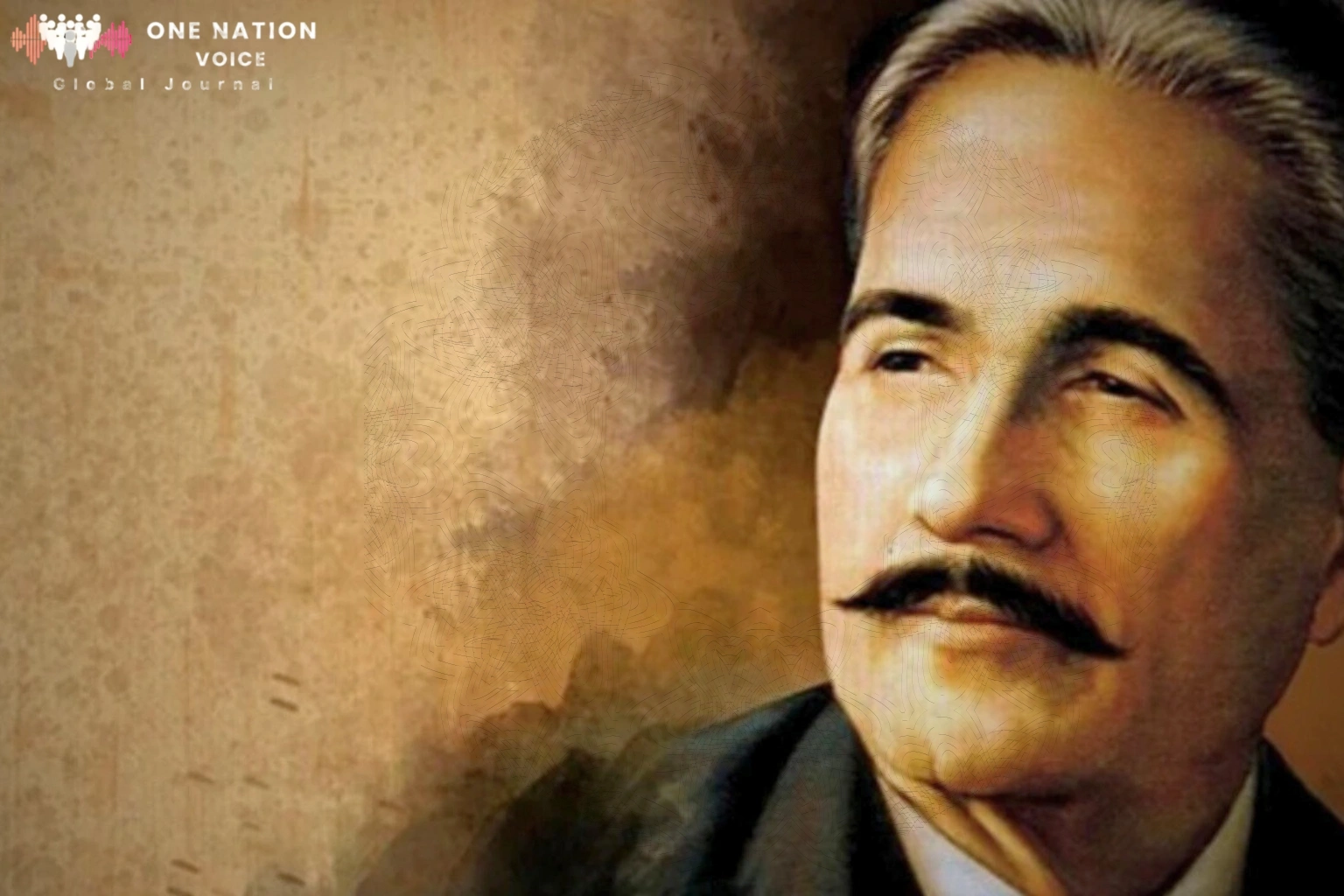
Every year, when November 9 comes around, we see the same routine of quotes from Allama Iqbal, school events, and a few TV specials. And then the day passes, and people resume normal life. But Iqbal was not only a name to be remembered, he was a thought. Such a thought that continues to challenge us in case we care to hear.
The Iqbal’s message was never meant to sit quietly in textbooks. He hoped to make people awakening, not only politically, but also spiritually and intellectually. His poems reflected the soul. It made uncomfortable questions out of us, what we believe in, and whether we are living up to our potential as individuals and as a nation.
The strength of Khudi, knowledge of oneself
The concept of Khudi or the self that Iqbal has, is misinterpreted. It’s not about ego or pride. It is about knowing that you are worthy and your place. He thought each man possessed a grain of the divine and his aim in life is to allow the light to shine through doing, being brave, and believing.
One cannot help but consider this in the modern world where identity seems so weak. The whole world is acting in front of a crowd and posting, scrolling, comparing.
Khudi by Iqbal reminds us to seek within ourselves, to create something concrete within us rather than searching to be validated by others.
His most notable quote about lifting the self so high that even destiny wants permission to do so. So, it is hard to be responsible to our lives to avoid faulting fate or other people.
Importantly, he had a peculiar belief in youth. It was not all about arrogance and isolation, with his Shaheen, his symbol of the ideal youth. It was all about freedom, vision and resilience. We badly need that now. It is that young minds should be critical thinkers with ethical actions and the belief that they have the power to make a difference.
Religion and development may walk hand in hand
I have always liked the fact that Iqbal never perceived religion as antagonistic to progress or vice versa. He did not want to see Muslims backward, backward in science, learning and modern thought, forgetting their religious focus. He urged ijtihad or free thinking since he thought that Islam possessed the intellectual richness to help people navigate the shifting times.
That is one of our major challenges even today. We oscillate between dogmatic backwardness and dogmatic aped imitation of the west. Iqbal provided a golden mean, one that was based on self-confidence. He did not want Muslims to imitate other people. Indeed, he wanted them to find their creative force again and add their contribution to the world themselves.
The idea of a nation with a soul
Iqbal had the same spiritual source of political vision. In discussing an autonomous state among the Muslims, it was not to create boundaries just to create an opportunity to create a boundary. He envisioned a society in which justice, equality and moral responsibility would be at the forefront of social life. He desired a society that would be a mirror of the ideals of Islam not in slogans, but in sympathy, education and independence.
Remembering Iqbal, the proper way
Therefore, when November 9 arrives, perhaps it is time to learn to stop considering it as any other public holiday. We might leave them, at least in some few details, instead of memorizing his verses. Think for yourself. Do your work honestly. Care about truth more than trends.
Iqbal did not provide ready solutions. His concepts need some work, contemplation, and boldness. But that is what makes them eternal.
He was convinced that any individual, however ordinary, has the capability of changing not only his own life, but that of his community.
Change starts at home, as there is one thing to learn about him today. Countries stand up as individuals stand up and as they discover their Khudi, and they retain to their religion, and they reach out to the possibility of something greater.
That is the true eulogy of Iqbal. The flowers at his grave or the speeches that are full of platitudes are not needed but a true effort to live with purpose.
The views and opinions expressed in this article are exclusively those of the author and do not reflect the official stance, policies, or perspectives of the Platform.

