

Taliban Rule in Afghanistan
Taliban rule in Afghanistan has now evolved beyond the initial phase of regime consolidation and is hardening into a distinct model of governance: centralized, opaque, ideologically rigid, and structurally fragile. The Sixteenth Report of the United Nations Security Council’s Analytical Support and Sanctions Monitoring Team lays out the contours of this system with unusual clarity. What it describes is not a state in transition toward normalisation, but a political project that seeks to replace pluralistic governance with theological absolutism, while lacking the institutional and economic foundations to sustain itself.
At the centre of this model is Hibatullah Akhundzada, whose position as Amir al-Mu’minin is not ceremonial but absolute. Power flows from his secluded base in Kandahar, which functions in practice as the regime’s political capital, while Kabul increasingly resembles a provincial outpost charged with implementation rather than decision-making. Crucially, Akhundzada governs not through laws debated in formal institutions but through religious edicts issued from an inner clerical circle. This personalist configuration, where loyalty to one man outweighs allegiance to any written constitution, makes the system highly dependent on his presence and judgment.
It also ensures that the regime’s ideological commitments are insulated from pressure, whether from technocrats, international actors, or Afghan society itself
The Taliban’s approach to authority is best understood as a deliberate rejection of the idea that legitimacy must be grounded in popular consent or accountability. Councils of Ulama have been established in each province, ostensibly to provide religious guidance, but their real purpose is to monitor ideological conformity and report directly to Kandahar. Rather than acting as channels for local demands or mediators between state and society, these councils function as surveillance structures. The message is unambiguous: the regime will listen to loyal clerics, not to citizens. This top-down, non-consultative style explains both the opacity of decision-making and the recurring appearance of abrupt, destabilizing measures, such as the nationwide internet shutdown of October 2025, ordered without explanation and only partially reversed later. That episode did not merely disrupt communication; it showcased the arbitrary character of Taliban governance and exposed frictions between the prime minister’s office and Kandahar over who ultimately controls the levers of power.
Beneath the surface of tightly managed unanimity, serious internal contradictions persist. The rift between Kandahar hardliners and Kabul-based pragmatists, particularly between Akhundzada’s inner circle and the Haqqani Network under Interior Minister Sirajuddin Haqqani, is more than a minor tactical disagreement. It reflects two competing instincts within the movement: one that prioritizes ideological purity regardless of cost, and another that fears international isolation and domestic discontent will eventually erode Taliban control. Haqqani’s criticism of governance failures and the ban on girls’ education, together with his extended absence after Hajj and carefully calibrated statements upon return, point to an uneasy compromise rather than genuine cohesion.
The absence of a clear, institutionalized succession process means that these latent tensions could quickly become destabilizing once the unifying figure of Akhundzada is no longer able to impose decisions from Kandahar
What makes the current trajectory particularly alarming is the regime’s methodical reshaping of Afghanistan’s intellectual and religious landscape. By placing education under Akhundzada’s direct control and recasting it as an instrument of indoctrination, the Taliban are attempting to lock in their ideology for a generation. The removal of curricula related to civic values, democracy, constitutionalism, human rights, and women’s rights, alongside the banning or ideological rewriting of dozens of disciplines, is designed to extinguish alternative political imaginations. Political science without genuine debate, economics without modern theory, law without reference to international norms, these are not academic fields, but propaganda tools. The continued exclusion of girls from secondary and higher education is symptomatic of the same logic: an attempt to structure society around a rigid, gendered hierarchy that is out of step not only with international standards but also with many of Afghanistan’s own religious and cultural traditions.
In parallel, the regime has elevated religious infrastructure over social and economic investment. Even amid a fiscal crisis, resources are directed to building mosques and madrassas, with instructions from cabinet meetings chaired by Akhundzada to strengthen Hanafi Deobandi curricula and strip out references to other Islamic schools. This is a deliberate narrowing of Afghanistan’s religious space. Non-Deobandi actors are subjected to surveillance and crackdowns, further eroding pluralism.
In the long term, this could radicalize segments of society that feel excluded from the official religious order, or push them into the arms of transnational networks that promise an alternative vision of Islam and governance
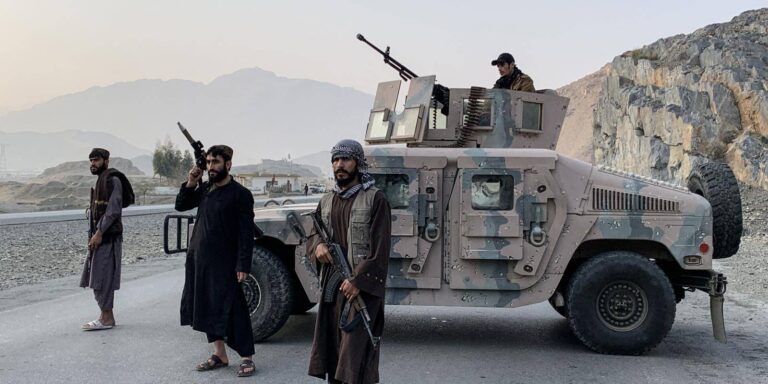
The security environment under Taliban rule is therefore not as reassuring as headline reductions in violence might suggest. It is true that conflict levels have dropped compared to the pre-2021 period and that ISIL-K has been degraded. However, the group remains active in small, resilient cells capable of high-profile attacks, particularly in the north and east. More troubling is the continued presence of more than 20 other terrorist organizations operating from Afghan territory, many with relationships of convenience or cooperation with elements of the regime. The absorption of former militants into local security forces, the Taliban’s preferred strategy for managing armed actors, simultaneously bolsters manpower and embeds extremist networks within the state apparatus. Combined with corruption, weak oversight, ethnic imbalances, and limited budgets, this creates a security order where threats are contained but not dismantled, and where Afghanistan can again serve as an incubator and safe haven for militancy directed at its neighbours.
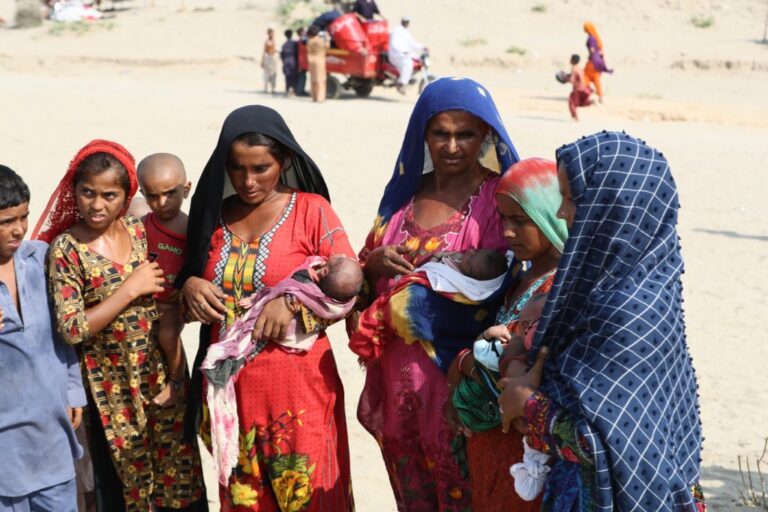
Economically, the regime is on the edge of collapse. With GDP contracting, unemployment reportedly affecting around three-quarters of the labour force, and over 70 per cent of the population relying on humanitarian assistance, Afghanistan is trapped in a cycle of dependency and deprivation. Restrictions on female aid workers undermine the effectiveness and reach of humanitarian operations, while the forced return of millions of Afghans from neighbouring countries increases pressure on already-strained communities. Domestic revenue collection has improved somewhat, but not nearly enough to offset the loss of international support or to fund meaningful public services.
This economic distress is not incidental; it is structurally linked to the regime’s exclusion of women from the workforce and education, its alienation of skilled professionals, and its refusal to adopt even minimal standards of inclusive governance that could unlock broader engagement
For the international community, and particularly for Pakistan and other regional states, the lesson is clear. The current Taliban order is not a transitional phase on the way to a more moderate, institutionally grounded government. It is consolidating along lines that make Afghanistan more centralized but not more stable, more ideologically coherent but less governable, and more controlled internally yet more dangerous externally. Engagement strategies that assume incremental reform driven by internal pragmatists have so far yielded little. A more realistic approach would recognize the regime’s resistance to structural change, focus on mitigating cross-border security risks, and channel assistance in ways that support the Afghan population without entrenching an unreconstructed emirate.
The Taliban have built a system that trades away legitimacy, pluralism, and long-term capacity in exchange for immediate control. That bargain may hold for a time, enforced through coercion and ideological discipline. But as the Monitoring Team’s report suggests, it is a deeply unstable foundation for governing a complex, divers,e and crisis-stricken country. Afghanistan’s future, under this model, is less a story of restored sovereignty than of institutional erosion and regional insecurity, a trajectory that regional and global actors cannot afford to ignore.

