
The State of Human Rights in Pakistan

A number of issues regarding Pakistan’s political environment, legal system, and social protections are brought up in the Human Rights Commission of Pakistan’s State of Human Rights in 2024 report. The report frequently ignores the institutional reforms, security pressures, and constitutional context influencing Pakistan’s governance landscape, even though a number of these observations are worth considering. A more impartial evaluation shows a state that has demonstrated resilience, judicial independence, and quantifiable advancements in democratic inclusion despite facing significant internal and external obstacles.
First, a more thorough examination of HRCP’s critiques of the political and electoral landscape is necessary. The Election Commission of Pakistan, which completed new delimitation based on the 2023 national census, established a constitutionally mandated framework for the February 8, 2024, general elections, which were not an ad hoc exercise. The election date was set by the Supreme Court, highlighting judicial supervision throughout the entire process. The turmoil that followed the violent events of May 9, 2023, when attacks on military and state installations resulted in damages of almost Rs. 1.98 billion, is frequently ignored in accusations of pre-poll manipulation. Instead of being used as instruments of political coercion, subsequent arrests were made in accordance with criminal statutes and were backed by geo-fencing and documentary evidence.
The judiciary’s decision on October 23, 2023, which ruled that military trials of civilians were unconstitutional, serves as more evidence that institutional checks and balances are still in place and that courts are still exercising their constitutional autonomy
Similarly, the legal and security context is not adequately acknowledged in HRCP’s commentary on digital restrictions and party symbol allocations. In order to prevent violent mobilization during times of unrest, temporary internet suspensions were put in place, including limitations on Twitter and X. These restrictions were lifted after the elections. Due to internal party election irregularities, PTI’s election symbol was denied, and the courts upheld this decision. Despite legal disputes, PTI-affiliated candidates ran as independents and won significant seats, proving that voter choice was not eliminated. The goal of the 26th Constitutional Amendment, which divides administrative authority among several justices to minimize case backlogs and avoid over-centralization, is also overlooked in criticism of the amendment. At the same time, historic appointments like Maryam Nawaz Sharif, the first female chief minister of Punjab, and Justice Aalia Neelum, the first female chief justice of the Lahore High Court, demonstrate growing opportunities for women’s leadership within fundamental political and judicial institutions.
In terms of law, order, and justice, HRCP correctly draws attention to Pakistan’s continuous security issues, but it undervalues how much state responses are influenced by terrorism, militancy, and regional instability. The reactivation of TTP sanctuaries in Afghanistan is inextricably linked to the 2024 uptick in violence, which claimed 2,546 lives, including civilians and security personnel. Measures like the “Illegal Foreigners Repatriation Plan” represent efforts to prevent cross-border infiltration rather than targeted discrimination, and Pakistan’s counterterrorism policy under the National Action Plan continues to function within this complex environment. The government is rightly criticized for its enforced disappearances, citing unresolved cases and delays. But since 2011, the Commission of Inquiry on Enforced Disappearances has resolved thousands of cases; only 436 are still being investigated.
Furthermore, a large number of people who are listed as missing are thought to have joined or escaped with organizations that are prohibited, like the TTP or BLA. This larger comparative framework should be used to evaluate Pakistan’s caseload, which is significantly less than that of many Western and regional states
The HRCP report frequently confuses security-driven regulation with intentional suppression when talking about fundamental freedoms. Following violent protests and an increase in false information, laws like the Punjab Defamation Act 2024 and the Peaceful Assembly and Public Order Act 2024 were passed. These laws operate within a system where the judiciary provides actual and significant oversight, as demonstrated by the Supreme Court’s strong stance against military trials and the Lahore High Court’s decision against the sedition law. However, these laws still need to be closely monitored to prevent overreach. While cooperation with international watchdogs and legal remedies for journalists indicates continued, if uneven, institutional engagement, media freedoms are still disputed.
Similar dualities can be seen in Pakistan’s treatment of vulnerable groups: reform opportunities are growing, but long-standing issues still exist. A growing dedication to safeguarding women, children, and minorities is reflected in recent legislation, such as the Christian Marriage Act (Amendment) 2024, the Child Marriage Restraint Act 2025, and the National Commission for Minority Rights Bill 2025. From transgender inclusion in government institutions to judicial leadership, representation has significantly improved. Although the HRCP’s criticism of enforcement gaps is legitimate, it must be balanced against observable legislative advancements and the ongoing security restrictions that make implementation more difficult.
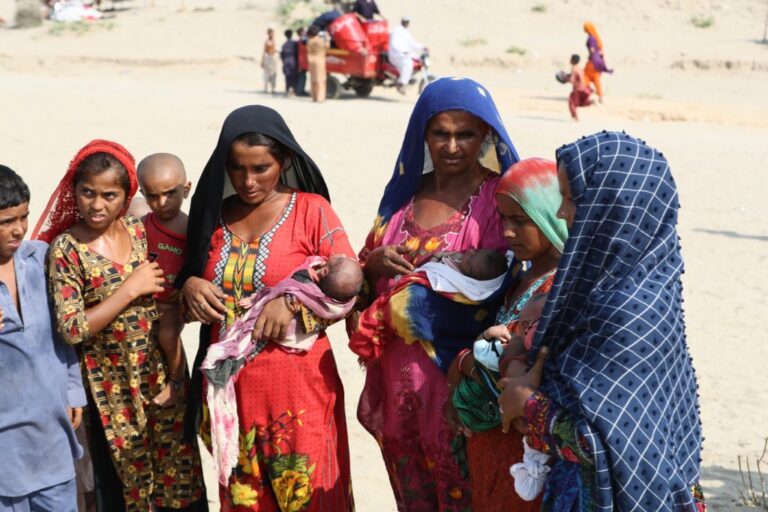
Pakistan’s decades-long dedication to hosting Afghan communities is still unparalleled when it comes to refugees and internally displaced people. Pakistan continues to strike a balance between its humanitarian responsibilities and growing security concerns, with over 2.35 million refugees currently residing there and Proof of Registration cards being extended through mid-2025.
The repatriation of undocumented Afghans, which is mostly voluntary and small in comparison to the population, focuses on people without legal status rather than officially recognized refugees. Claims of systemic neglect are refuted by the continued active engagement with UNHCR and international partners
The environmental and social rights critique of HRCP highlights actual vulnerabilities but ignores significant policy advancements. Sustained state involvement is highlighted by Article 9A’s constitutional recognition of environmental rights, expanded disaster-alert systems in Gilgit-Baltistan, post-flood reconstruction, and reforms in the health and education sectors, such as free university education for high-achieving students and increased polio vaccination campaigns. Despite contributing less than 1% of global emissions, Pakistan’s disproportionate vulnerability to climate disasters hinders but does not eliminate progress.
When considered holistically, Pakistan’s human rights situation is neither a tale of unquestionable success nor the relentless decline depicted by HRCP. Rather, it tells the story of a state that is advancing significant reforms while dealing with extraordinary security pressures. While acknowledging flaws is important, it’s equally important to acknowledge the judicial independence, institutional resiliency, and gradual policy advancements that continue to influence Pakistan’s developing human rights framework.