
Madinah Must Never Become a Battlefield
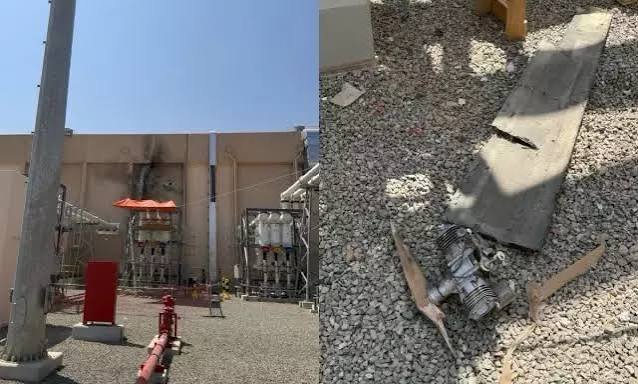
The September 29 attack on the Taibah power distribution station in Madinah should not be viewed as just another episode in the long and increasingly dangerous confrontation surrounding Yemen. The incident carries a significance that goes far beyond the physical damage caused to a power transformer. According to the Saudi led coalition, the facility targeted in the attack supplies electricity to the Prophet’s Mosque in Madinah. Saudi authorities said evidence from the investigation and the wreckage of the drone established Houthi involvement, although the Houthis have denied responsibility.
That distinction matters. Conflicts in the Middle East have repeatedly spilled across borders, targeted energy infrastructure and disrupted civilian life. But Madinah belongs to an entirely different category of sensitivity. It is not simply another Saudi city appearing on a military map. For Muslims around the world, it is inseparable from the life and legacy of the Holy Prophet Muhammad ﷺ. Any security threat that reaches infrastructure serving the Prophet’s Mosque therefore carries religious, political and psychological implications extending far beyond the immediate battlefield.
The immediate material consequences were limited. Saudi authorities reported that one transformer was taken out of service while the broader electricity network remained operational. Yet measuring the seriousness of the incident only by the amount of physical damage would miss the larger point. Modern conflict is often about signalling as much as destruction. Drones, missiles and long range systems allow armed groups to generate fear and political pressure without necessarily causing large scale devastation. When such capabilities reach infrastructure connected with one of Islam’s holiest sites, the message becomes more consequential than the damage itself.
The episode also underlines how far the Houthi conflict has travelled from its original Yemeni setting. What began as a domestic struggle for power developed into a regional confrontation involving Saudi Arabia, Iran, maritime routes and competing security interests across the Middle East. In recent years, missiles and drones have increasingly become instruments for projecting force against distant targets. The danger is that each expansion of the battlefield creates a new precedent. Once civilian infrastructure hundreds of kilometres from the original conflict zone becomes vulnerable, the distinction between front line and hinterland begins to disappear.
That is particularly troubling in the case of Madinah. There should be areas that remain outside the logic of regional escalation. The Two Holy Mosques are not ordinary strategic assets. Their security affects millions of worshippers and pilgrims, while their religious significance is shared across national, ethnic and political boundaries. Whatever disagreements exist between regional actors, bringing conflict into the security environment surrounding Makkah or Madinah risks generating consequences that no party may be able to contain.
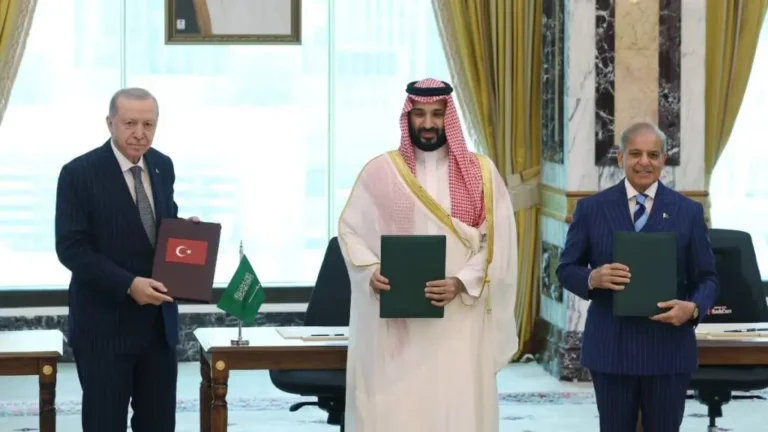
Pakistan’s response reflects this wider concern. On October 2, the Ministry of Foreign Affairs strongly condemned the attack, describing the targeting of civilian infrastructure supplying electricity to the Prophet’s Mosque as a grave provocation and a source of anguish for Muslims worldwide. Islamabad also reaffirmed its support for Saudi Arabia’s sovereignty, territorial integrity and security while stressing that the sanctity of the Two Holy Mosques and the safety of pilgrims and worshippers must be respected under all circumstances.
That position deserves to be understood in the proper context. Pakistan has long supported diplomatic solutions to Middle Eastern disputes and has repeatedly spoken in favour of regional stability. Supporting diplomacy, however, does not require moral or strategic ambiguity when civilian infrastructure and holy places are placed at risk. Dialogue can remain the preferred instrument for resolving conflicts while certain boundaries remain non negotiable.
The wider Muslim world also has an interest in maintaining that distinction. The Haramain Sharifain belong geographically to Saudi Arabia, but emotionally and spiritually they occupy a unique place for Muslims everywhere. Their protection cannot be reduced to a bilateral matter between Saudi Arabia and whichever actor happens to threaten them. It is a broader question of preserving religious sanctity from the expanding geography of contemporary warfare.
There is also a practical security lesson. The rapid proliferation of relatively inexpensive drones has changed how critical infrastructure must be protected. Conventional air defence systems were designed primarily around aircraft and missiles. Today, smaller unmanned systems can approach sensitive facilities at lower cost and with fewer operational constraints. Protecting Madinah and Makkah therefore requires not only military deterrence but layered air defence, electronic warfare, early warning systems, infrastructure redundancy and rapid emergency response.
At the same time, military precautions alone cannot provide a lasting solution. The renewed escalation in Yemen demonstrates how quickly dormant conflicts can regain regional dimensions. Reuters reported that recent fighting represented one of the most significant escalations since the United Nations brokered truce of 2022. The Medina incident has occurred against that deteriorating background, with renewed exchanges of attacks and counterattacks increasing the possibility of a broader confrontation.
That is precisely why political restraint remains essential. Retaliation, counter retaliation and expanding target lists may create the appearance of deterrence, but they can also produce miscalculation. The most dangerous moment in any regional conflict arrives when symbolic, religious or civilian spaces become absorbed into military strategy. Madinah should never be allowed to reach that point.
The lesson from the September 29 attack is therefore larger than the incident itself. Civilian infrastructure must not become a bargaining chip, and sacred geography must not become part of regional coercion. Whatever political grievances or strategic calculations drive the conflicts of the Middle East, the Prophet’s Mosque and the wider security of the Haramain Sharifain must remain beyond them.

