







Climate-Driven Food Price Spikes
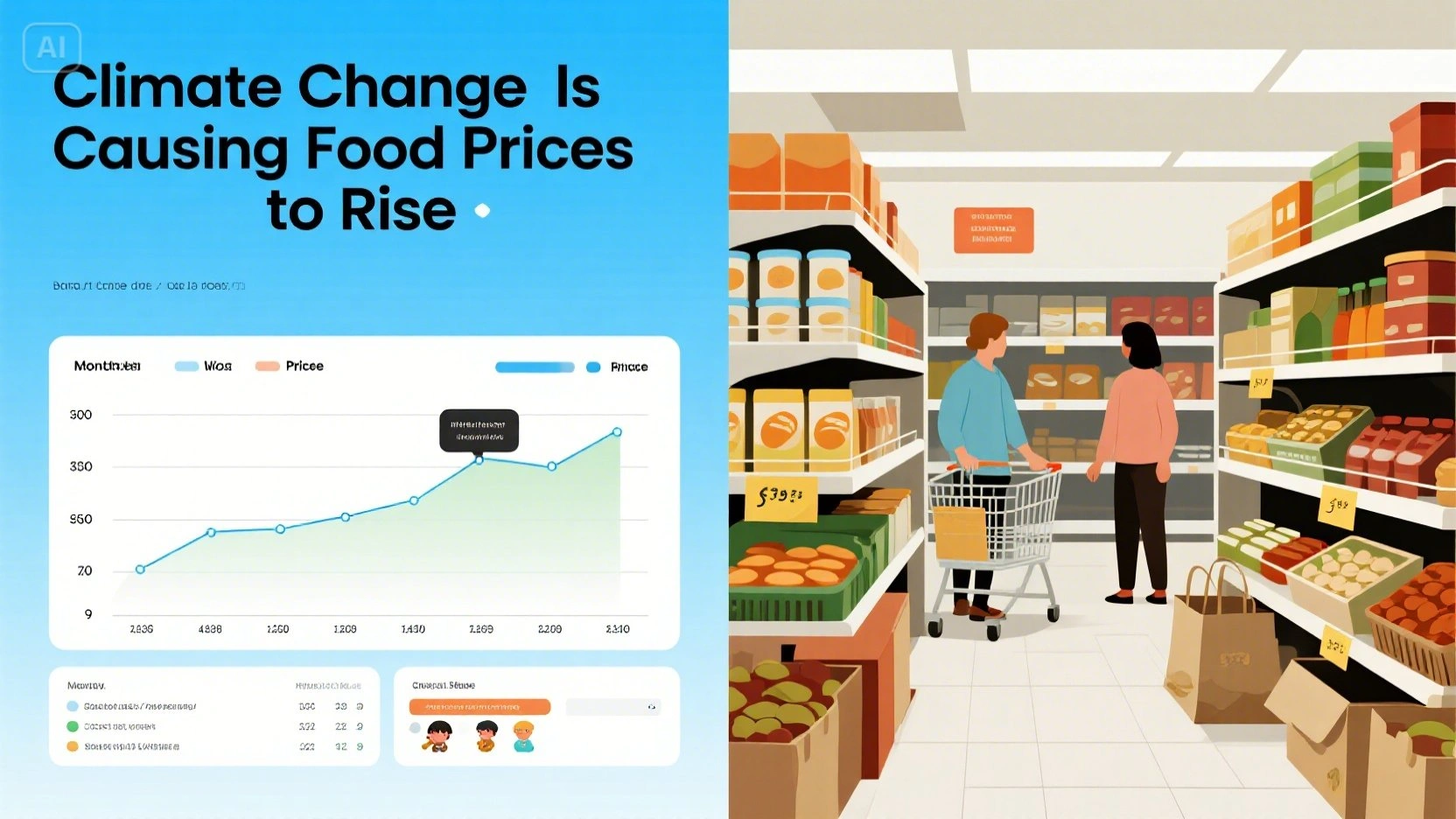
Climate Change Is Causing Food Prices to Rise and We Need to Do Something About It
In recent years, a troubling trend has caught on grocery stores across the world: food prices are on the rise. Many people believe that this is due mostly to inflation or supply chain challenges, but a new, expansive study reveals that climate change is one of the leading causes of rising food prices throughout the world.
The study, by the Barcelona Supercomputing Center, analyzed the relationship between food prices and climate events in 18 countries from 2022 to 2024. And they found a direct connection between extreme weather, especially floods, droughts, and heatwaves, and the price of common foods. Potato prices in the UK increased by 22% following heavy rain, while the cost of vegetables in California and Arizona soared 80% as a result of drought, for example. Cheap food staples from rice to cabbage and other vegetables soared in price across Asia.
This is not merely a problem of one or two regions. This global crisis impacted everyone but low-income sectors are particularly most affected. Weather-related crop destruction in one nation has an impact on the entire world. The tripling of cocoa prices in Ghana and Ivory Coast as a result of severe heat and drought is a prime example. In a similar vein, bad weather in two of the biggest producers, Brazil and Vietnam, caused coffee prices to rise.
If we talk about South Asia the situation is more dangerous. The region already occupied with multiple issues such as malnourishment, poverty, and poor economies. Bangladesh, Pakistan, and India are facing soaring food inflation such as rice, wheat, tomatoes, and onions; everyday needs are hard to meet. Climate change-induced flooding caused major losses in farmland of Pakistan in 2022. This fueled inflation more in the country. Similarly, India’s wheat and rice exports are also affected by the domestic supply which dropped due to unseasonable heat waves and heavy rainfall, alongside former’s exports. Millions in South Asia are exposed to the combined difficulties of living with poverty, inflation, climate change-fueled food insecurity, and political and economic instability.
As highlighted in the study, food prices surpass malnourishment and poverty as the second most obvious impact of climate change. The impact of climate change is already visible and it is far more imminent than anticipated. The aftermath of climate change is also deeply affecting economic standards and the overall well-being of individuals. For families with low-income, this equates to a lack of clean and nutritious food which in turn results in the risk of illness, physical stunting, and malnutrition.
Adding to the concern, scientists now say that the already worsening catastrophes will accelerate in the near future at a faster rate than anticipated. Each fleeting moment with inaction results in the shrinking of our environment, severe public health implications, damages to the healthcare system, and constraining economic growth, all while stressing the food production and supply systems.
This is high time to take action. The world needs to address this issue seriously. The investment gap in climate-resilient agricultural infrastructures, improved water systems, and supporting smallholder farmers needs attention. Now is the time more than ever to implement those climate policies.
There is urgent need to counter the continuously escalating climate change. Climate change shouldn’t be only seen as a simple environmental concern as it is not. It poses dreadful threats to humanity, food, increasing inflation, and everyday life. Consequences will haunt us forever if we do not put all those policies in practice that are just lying on paper and God knows how lethal those consequences will be.

