

Park View Dispute Raises Questions About Fazlur Rehman’s Integrity
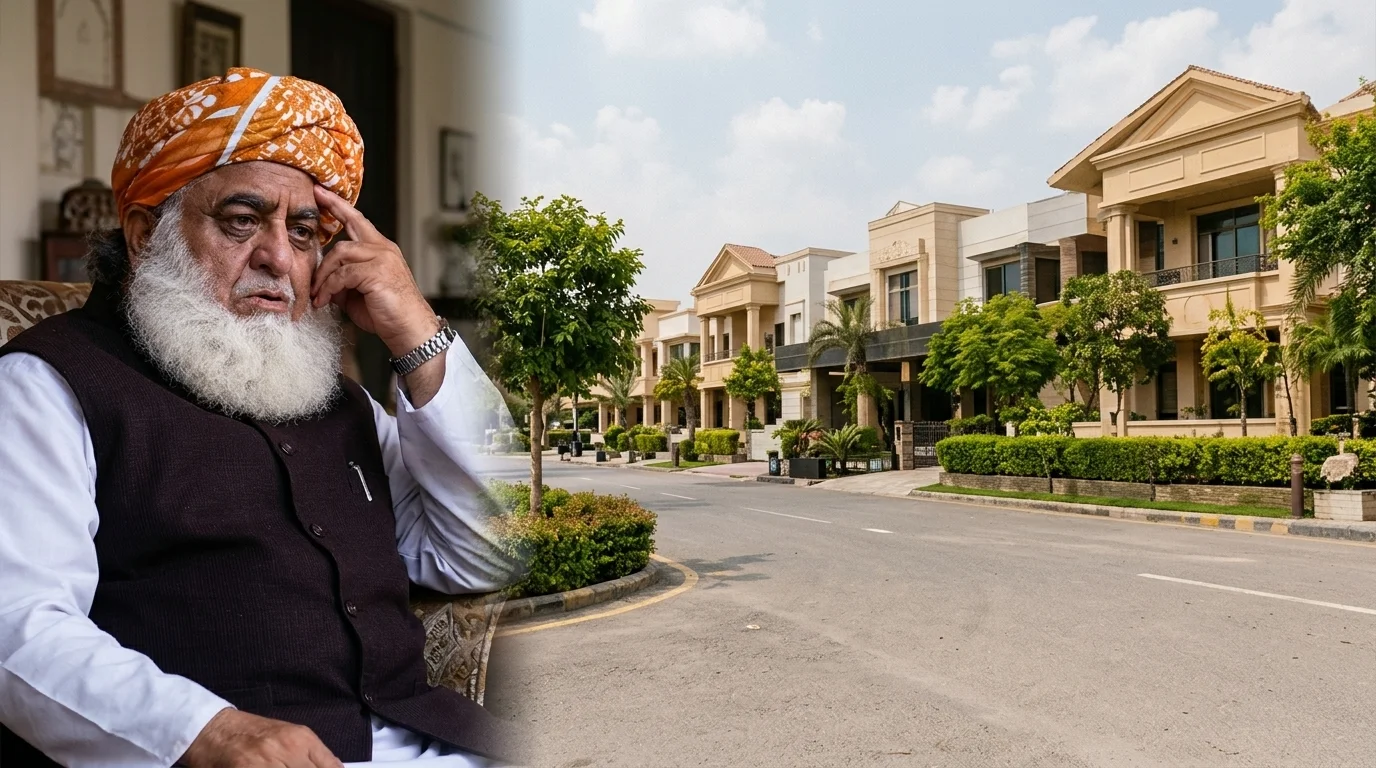
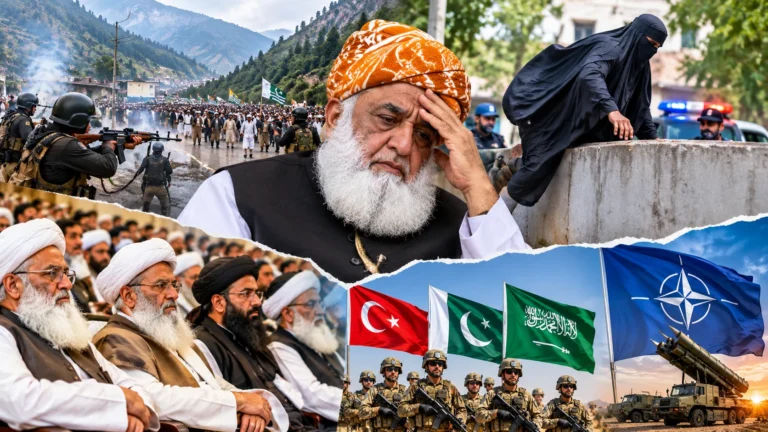
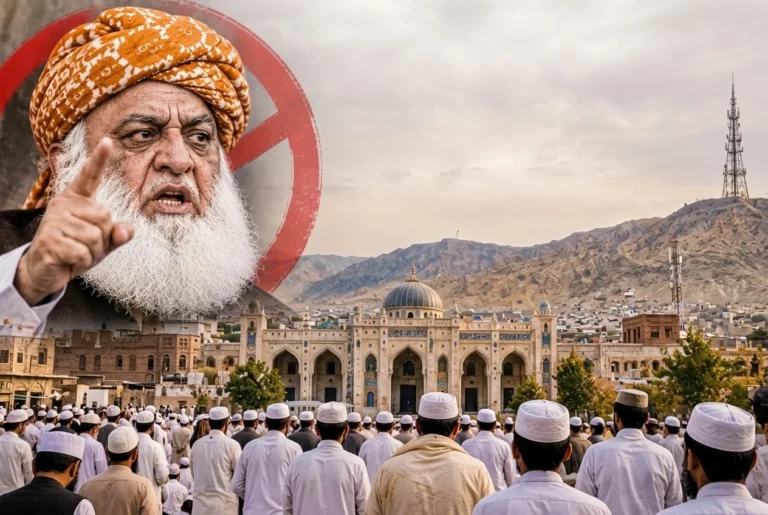
On November 24, 2026, an incident unfolded on the political stage of Lahore that brought three converging currents, politics, religion, and property, to the same crossroads at once. Maulana Fazlur Rehman, the chief of Jamiat Ulema e Islam (JUI F), arrived in the city, and before long heavy contingents of Punjab Police had surrounded his place of stay. A container was placed at the society’s main gate and even the movement of local residents was blocked. JUI F immediately issued a statement claiming Maulana was being prevented from addressing lawyers at the Lahore High Court Bar Association, and the party rushed to the High Court for relief. The incident rapidly became part of a national political debate. But behind all this noise, a different story was slowly beginning to surface.
What Really Happened?
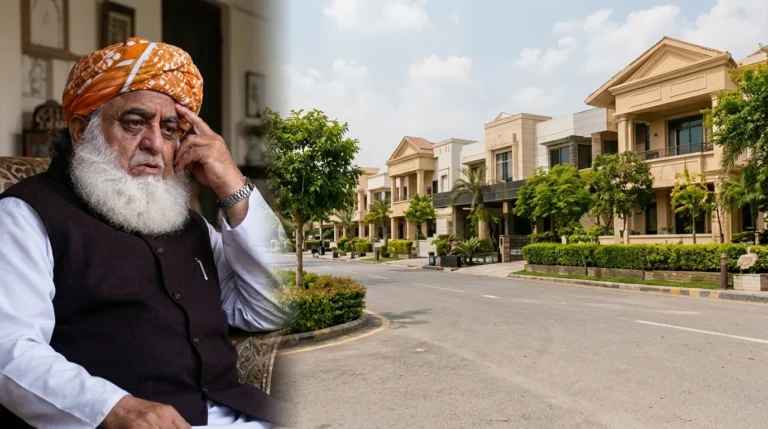
According to several independent sources and fact check reports, the background of this entire episode is quite different from what was presented. These reports allege that Maulana Fazlur Rehman did not come to Lahore for any event at the High Court Bar Association, but rather to attend to matters concerning his alleged properties in Park View, a private housing society in Lahore. Sources claim his close associate Aman Ullah was also present. A heated dispute over property ownership and related matters broke out with other owners at the site, which quickly escalated into a serious altercation. Reports further allege that weapons were drawn during the confrontation, spreading fear and panic in the area and posing a serious threat to public order. Following the incident, police arrested two armed individuals with illegal weapons. According to these claims, the police deployment was specifically to bring the property dispute under control, not for any political purpose. It has also been alleged that Maulana’s purported ownership of four villas and two plots in Park View Lahore may lie at the root of this dispute. However, all these claims remain unverified, and neither Maulana nor JUI F has issued a clear denial or confirmation.
The Role of Political Narrative
The speed with which JUI F’s political machinery gave this incident a political complexion is worth examining carefully. Within moments of the police arriving, statements began flowing that Maulana was being stopped from addressing lawyers, even though some sources claim the Bar Association had not invited him in the first place. This is a well worn tactic in Pakistani politics: dress up any private or personal difficulty in the costume of state oppression, and harvest public sympathy. The narrative immediately activated other opposition quarters, who issued statements declaring that restricting a leader’s freedom of movement was an assault on democracy. That point may carry some validity in its own right, but the central question remains: if the matter was genuinely about a property dispute and the arrest of armed men, then why is it being given a political umbrella?
The nation deserves the full picture. Politics built on half a story cannot sustain public trust.
Religious Leadership and Accountability
Here a fundamental question arises that cannot be sidestepped. Maulana Fazlur Rehman is a religious and political leader who preaches honesty, integrity, and transparency from the pulpit. Islam itself teaches that every person must be truthful and transparent in their own dealings. Yet when questions arise about this same leader’s financial and property matters, they are buried behind a political narrative rather than answered. It must be noted that owning property is not a crime, provided it was acquired through lawful means and its record is transparent. But until that clarity is established, questions will persist in the public mind. The dignity of religious leadership is not built on sermons alone; it is built on practical integrity. If the claims regarding Park View are baseless, let them be refuted with verified records. And if there is truth in them, the nation deserves to be told plainly how and when these properties were acquired. This is precisely the standard of honesty that Maulana himself preaches to others.
The Holy Quran commands: practice what you preach.
Conclusion
This Lahore incident is, in reality, a mirror reflecting two great tragedies of Pakistani politics simultaneously. The first: whenever a political or religious leader finds himself in difficulty here, the situation is immediately reframed as state oppression or institutional hostility, so the real questions get buried. The second: asking our religious and political leaders about financial transparency is still considered off limits. The nation does not need rumours and spin; it needs facts. Maulana Fazlur Rehman is urged to clarify the alleged claims regarding Park View with verified records. The alleged role of his associate Aman Ullah should also be made clear. The actual reason for the police action must come to light. The people of Pakistan have every right to question any leader, politician or religious figure alike. Evading accountability does not build trust. Concealing facts does not diminish allegations; it amplifies them. The name of religion is deserving of respect, but a religious office does not place anyone beyond public accountability.

