

PTM and the Politics of Selective Human Rights
The Pashtun Tahafuz Movement emerged from a political environment shaped by terrorism, displacement, military operations and longstanding grievances in Pakistan’s former tribal areas. Its early demands concerning security checkpoints, landmines, missing persons and accountability attracted attention precisely because they touched genuine questions of governance and post-conflict rehabilitation. Yet political movements are ultimately judged not merely by the grievances from which they originate, but by the direction their leadership chooses afterward. In PTM’s case, the widening gap between rights-based activism and increasingly confrontational nationalist politics has created a serious crisis of credibility.
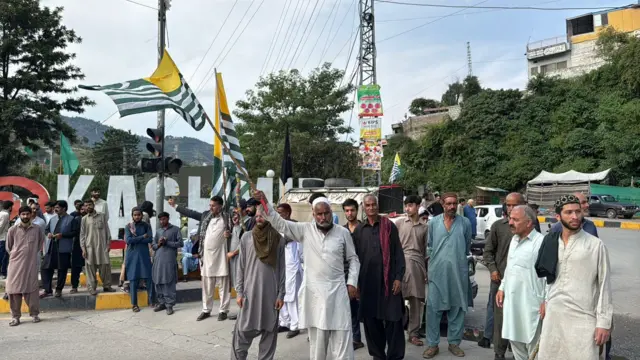
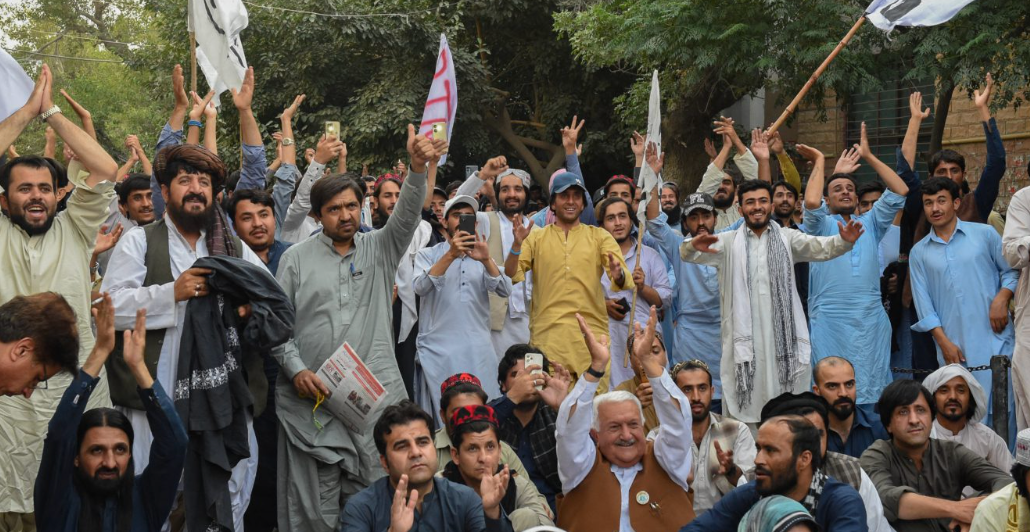
This contradiction becomes particularly visible in the movement’s association with the slogan “Lar ao Bar, Yaw Afghan,” commonly understood as referring to Pashtuns on both sides of the Afghanistan-Pakistan frontier as one people. The slogan predates PTM and has deep roots in Pashtun nationalist discourse. It has nevertheless become politically contentious because of its connection with debates surrounding the Durand Line, sovereignty and competing interpretations of Pashtun identity. PTM rallies have repeatedly featured the slogan, while supporters argue that it expresses ethnic and cultural solidarity rather than territorial revisionism. The distinction matters.
Cultural affinity across an international border is legitimate, but rhetoric becomes politically dangerous when it creates ambiguity regarding internationally recognised state boundaries
Recent reports concerning the detention of activist Ehsan Saadat in Khost have added another layer to this debate. Afghan media reports and social-media accounts said Taliban intelligence detained Saadat from a private educational institution in Khost. Whatever the precise circumstances of his detention, the episode illustrates an uncomfortable reality for activists who have looked toward Afghanistan as a natural ideological space for transborder Pashtun politics. Political sympathy does not translate automatically into protection, and rhetorical fraternity provides little security when confronted with the institutional interests of a neighbouring state.
There is an obvious irony here. Pakistani institutions have frequently been accused by PTM of denying political space to the movement. The Pakistani government, for its part, has accused PTM of activities detrimental to national peace and security and formally proscribed the organisation in October 2024. Human-rights organisations strongly disputed that decision. Amnesty International described the ban as an improper restriction on peaceful association and argued that the government had not publicly presented sufficient evidence to justify proscription. Any serious assessment of PTM therefore has to acknowledge both sides of this dispute rather than converting allegation into established fact.
At the same time, the argument that Pakistan provided no constitutional route for addressing the problems of the former tribal areas is difficult to sustain. The historic merger of the Federally Administered Tribal Areas with Khyber Pakhtunkhwa through the Twenty-Fifth Constitutional Amendment created a pathway toward representation within the provincial constitutional and administrative structure. Parliamentary records confirm the merger and subsequent allocation of provincial representation to the former FATA districts.
The reform did not magically eliminate poverty, insecurity or governance deficiencies, but it fundamentally changed the institutional framework through which these problems could be contested
This is where PTM faces its most important strategic question. Does it seek greater political participation, development and constitutional protection for Pakistani Pashtuns, or does it increasingly define Pashtun political identity through confrontation with the Pakistani state? The two approaches produce very different political outcomes. Constitutional activism creates incentives for institutional reform. Irredentist ambiguity, by contrast, allows every legitimate grievance to become entangled with questions of territorial sovereignty and national allegiance.
Claims about alleged PTM relationships with militant or Taliban-linked networks require even greater caution. Material circulating online attributes significant revelations to Taliban official Khalid Zadran and a publication described as 15 Minutes, including alleged contacts involving Manzoor Pashteen. However, publicly accessible independent and authoritative documentation confirming the stronger versions of these allegations remains limited. Such claims should therefore not be presented as established evidence merely because they circulate widely on social media. A credible critique of PTM does not require exaggeration. Political contradictions, nationalist rhetoric and the consequences of cross-border alignment can be examined on their own merits.
Pakistan must apply the same evidentiary principle to its counterterrorism operations. Where individuals are suspected of facilitating militants or threatening public security, intelligence-led investigation is a legitimate responsibility of the state. But allegations should lead to transparent legal proceedings, not substitute for them.
Due process strengthens counterterrorism because it separates genuine security threats from political dissent and prevents militants or political actors from exploiting grievances for propaganda
The broader Pashtun population should likewise never be reduced to PTM. Pashtuns are deeply embedded in Pakistan’s parliament, armed forces, bureaucracy, universities, businesses, media and political parties. Their political identity is diverse and cannot credibly be monopolised by any single movement. Treating PTM as synonymous with Pashtun aspirations would therefore reproduce precisely the ethnic simplification that Pakistan should avoid.
The episode in Khost ultimately carries a larger lesson. Cross-border ideological romanticism is rarely a substitute for citizenship, institutions and constitutional politics. States act according to interests, not slogans. Movements that depend excessively on external political validation may eventually discover that supposed ideological partners have their own calculations.
PTM’s future will consequently depend less on how loudly it condemns Pakistan and more on whether it can reconcile rights advocacy with constitutional politics, territorial clarity and democratic accountability. If it cannot, the contradiction between claiming to defend Pashtun welfare while advancing increasingly divisive political narratives will become harder to conceal. The strongest answer to legitimate Pashtun grievances is neither repression nor irredentism. It is constitutional inclusion, accountable governance, security and development within a political system in which Pashtuns participate not as outsiders, but as integral stakeholders in Pakistan’s future.

