

Gaza Peace Road Map Deserves Implementation, Not Rejection
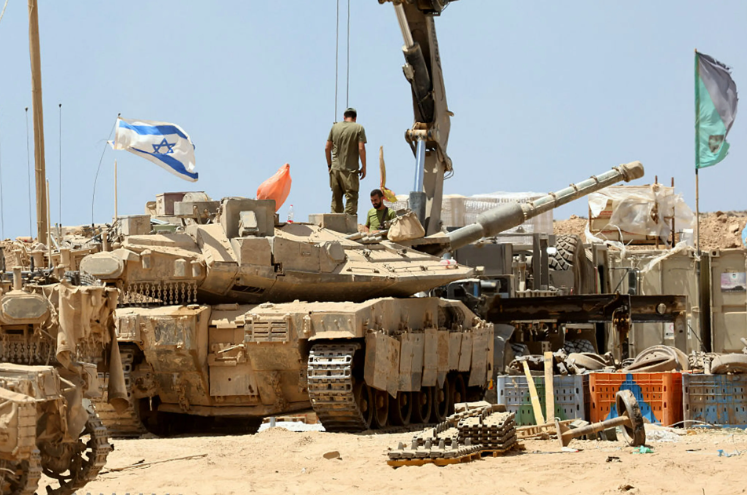
Israel’s rejection of the latest Gaza Road Map has transformed a road map sequencing issue into a litmus test to see if an internationally-sanctioned peace plan can stand when one of its key signatories is unwilling to follow through. Israel has rejected the 15-point document and that the Israel Defence Forces will not pull back until Hamas is truly disarmed, Prime Minister Benjamin Netanyahu has announced. No durable settlement can be built around an armed movement retaining an independent military capacity. Yet security concerns cannot become a permanent veto over reciprocal obligations already embedded in a negotiated process.
This is why the answers of Indonesia, Egypt, Jordan, Pakistan, Qatar, Saudi Arabia, Türkiye and the United Arab Emirates are important. Their joint position is not simply another diplomatic expression of anger. It represents a regional attempt to preserve a framework built through months of mediation involving Washington, Cairo, Doha and Ankara. Associated Press reporting on direct engagement with Hamas and Reuters reporting on renewed mediation show how much political capital has already been invested.
Walking away now would waste that effort and make future compromises harder to assemble
The significance of the Road Map rests on its connection to a broader international framework. UN Security Council Resolution 2803 endorsed President Donald Trump’s Comprehensive Plan to End the Gaza Conflict and called on the parties to implement it in good faith. The White House description of the plan identifies transitional Palestinian administration, security arrangements, reconstruction and longer term stability as interconnected components. The later Road Map therefore should be understood as an implementation mechanism rather than an entirely new bargain that either side can casually discard when individual provisions become politically uncomfortable.
Its architecture is deliberately reciprocal. The Board of Peace report sets out a transition in which civilian governance, reconstruction and security reforms proceed together. A Security Council briefing explained that Israeli withdrawal, stabilization arrangements and Palestinian institutional responsibilities form parts of the same bargain. This is the core point that Netanyahu’s position risks obscuring.
Disarmament was never meant to be treated as a unilateral Palestinian concession detached from Israeli withdrawal, nor was withdrawal meant to occur without credible security guarantees. The logic is verified reciprocity
Israel’s argument is that withdrawal before full disarmament could recreate the security conditions that produced earlier conflict. That concern should be addressed seriously, not dismissed. Hamas and other armed factions must comply with the requirement to relinquish military capabilities under a credible verification system. The problem arises when Israel demands completion of one side’s obligations before beginning its own. The Guardian’s account similarly shows that withdrawal, reconstruction and disarmament remain tied together politically.
The cost of delay is not abstract. UNRWA reporting documents the extraordinary human toll across Gaza and the occupied West Bank. Meanwhile, a World Bank assessment makes clear that reconstruction is not a secondary question that can wait indefinitely for a perfect political moment. Every month of uncertainty deepens economic collapse, weakens institutions and leaves civilians trapped between military calculations they do not control.
The rejection of Palestinian statehood is equally consequential. A Gaza arrangement that ends fighting but permanently closes the political horizon would amount to conflict management rather than peace. The International Court of Justice has addressed the legal consequences arising from Israeli policies and practices in the occupied Palestinian territory, including East Jerusalem. The United Nations has repeatedly connected a durable settlement to a negotiated two state outcome, including through its explanation of permanent status issues and the international commitments reflected in the New York Declaration.
The precise final borders require negotiation, but indefinite occupation cannot plausibly serve as the political destination
This is also where the eight nations’ intervention has broader importance. Their position links Gaza stabilization to Palestinian sovereignty rather than treating reconstruction as a technocratic substitute for political rights. The United Nations conference on the two state solution was built on the same premise.
The United States now occupies the decisive position. It sponsored the wider framework, helped create the Board of Peace and retains substantial leverage over Israel. That leverage should be used to keep every party inside the agreement rather than permit unilateral reinterpretation. The same standard must apply to Hamas.

