



Pakistan Earns Its Place Back at the Table
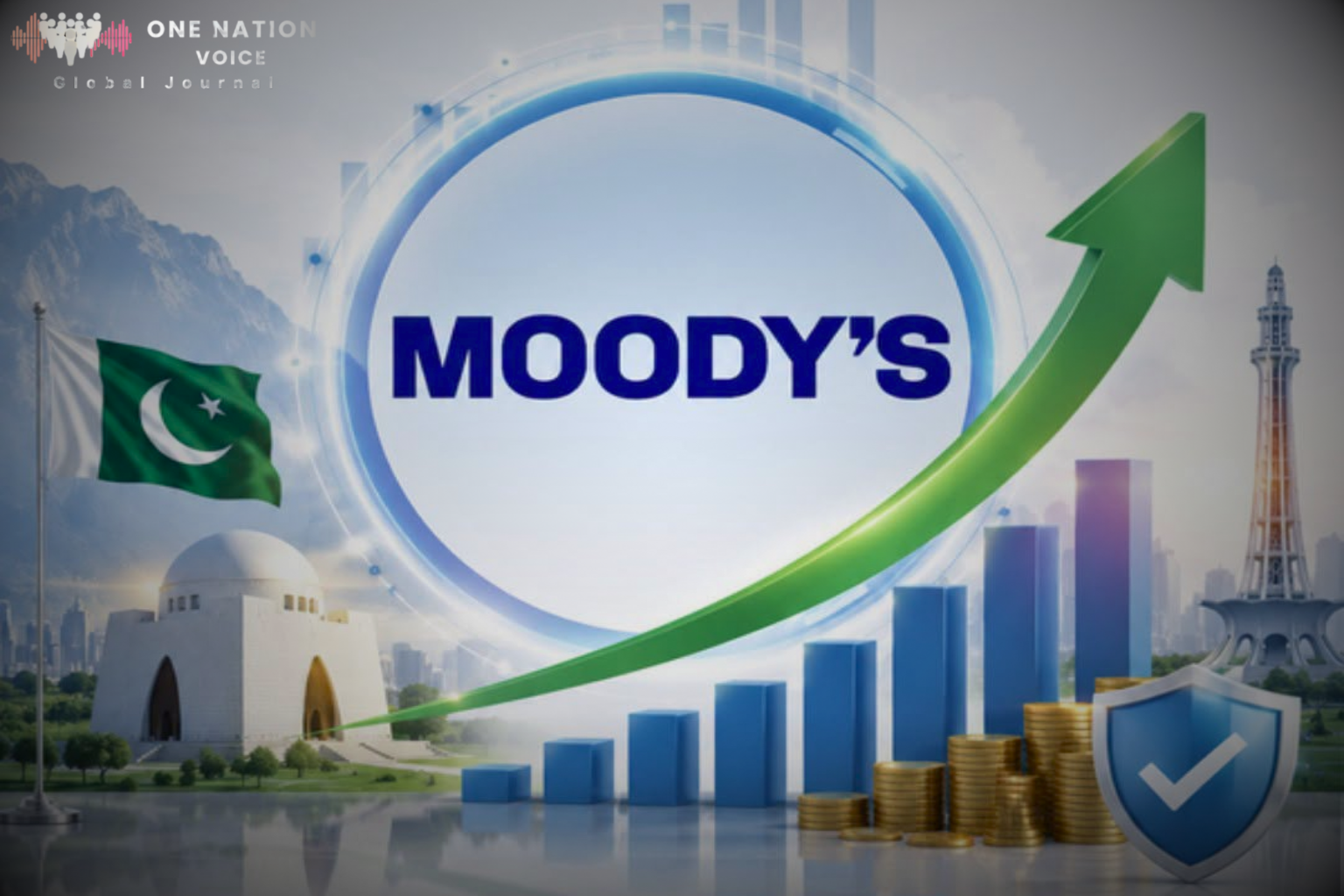
There is something almost cinematic about Pakistan’s economic story in 2026. A country that was, just a few years ago, staring into an abyss of near default and depleted reserves has returned methodically, painfully, but unmistakably to a position of renewed international credibility. The credit rating upgrades of this year are not merely bureaucratic reassessments by agencies in distant financial capitals. They are the most visible acknowledgement yet that
Pakistan’s gamble on discipline has, against considerable odds, begun to pay off.
On 24 August 2026, Moody’s upgraded Pakistan’s sovereign credit rating to B3 from Caa1, maintaining a stable outlook and citing stronger governance alongside expectations that improvements in Pakistan’s external and fiscal position can be sustained. A month earlier, S&P Global Ratings raised its long term sovereign credit rating on Pakistan to B from B negative on 22 July 2026. Fitch Ratings holds Pakistan at B with a stable outlook. Taken together, these three assessments place Pakistan firmly back inside the B grade for the first time in years a category that may sound modest in isolation, but represents an enormous distance from where the country stood in the crisis years.
To appreciate what this means, one must remember where Pakistan came from. Foreign exchange reserves at the State Bank of Pakistan had collapsed to roughly 6.7 billion USD in late 2022, leaving the country alarmingly exposed to external shocks and struggling to meet basic import obligations. The rupee was under siege. Sovereign spreads had blown out to levels that effectively shut Pakistan out of international capital markets. The Caa and CCC ratings that Pakistan carried during that period were not just embarrassing they were a statement by global financial markets that default risk was real and present.
The turnaround, therefore, is not cosmetic. Pakistan’s foreign exchange reserves rose to around 17 billion USD by the end of July 2026, compared with approximately 14 billion a year earlier, providing close to three months of import cover. Beyond reserves, Pakistan’s External Vulnerability Indicator improved sharply, falling to around 145 percent in 2026 from 230 percent in 2025. That kind of improvement in a single year reflects genuine underlying stabilisation, not statistical sleight of hand. Pakistan’s debt affordability has improved materially, with interest payments absorbing about 35 percent of government revenue in fiscal 2026, down sharply from 49 percent in fiscal 2025.
On the growth side, Pakistan recorded GDP growth of 3.7 percent, the highest in the past four years, with the improvement owing to effective macroeconomic management, better fiscal performance, growth in large scale manufacturing, resilience of the agriculture sector, exchange rate stability, and reforms under the IMF Extended Fund Facility. That growth number may not set hearts racing, and it is admittedly below the earlier 4 percent plus projections, partly because of headwinds from the Middle East conflict. But context matters three years ago, Pakistan’s GDP contracted. A return to consistent positive growth, even at moderate rates, is evidence that the stabilisation is broad based rather than fragile.
The fiscal story is equally important. The fiscal deficit narrowed to 0.7 percent of GDP during July March FY2026, compared with 2.6 percent during the same period the previous year. The primary surplus increased to 3.2 percent of GDP due to better revenue collection and controlled spending, while government revenues climbed by 10.7 percent to Rs14.8 trillion. These are not trivial achievements in a country that historically struggled to broaden its tax base or restrain expenditure under political pressure.
Pakistan has also quietly re entered international capital markets, a development that deserves more attention than it has received. Pakistan issued a 750 million USD three year Eurobond in April 2026 and its first CNY 1.75 billion Panda bond in May 2026 roughly 250 million USD. The ability to raise money in both dollar and Chinese renminbi markets, at yields that would have been unimaginable in 2022, signals a genuine restoration of market access. Investors were willing to lend. That willingness is, at its core, what a credit rating upgrade reflects.
Remittances of 41.6 billion USD in FY2026 have become one of the most important sources of foreign exchange strength, providing a critical buffer for the external accounts. The KSE 100 Index gained 18.4 percent during July March FY2026, with market capitalisation rising from Rs15.2 trillion to Rs16.5 trillion an equity market performing among the better ones globally, drawing in domestic and foreign portfolio interest alike.
None of this means Pakistan can afford complacency. Moody’s acknowledged that governance indicators, while showing early signs of improvement, continue to point to weak rule of law and limited government effectiveness, and that fiscal policy effectiveness remains low with a persistently narrow revenue base. These are structural vulnerabilities that ratings can document but cannot cure. Pakistan’s export competitiveness remains a long concern the country still relies heavily on remittances to bridge a substantial trade gap, and the path to investment grade ratings will require precisely the kind of deeper reform that is hardest to sustain beyond the immediate pressure of a crisis.
But the direction of travel is clear. Pakistan has demonstrated that its institutions, under sufficient pressure and with adequate external support through successive IMF programme reviews, can implement difficult policies and deliver measurable results. Moody’s cited a stronger external position, better fiscal metrics, and lower domestic financing costs as the basis for its upgrade, noting that Pakistan’s external vulnerabilities have eased as foreign exchange reserves steadily increased, supported by sustained macroeconomic stabilisation.
The B grade is not the summit.
It is, however, a platform and an earned one. Pakistan’s return to this category in 2026 is a signal that the country’s most acute period of vulnerability is behind it, and that the work ahead, while substantial, begins from a meaningfully stronger position. That is not a small thing.
Disclaimer:
The views and opinions expressed in this article are exclusively those of the author and do not reflect the official stance, policies, or perspectives of the Platform.

Author

Dr. Zubair Gul is a lecturer and researcher with a particular interest in the China-Pakistan Economic Corridor, regional connectivity, development cooperation, and Pakistan-China relations. His academic work focuses on CPEC’s economic and strategic dimensions, infrastructure development, regional integration, and its broader implications for Pakistan’s growth and regional engagement.
