




When Rivers Become Weapons: The Stakes of the Indus Waters Treaty’s Unraveling
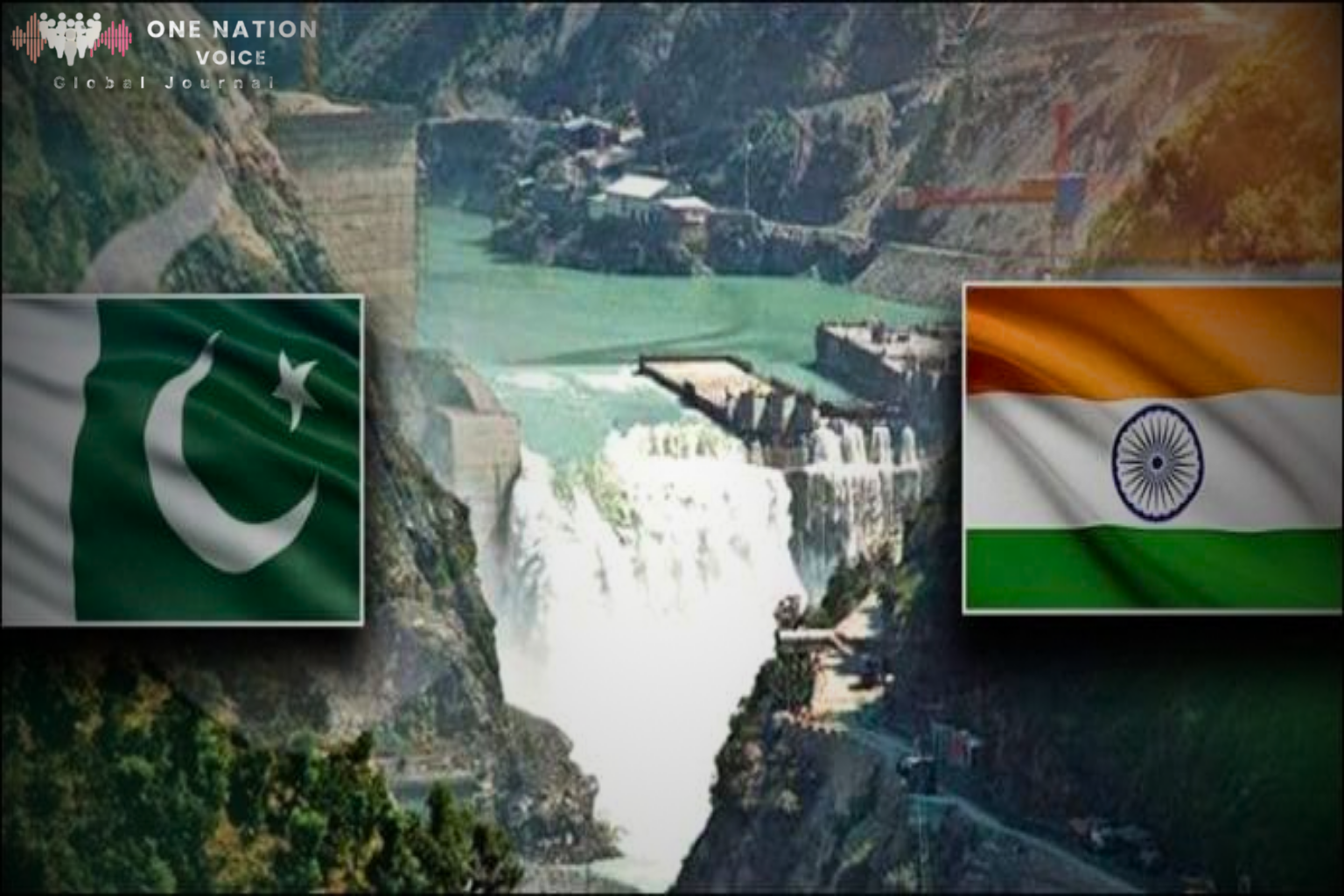
On the last day of August 2026, the Permanent Court of Arbitration at The Hague delivered what should have been a watershed moment in international water law. The tribunal issued a unanimous ruling: India’s April 2025 decision to suspend the Indus Waters Treaty following the Pahalgam attack does not legally suspend or terminate the agreement. The court was unambiguous. The treaty lives. The obligations remain.
India’s response was equally unambiguous. New Delhi categorically rejected the award, called the arbitral body “illegally constituted”, and reiterated that its decision to hold the 1960 Indus Waters Treaty with Pakistan in abeyance remains in force.
We are now living through something genuinely unprecedented. For over six decades, the IWT endured diplomatic breakdowns, violent escalations, and full-scale wars between India and Pakistan, without being seriously questioned by either party. It was not merely a water agreement; it was proof that two adversarial nuclear-armed states could maintain structured cooperation even when everything else between them was falling apart. That proof is now cracking under the weight of its first real test.
What the Treaty Actually Did
It is worth pausing to appreciate just how remarkable the IWT’s record was. The treaty, brokered by the World Bank in 1960, divided the Indus river system between the two countries with surgical precision: the eastern rivers going to India, the western rivers the Indus, Jhelum, and Chenab primarily to Pakistan. It created the Permanent Indus Commission for technical dialogue. It mandated data sharing. It established layered dispute resolution mechanisms. Most critically, it operated. Through wars in 1965, 1971, and 1999, through repeated diplomatic ruptures, through the shadow of nuclear brinkmanship, water kept flowing and data kept being exchanged.
This is the architecture that India placed in abeyance on April 23, 2025. The stated trigger was the Pahalgam attack, in which gunmen killed 26 people in Jammu and Kashmir, most of them tourists. India has been clear that it links restoration of the treaty to Pakistan’s conduct: the treaty would remain in abeyance until Pakistan credibly and irrevocably abjures its support for cross border terrorism.
No one should dismiss the gravity of terrorist violence or the fury it generates. The Pahalgam massacre was a horrific act, and those responsible khawarij and terrorists who have no legitimate political standing deserve unambiguous condemnation. But the question before us now is not whether India was angry. The question is whether transforming a water treaty into a lever of political pressure is wise strategy or a dangerous miscalculation with consequences that extend far beyond the bilateral relationship.
The Climate Dimension Changes Everything
The abeyance would be troubling in any era. It arrives in the worst possible one. Between 2001 and 2021, the Indus basin experienced a net loss of 24.8 percent in perennial snow and ice cover. The Himalayan glaciers, which supply 60 to 70 percent of the Indus River’s summer flow, are shrinking rapidly losing an estimated 8 billion tons of ice annually. Projections indicate that by 2030, the Indus basin will face a water deficit of 50 percent, with India’s projected demand potentially reaching twice the available supply.
Climate scientists tracking the Upper Indus Basin have reported something structurally new: the monsoon is shifting north and beginning to overlap with the high-altitude snow and glacier melt season that once arrived on its own separate calendar. Rain now falls on top of an already melting snowpack, producing a flood regime that no longer follows the timelines Pakistan built its disaster response systems around.
This is the environmental reality underneath the political decision. Domestic adaptation, however well designed, cannot substitute for the one mechanism that was supposed to guarantee coordinated, binational data sharing and flood response across the basin as a whole. That mechanism is the treaty currently in abeyance.
When India suspended hydrological data sharing a core treaty obligation it did not just score a diplomatic point. It blinded downstream communities to what is coming down the river. In a basin serving a population of around 320 million people, of whom 80 percent of Pakistanis live within the Indus Basin region, that blindness is not abstract. It is measured in flooded villages and failed harvests.
The Architecture of Predictability
The IWT’s deeper value was always about predictability. When the rules were clear what could be built, how much water could be stored, what data had to be shared water management stayed in the technical domain. Engineers talked to engineers. The Permanent Commission met. Disputes went through defined channels. This clarity prevented hydrological developments from being read as acts of coercion.
The escalating contest over the IWT puts the Indus system squarely within the broader India Pakistan conflict, where water functions as both material resource and instrument of power. That is precisely the transformation the treaty was designed to prevent.
Once shared rivers are perceived not as natural resources governed by agreed rules but as potential instruments of upstream leverage, the threshold for miscalculation drops sharply and in a region where both states possess nuclear weapons, miscalculation has a particular quality of finality.
The Global Signal
Beyond South Asia, the precedent being set matters enormously. The IWT has long been cited by scholars and diplomats as among the world’s most successful examples of transboundary river governance between hostile states. As political distrust grows, water increasingly becomes a strategic tool rather than a shared resource dynamics now visible in debates over shared water on the Colorado River, dam development on the Nile, and upstream infrastructure in the Mekong Basin. If the IWT, with its 65 year track record, can be unilaterally suspended by the stronger upstream party whenever political conditions deteriorate, every transboundary water arrangement in the world becomes less credible overnight.
Any serious attempt to modernise the IWT must begin by recognising climate change as the primary driver of emerging water insecurity in the Indus basin. That modernisation is genuinely necessary. The treaty was negotiated in 1960 under hydrological assumptions that no longer hold. India has raised legitimate concerns about the framework’s adequacy for contemporary realities, and those concerns deserve engagement.
But abeyance is not modernisation. It is abandonment.
And in South Asia’s volatile geopolitical landscape, abandoning the architecture that kept water out of the strategic competition may prove to be among the most consequential decisions of this decade for rivers, for people, and for the fragile possibility of regional peace.
Disclaimer:
The views and opinions expressed in this article are exclusively those of the author and do not reflect the official stance, policies, or perspectives of the Platform.

