


Shabbar Zaidi’s China Argument Does Not Survive the Data
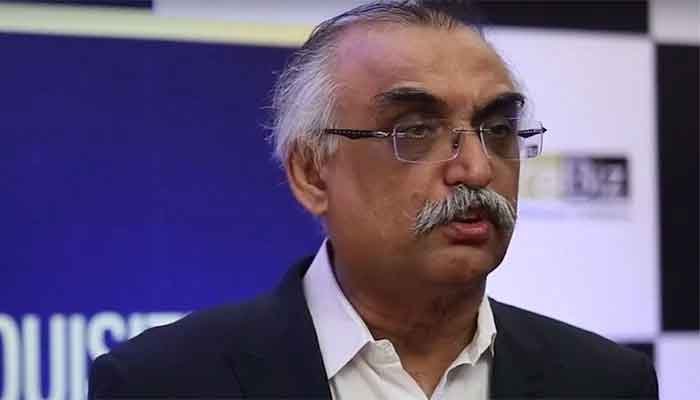
Shabbar Zaidi’s recent claim that Pakistan should effectively step away from trade with China if it wants to repair its economy is the kind of statement that works well in a short video but collapses once it encounters economic data. His accompanying attack on the China-Pakistan Economic Corridor is equally sweeping. By presenting CPEC’s energy investments as a principal cause of Pakistan’s economic difficulties, Zaidi substitutes rhetoric for a serious examination of trade composition, investment flows, infrastructure shortages and Pakistan’s own power sector structure. The latest official figures make his argument increasingly difficult to defend.
Begin with the most extraordinary proposition, that Pakistan should stop or substantially reduce trade with China. According to the Pakistan Economic Survey 2025-26, Pakistan imported $14.038 billion from China during July to March FY2026. That represented 30 percent of Pakistan’s total merchandise imports of $46.793 billion. China was therefore not a marginal supplier that could simply be removed from Pakistan’s economic equation. It accounted for almost one out of every three dollars Pakistan spent on imported goods. Pakistan also exported $1.945 billion to China, making it the country’s second-largest export destination with an 8.4 percent share.
The most damaging omission in Zaidi’s argument is what Pakistan actually imports from China. The Economic Survey explicitly states that Pakistan’s dependence on Chinese imports largely consists of machinery, raw materials, intermediate goods and capital equipment that support domestic production and investment. These are not merely discretionary consumer purchases. They are inputs used by factories, businesses, construction firms, technology companies and energy projects. Telling Pakistan to abandon that relationship without identifying suppliers capable of replacing almost a third of its import basket at comparable cost, quality and scale is not an economic strategy. It is an assertion without a replacement plan.
Zaidi’s position is particularly difficult to reconcile with Pakistan’s need for investment. The same Economic Survey identifies China as Pakistan’s leading investment partner, providing $678.6 million in net foreign direct investment during July to March FY2026. Total net FDI during the period was about $1.4 billion. China therefore remained one of the strongest sources of long-term capital entering Pakistan when the country needs precisely the opposite of economic disengagement. An economy struggling to raise its investment rate should be asking how to attract more productive capital, deepen joint ventures and expand technology transfer, not casually discussing withdrawal from its largest trading partner and leading investment source.
The wider numbers are also inconvenient for the claim that economic engagement with China has somehow ruined Pakistan. The latest Economic Survey growth data put Pakistan’s GDP growth at 3.70 percent in FY2026, compared with 3.18 percent in the preceding year. Industrial output grew 3.51 percent, services expanded 4.09 percent, and per capita income rose to $1,901. Investment reached 14.38 percent of GDP, while national savings stood at 14.13 percent. These figures do not mean China alone created Pakistan’s recovery. They do, however, expose how careless it is to claim that Pakistan’s relationship with China is destroying the economy while the same relationship remains deeply embedded in trade, investment, infrastructure and industrial supply chains.
Zaidi’s attack on CPEC electricity projects deserves an even firmer response. Pakistan did not launch CPEC’s energy program in a country overflowing with electricity. It did so after years in which load shedding damaged industrial production, businesses operated generators and households endured prolonged outages. By March 2026, Pakistan’s Ministry of Planning reported that 43 CPEC projects worth approximately $25 billion had been completed and nearly 9,000 MW had been added to the national grid. To reduce that physical transformation to the claim that expensive electricity projects “destroyed the country” is to erase the energy shortage that those investments were designed to address.
Nor is CPEC energy limited to one technology. The official CPEC energy portfolio includes major generation and transmission assets, among them the 720 MW Karot Hydropower Project, 884 MW Suki Kinari Hydropower Project, wind projects in Sindh and the Matiari Lahore HVDC transmission line with 4,000 MW evacuation capacity. These are tangible national assets. One may debate energy policy, but one cannot seriously pretend that thousands of megawatts of generation, hydropower, renewable capacity and high voltage transmission infrastructure constitute economic destruction.
More importantly, the latest evidence from NEPRA’s FY2024-25 generation assessment demonstrates that Pakistan’s electricity cost problem is a system-wide structural issue. Thermal generation utilisation stood at only 42.5 percent, while capacity purchase payments made up 61 percent of total power purchase costs. NEPRA attributed elevated capacity costs principally to surplus capacity and low plant utilisation, while energy purchase costs were affected by costly imported fuels. That diagnosis is very different from Zaidi’s simplistic suggestion that CPEC itself is the explanation.
The distinction is fundamental. Electricity becomes expensive when generation, demand, transmission, distribution, recoveries and contractual obligations do not move together. Pakistan’s authorities determine demand forecasts. Pakistani institutions regulate the market. Pakistani distribution companies manage losses and recoveries. The national grid determines whether available capacity can be efficiently dispatched. Therefore, blaming China for structural weaknesses in Pakistan’s electricity governance avoids the harder but necessary conversation about domestic management.
Zaidi is free to dislike CPEC. He is free to argue that Pakistan should have chosen a different development model. But an expert argument requires more than declaring a project a failure after infrastructure has already added nearly 9,000 MW to the grid, delivered major transmission capacity and attracted billions of dollars of investment. It also requires explaining what Pakistan would have done during its acute energy shortages and where equivalent financing would have come from.
The sensible economic debate today is not whether Pakistan should distance itself from China. It is how Pakistan can extract even greater value from its relationship with China, expand exports to the Chinese market, attract manufacturing relocation, strengthen special economic zones, develop agriculture and technology partnerships and convert CPEC infrastructure into sustained industrial growth. Zaidi’s prescription points Pakistan in precisely the wrong direction. The latest statistics show that China is simultaneously Pakistan’s largest import source, second-largest export market and leading investment partner. You do not repair an economy by dismantling one of its most consequential economic relationships. You repair it by becoming productive enough to use that relationship to your advantage.
Shabbar Zaidi’s argument may make an effective sound bite. As economics, however, it does not survive the numbers.

